 May 2015 in “Hair transplant forum international”
 Androgenetic alopecia causes hair loss by shrinking hair follicles due to androgens, with the connection between the muscle and hair follicle determining if the loss is reversible.
 5 citations
,
October 1984 in “The BMJ”
5 citations
,
October 1984 in “The BMJ” Up to 50% of scalp hair can be lost before it appears thin, and treatment is only needed for hair loss caused by diseases or deficiencies.
 March 2026 in “Frontiers in Medicine”
 Different types of alopecia cause hair loss due to immune system issues, with some allowing regrowth and others causing permanent loss.
 October 2023 in “Case Reports”
 A man with a new type of male pattern hair loss that affects the back of the head responded well to common hair loss treatments.
 April 2016 in “Actas Dermo-Sifiliográficas”
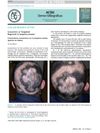
 The document concludes that a unique target-like hair regrowth pattern in alopecia areata may be more common than thought and should be properly identified.
 10 citations
,
July 2012 in “International Journal of Dermatology”
10 citations
,
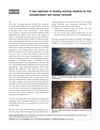
July 2012 in “International Journal of Dermatology” Syphilis can cause hair loss and should be considered in unexplained cases.
 11 citations
,
January 2010 in “Indian Journal of Dermatology, Venereology and Leprology”
11 citations
,
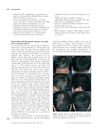
January 2010 in “Indian Journal of Dermatology, Venereology and Leprology” Hair transplant and applying 5% minoxidil solution can effectively treat permanent hair loss, but it may change hair direction in some cases.
March 2016 in “Actas dermo-sifiliográficas/Actas dermo-sifiliográficas” Stopping the use of a tight headband and using specific treatments led to partial hair regrowth.
April 2023 in “The Medical Journal of Australia” A five-year-old girl has a harmless, unchanging bald patch on her scalp.
 122 citations
,
November 1984 in “Journal of the American Academy of Dermatology”
122 citations
,
November 1984 in “Journal of the American Academy of Dermatology” No single treatment is consistently effective for alopecia areata, and more research is needed.
The document concludes that Androgenic Alopecia is a type of hair loss, commonly known as baldness.
 January 2018 in “HAL (Le Centre pour la Communication Scientifique Directe)”
 Male pattern baldness affects social interactions and mental health, and while treatments are being explored, hair transplants are currently the most effective solution.
 2 citations
,
October 2015 in “Primary Care: Clinics in Office Practice”
2 citations
,
October 2015 in “Primary Care: Clinics in Office Practice” Doctors should diagnose hair loss by examining the patient and possibly doing tests, and then treat it based on the type, which may prevent permanent hair loss.
32 citations
,
August 2016 in “Journal of the American Academy of Dermatology” Temporal triangular alopecia is a non-scarring hair loss in children, often linked to other health conditions.
 March 2026 in “Frontiers in Medicine”
 Diffuse unpatterned alopecia can affect donor areas, but treatment with finasteride and minoxidil can improve hair density.
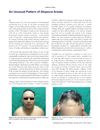 January 2014 in “International Journal of Trichology”
 A man had an unusual type of hair loss that didn't match known patterns and didn't improve with treatment.
January 2022 in “Clinical Cases in Dermatology” Hypothyroidism can cause hair loss, which is often reversible with treatment.
November 2022 in “Journal of Investigative Dermatology” Minoxidil and PRP can help convert miniaturized hair follicles back to normal in male pattern baldness.
October 2025 in “University of Zadar Institutional Repository” Early hair loss may signal a risk for metabolic syndrome and related health issues.
 2 citations
,
April 1981 in “International Journal of Dermatology”
2 citations
,
April 1981 in “International Journal of Dermatology” No treatment reliably changes Alopecia Areata's course; reassurance and possibly a wig are recommended.
 22 citations
,
July 2012 in “International Journal of Trichology”
22 citations
,
July 2012 in “International Journal of Trichology” Miniaturized hairs stay connected to muscle in alopecia areata, allowing possible regrowth, but not in androgenetic alopecia.
 10 citations
,
August 1991 in “PubMed”
10 citations
,
August 1991 in “PubMed” Inflammation, possibly triggered by a specific bacteria and activated by UV radiation, may contribute to male pattern baldness.
 17 citations
,
October 2013 in “Plastic and reconstructive surgery. Global open”
17 citations
,
October 2013 in “Plastic and reconstructive surgery. Global open” Male pattern baldness may be caused by scalp pressure on hair follicles, which increases with age and leads to a cycle of hair loss. This process is not directly determined by genes.
 March 2025 in “HAL (Le Centre pour la Communication Scientifique Directe)”
 De nouvelles thérapies promettent de mieux traiter la perte de cheveux due à l'alopécie androgénétique.
January 2024 in “Updates in clinical dermatology” Frontal fibrosing alopecia is a scarring hair loss condition mainly affecting postmenopausal women, with unclear causes.
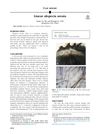 4 citations
,
November 2018 in “JAAD case reports”
4 citations
,
November 2018 in “JAAD case reports” Alopecia areata can sometimes appear as a straight line of hair loss instead of round patches.
17 citations
,
January 1991 in “Acta Dermato Venereologica” A family had a genetic condition causing hair loss on the scalp, passed down through four generations.
 1 citations
,
September 2021 in “The Journal of Dermatology”
1 citations
,
September 2021 in “The Journal of Dermatology” Japanese cases of fibrosing alopecia show a unique age and hair loss pattern, possibly due to racial differences.
September 2022 in “Medical Mycology” Scalp fungi and sebum differences may affect hair loss in men.