 1 citations
,
August 2002 in “Zeitschrift für Hautkrankheiten”
1 citations
,
August 2002 in “Zeitschrift für Hautkrankheiten” Male androgenetic alopecia involves hair follicle miniaturization due to DHT, with potential treatments using inhibitors and blockers.
 April 2018 in “The journal of investigative dermatology/Journal of investigative dermatology”
 Aging causes changes in scalp cells that can negatively affect hair health.
Early diagnosis and treatment of frontal fibrosing alopecia are crucial to prevent permanent hair loss.
19 citations
,
October 1996 in “International Journal of Dermatology” Pseudopelade is a rare inherited hair loss condition with a genetic cause.
 April 2023 in “World Journal Of Advanced Research and Reviews”
 Cosmetic products or emotional factors might contribute to Frontal Fibrosing Alopecia, and trichoscopy is useful for diagnosis.
 1 citations
,
September 2013 in “Elsevier eBooks”
1 citations
,
September 2013 in “Elsevier eBooks” Hair ages and thins due to factors like inflammation and stress, and treatments like antioxidants and hormones might improve hair health.
141 citations
,
November 2007 in “Journal of Investigative Dermatology” Balding cells age faster due to stress, suggesting stress-targeting treatments for hair loss.
January 2005 in “Digest of the World Core Medical Journals” Oral zinc gluconate and topical steroids significantly improved a rare scalp condition in three elderly patients.
 30 citations
,
November 2012 in “Anais Brasileiros De Dermatologia”
30 citations
,
November 2012 in “Anais Brasileiros De Dermatologia” Diagnosing diffuse alopecia, a hair loss condition, can be challenging and may require a scalp biopsy or tracking the disease's progression when symptoms and skin tests aren't enough.
October 2012 in “Indian Journal of Dermatology, Venereology and Leprology”  3 citations
,
March 2014 in “Turkderm”
3 citations
,
March 2014 in “Turkderm” Hair loss in men can be slowed or reversed with treatments like minoxidil and finasteride, but it resumes if treatment stops. It may also indicate early heart disease and obesity.
 June 2020 in “The journal of investigative dermatology/Journal of investigative dermatology”
 Topical treatments led to hair regrowth in a man with linear morphea.
15 citations
,
October 1996 in “Archives of Dermatology” Researchers identified a new hair loss pattern called "sisaipho type," where hair is lost across the scalp except around the edges.
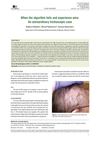 January 2026 in “Forum Dermatologicum”
 Thorough hair examination is crucial for accurate diagnosis and treatment.
 January 2026 in “Clinical Cosmetic and Investigational Dermatology”
 Early diagnosis and targeted anti-inflammatory treatments can improve outcomes in androgenetic alopecia with perifollicular inflammation and fibrosis.
192 citations
,
October 1998 in “Experimental Dermatology” Androgenetic alopecia involves complex hair follicle changes and knowledge gaps remain.
August 2025 in “EMC - AKOS - Trattato di Medicina” Non-scarring alopecia can regrow hair, but scarring alopecia is often permanent and needs quick treatment.
12 citations
,
August 2002 in “Archives of Dermatology”  8 citations
,
March 2017 in “Experimental Dermatology”
8 citations
,
March 2017 in “Experimental Dermatology” Finasteride helps female-pattern hair loss.
 December 2020 in “Skin appendage disorders”
 A young man with an unusual type of scarring hair loss suggests a possible new variant of a known scalp condition.
 January 2026 in “DOAJ (DOAJ: Directory of Open Access Journals)”
 Early biopsy and targeting inflammation can improve treatment for hair loss in androgenetic alopecia.
 158 citations
,
February 2000 in “Archives of dermatology”
158 citations
,
February 2000 in “Archives of dermatology” Some people with pattern hair loss may also have scalp inflammation and scarring similar to lichen planopilaris.
17 citations
,
January 1991 in “Acta Dermato Venereologica” A family had a genetic condition causing hair loss on the scalp, passed down through four generations.
1 citations
,
September 2022 in “Journal of the Egyptian Womenʼs Dermatologic Society” A rare scalp infection in a 66-year-old woman was successfully treated, leading to full hair regrowth.
January 2006 in “The Year book of dermatology” 2 citations
,
June 2013 in “Clinical and Experimental Dermatology” Thorough evaluation is crucial for understanding diffuse scalp hair loss.
April 2016 in “Journal of the American Academy of Dermatology” Treatment improved some symptoms but not all.
1 citations
,
July 2024 in “Indian Journal of Sexually Transmitted Diseases and AIDS” Syphilitic alopecia can be effectively diagnosed and treated, leading to hair regrowth.
 139 citations
,
June 2003 in “Journal of Investigative Dermatology Symposium Proceedings”
139 citations
,
June 2003 in “Journal of Investigative Dermatology Symposium Proceedings” Androgenetic alopecia in women needs more research and better management strategies.
 November 2018 in “Skin appendage disorders”
 The document concludes that a woman has both Frontal Fibrosing Alopecia and Lichen Simplex Chronicus, a previously unreported combination of conditions.