 June 2018 in “Journal of Acupuncture and Meridian Studies”
 New technologies in acupuncture and biosensors show promise for better medical treatments and healing.
 August 2013 in “Nature Reviews Drug Discovery”
 New treatments may restore cancer-blocking proteins, slow prostate cancer, identify drug targets, and potentially regrow hair.
 August 2013 in “Nature Reviews Drug Discovery”
 New treatments for cancer and skin disorders show promise in disrupting harmful cell interactions and promoting hair growth.
January 2009 in “한국피부장벽학회지” Calcium is crucial for skin development and healing.
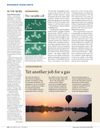 October 2005 in “Nature reviews. Molecular cell biology (Print)”
 Hairless protein is key for hair growth, cell differences cause gene expression variation, and the N-end rule pathway senses nitric oxide for protein breakdown.
 277 citations
,
July 2011 in “Journal of the Dermatology Nurses’ Association”
277 citations
,
July 2011 in “Journal of the Dermatology Nurses’ Association” The skin's layers protect, sense, and regulate the body's internal balance, but can be prone to cancer.

The conference emphasized innovative solutions for global challenges, including disaster architecture, education, health, and economic impacts.
March 1993 in “Neuroscience letters” Biotin is important for metabolism, with specific daily intake recommendations, and deficiency can cause health problems.
79 citations
,
July 2022 in “Sensors” Machine learning can effectively predict type 2 diabetes risk.
13 citations
,
September 2020 in “Sensors” Hair follicles have a pH gradient, increasing towards the root.
 11 citations
,
October 2020 in “Sensors”
11 citations
,
October 2020 in “Sensors” Photoacoustic imaging can accurately assess hair follicle density and orientation for hair transplant planning.
 8 citations
,
January 2022 in “Sensors”
8 citations
,
January 2022 in “Sensors” Deep learning can accurately automate hair density measurement, with YOLOv4 performing best.
4 citations
,
September 2021 in “Sensors” LED therapy can safely and effectively regrow eyebrows in people with frontal fibrosing alopecia.
December 2025 in “Sensors” Microneedles in wearables can deliver drugs over time but face challenges in manufacturing and safety.
1 citations
,
June 2019 in “IEEJ Transactions on Sensors and Micromachines” A new device mimics hair follicle functions and detects tiny forces with high sensitivity.
46 citations
,
April 1987 in “Brain Research” Hair-follicle nerves in cats' spinal cords can be inhibited by GABA-related connections.
28 citations
,
September 2002 in “The Journal of Comparative Neurology” Presynaptic inhibition of certain nerve fibers in cats is mainly controlled by GABA and glycine.
42 citations
,
September 2002 in “The Journal of Comparative Neurology” Glycine likely affects dendrites connected to hair follicle terminals in rats.
 January 2026 in “Stem Cell Reviews and Reports”
 Hair graying may help prevent cancer by protecting stem cells.
31 citations
,
November 1991 in “Brain Research” Aδ-LTMRs have complex synapses with glycine, while Aβ-LTMRs have simpler ones.
5 citations
,
July 1999 in “Journal of Anatomy” Methylene blue staining effectively reveals detailed nerve structures in rat snouts.
5 citations
,
July 1999 in “Journal of Anatomy” Methylene blue staining effectively highlights detailed nerve structures in rat fur.
63 citations
,
February 2010 in “Journal of Neurophysiology” Microstimulation of certain facial and mouth nerves can evoke specific sensations, while deeper nerves may require multiple stimulations to affect perception.
109 citations
,
November 2011 in “Nature Neuroscience” 123 citations
,
November 2003 in “Neuroscience Letters” TRPV4 helps sense pressure in mouse skin.
41 citations
,
April 2009 in “Journal of comparative neurology” P2X3-IR fibers are widespread in rat skin and likely help detect pain.
January 2016 in “Columbia Academic Commons (Columbia University)” Mammalian touch receptors have evolved to detect different features, enhancing our ability to perform various tasks and interact socially.
15 citations
,
December 1972 in “Journal of Investigative Dermatology” 47 citations
,
May 1994 in “Experimental Brain Research” The mystacial pad's innervation in adult rats is more complex than previously thought.
110 citations
,
January 1995 in “European Journal of Neuroscience” Glycine is a key transmitter in rat spinal cord synapses, often alongside GABA.