 81 citations
,
June 2014 in “Cold Spring Harbor perspectives in medicine”
81 citations
,
June 2014 in “Cold Spring Harbor perspectives in medicine” Skin has specialized touch receptors that can tell different sensations apart.
 7 citations
,
March 2017 in “Journal of dermatology”
7 citations
,
March 2017 in “Journal of dermatology” The conclusion is that accurately identifying folliculosebaceous tumors requires understanding their clinical signs and microscopic features.

Some side effects of breast cancer chemotherapy last longer than others, and patient feedback can help improve care.

Understanding hair follicle signaling can improve hair disorder treatments.
 1113 citations
,
August 1999 in “The New England Journal of Medicine”
1113 citations
,
August 1999 in “The New England Journal of Medicine” Hair follicle biology advancements may lead to better hair growth disorder treatments.
 50 citations
,
September 2014 in “Stem cell reports”
50 citations
,
September 2014 in “Stem cell reports” BLIMP1 is essential for skin maintenance but not for defining sebaceous gland progenitors.
 31 citations
,
November 2016 in “Cell Reports”
31 citations
,
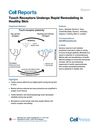
November 2016 in “Cell Reports” Touch sensitivity in mouse skin decreases during hair growth due to changes in touch receptors.
 4 citations
,
November 2014
4 citations
,
November 2014 The skin protects the body, regulates temperature, senses touch, and makes vitamin D.
 December 2025 in “Journal of World Economy”
 Natural organic cosmetics with high natural content and patent labeling are popular and profitable in the US market.
 January 2024 in “Archives of pharmacy practice”
 The skin is vital for protection, temperature control, fluid balance, immunity, and sensing, with damage affecting daily life and mental health.
 January 2018 in “Stem cell biology and regenerative medicine”
 The nucleus is key in controlling skin growth and repair by coordinating signals, gene regulators, and epigenetic changes.
 March 2026 in “Cancer Diagnosis & Prognosis”
 Some side effects of breast cancer chemotherapy, like neuropathy and nail loss, can last long after treatment.
 October 2005 in “Nature reviews. Molecular cell biology (Print)”
 Hairless protein is key for hair growth, cell differences cause gene expression variation, and the N-end rule pathway senses nitric oxide for protein breakdown.
 71 citations
,
February 2020 in “Journal of Translational Medicine”
71 citations
,
February 2020 in “Journal of Translational Medicine” Progress has been made in skin and nerve regeneration, but more research is needed to improve methods and ensure safety.
 6 citations
,
January 2009 in “Elsevier eBooks”
6 citations
,
January 2009 in “Elsevier eBooks” The skin has multiple layers and cells, serves as a protective barrier, helps regulate temperature, enables sensation, affects appearance, and is involved in vitamin D synthesis.

Understanding hair surface properties is key for effective hair care products.
 1 citations
,
January 2012 in “Elsevier eBooks”
1 citations
,
January 2012 in “Elsevier eBooks” The document concludes that the skin is a complex organ providing protection, sensation, and healing, with challenges in treating conditions like itchiness.
 14 citations
,
October 2020 in “Scientific reports”
14 citations
,
October 2020 in “Scientific reports” Hair greying is linked to reduced ATM protein in hair cells, which protects against stress and damage.
 December 2025 in “Nature Communications”
 Blocking IL-17a can improve age-related smell loss in mice.
 65 citations
,
March 2016 in “Lasers in Medical Science”
65 citations
,
March 2016 in “Lasers in Medical Science” Most low-level light therapy studies did not accurately report how light was measured, affecting treatment reliability.
 January 2024 in “Wiadomości Lekarskie”
 AI and robotics are improving treatment and monitoring of neurodegenerative disorders like Parkinson's.
 January 2024 in “Wiadomości Lekarskie”
 Eastern medical professionals struggle with Polish specialized vocabulary due to language differences, and tailored educational materials could help.
 277 citations
,
July 2011 in “Journal of the Dermatology Nurses’ Association”
277 citations
,
July 2011 in “Journal of the Dermatology Nurses’ Association” The skin's layers protect, sense, and regulate the body's internal balance, but can be prone to cancer.
47 citations
,
May 1994 in “Experimental Brain Research” The mystacial pad's innervation in adult rats is more complex than previously thought.
February 2026 in “Advanced Sensor Research” Advanced technologies can improve understanding and monitoring of skin-brain interactions.
112 citations
,
February 2001 in “Journal of Investigative Dermatology” Neuropeptides affect hair growth, with some speeding it up and others slowing it down.
 2 citations
,
December 2023 in “JEADV. Journal of the European Academy of Dermatology and Venereology/Journal of the European Academy of Dermatology and Venereology”
2 citations
,
December 2023 in “JEADV. Journal of the European Academy of Dermatology and Venereology/Journal of the European Academy of Dermatology and Venereology” The document suggests a new way to categorize skin and mind disorders into two main groups to reduce confusion.

Skin stem cells in hair follicles are important for touch sensation.
63 citations
,
February 2024 in “BMC Psychology” Emotion recognition tech helps devices understand emotions, but more research is needed for complex situations.
33 citations
,
January 2000 in “Acta Oto-Laryngologica” Epidermal growth factor increases extra hair cells in newborn rat ears.