26 citations
,
September 2001 in “Journal of Investigative Dermatology” BSSP may help skin tumors grow and could be a marker or target for skin cancer treatment.
32 citations
,
May 1999 in “Biochemical and Biophysical Research Communications” A new enzyme, BSSP, is found in high amounts in the hair follicles of nude mice.
182 citations
,
May 2003 in “Development” Myc activation reduces skin stem cells by affecting cell adhesion.
33 citations
,
July 2007 in “Journal of cell science” Miz1 is essential for proper hair structure and growth.
65 citations
,
November 2013 in “The EMBO Journal” HDAC1 is crucial for skin development and preventing tumors.
41 citations
,
October 2001 in “Experimental Dermatology” The nude gene is important for skin and hair development.
8 citations
,
September 2024 in “Food Science & Nutrition” β-Sitosterol may help prevent heart disease, cancer, and diabetes, but more human studies are needed.
37 citations
,
December 1995 in “Journal of Cell Science” Nexin 1 may help control hair growth.
13 citations
,
August 1999 in “Journal of Investigative Dermatology” Bikunin is found on the cell boundaries of certain skin layers and may help regulate skin and hair functions.
1 citations
,
September 2001 in “PubMed” ONO-3403 effectively reduces mouse skin tumor growth without side effects.
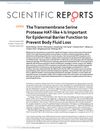 19 citations
,
March 2017 in “Scientific Reports”
19 citations
,
March 2017 in “Scientific Reports” HAT-L4 is crucial for preventing body fluid loss by maintaining skin barrier integrity.
8 citations
,
August 2018 in “Journal of Investigative Dermatology” December 2022 in “Biochemical and Biophysical Research Communications” HtrA2 activity is crucial for normal hair growth by regulating fat cell development.
January 2022 in “Mammalian Genome” The wavy coat in NCT mice is caused by multiple genes, including a mutation in the Prss53 gene.
28 citations
,
February 2010 in “Experimental Dermatology” The frizzy mouse and hairless rat mutations are due to changes in the Prss8 gene.
 6 citations
,
September 2020 in “Journal of The American Academy of Dermatology”
6 citations
,
September 2020 in “Journal of The American Academy of Dermatology” Severe male balding may increase the risk of serious COVID-19, and treatments that reduce androgens or block a specific enzyme might help protect these individuals.
12 citations
,
October 2006 Matriptase imbalance contributes to cancer development and spread.
 March 1998 in “Journal of dermatological science”
 Protease Nexin-1 is found in human hair growth cells and is affected by male hormones.
165 citations
,
January 2006 in “Molecular Medicine” Matriptase is crucial for skin, hair, and immune cell health, and its imbalance can lead to cancer.
138 citations
,
December 1976 in “Journal of Biological Chemistry” The enzyme from human skin can cross-link proteins and needs calcium to work.
99 citations
,
October 2008 in “Journal of Investigative Dermatology” Mutations in the ST14 gene cause skin and hair issues by disrupting important protein processing.
84 citations
,
May 2008 in “Biological Chemistry” Human tissue kallikreins help regulate skin barrier functions and affect skin health.
29 citations
,
April 1997 in “Developmental Dynamics” Trypsin slows hair growth and affects color by causing cell death in hair follicles.
23 citations
,
December 2001 in “Experimental dermatology” Soymilk can slow hair growth and make hair thinner.
21 citations
,
August 2007 in “Experimental Dermatology” Overexpression of hurpin in mice leads to abnormal skin and higher skin cancer risk.
11 citations
,
December 2017 in “Orphanet Journal of Rare Diseases” A new mutation in the ST14 gene broadens the understanding of ichthyosis-hypotrichosis syndrome.
9 citations
,
November 2007 in “Blood” TMPRSS6 is crucial for controlling hepcidin and normal iron absorption.
3 citations
,
April 1997 in “Developmental Dynamics” Trypsin slows hair growth and affects color by causing cell death in hair follicles.
1 citations
,
February 2013 in “InTech eBooks” LEKTI is crucial for skin barrier and immune function, affecting conditions like Netherton syndrome and atopic dermatitis.
1 citations
,
April 1998 in “PubMed” Nexin 1 helps control hair growth in young rats.