 September 2022 in “Frontiers in genetics”
 A Chinese male with a new genetic mutation has a skin condition and severe urinary issues, with treatments having mixed success.
4 citations
,
September 2015 in “JAAD case reports” Substance P may play a role in the inflammation seen in keratosis follicularis spinulosa decalvans.
 11 citations
,
June 2012 in “Acta histochemica”
11 citations
,
June 2012 in “Acta histochemica” Mice with a Gsdma3 gene mutation have thicker skin and longer hair follicle openings due to increased β-catenin levels.
 23 citations
,
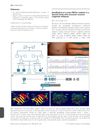
December 2013 in “British Journal of Dermatology”
23 citations
,
December 2013 in “British Journal of Dermatology” A new gene mutation linked to a skin condition was found in a Spanish family.
10 citations
,
August 2013 in “Experimental Dermatology” Hairless protein and putrescine regulate each other, affecting hair growth and skin balance.
October 2024 in “Frontiers in Oncology” A new gene mutation linked to Olmsted syndrome may increase cancer risk, suggesting the need for ongoing patient monitoring.
 June 2023 in “Medical records-international medical journal”
 Decreased IGF-1R expression may contribute to sacrococcygeal pilonidal sinus development.
39 citations
,
September 2007 in “BMC developmental biology” Neuregulin3 affects cell development in the skin and mammary glands.
 April 2024 in “BMB Reports”
 Lack of Cisd2 disrupts calcium balance in cells, leading to poorly functioning neutrophils.
11 citations
,
October 2023 in “mSphere” PrrH sRNA controls pyochelin production in *Pseudomonas aeruginosa*.
62 citations
,
March 2017 in “Journal of Investigative Dermatology” Mutations in the ACTB gene cause Becker’s nevi and may lead to muscle issues in Becker’s nevus syndrome.
 1 citations
,
January 2024
1 citations
,
January 2024 CaBP1 and CaBP2 are necessary for proper hearing and neurotransmission in the ear's inner hair cells.

CaBP1 and CaBP2 are necessary for proper hearing and neurotransmission in the ear's inner hair cells.
11 citations
,
February 2018 in “Oncotarget” Lower SMAD2/3 activation predicts more severe skin cancer.
 April 2026 in “Apollo (University of Cambridge)”
 SOX9 is crucial for cell development and repair but can cause fibrosis and cancer if misregulated.
5 citations
,
September 2013 in “BMB Reports” BMPR1a-ECD reduces wrinkles much more effectively than retinoic acid.
 16 citations
,
March 2016 in “The journal of investigative dermatology/Journal of investigative dermatology”
16 citations
,
March 2016 in “The journal of investigative dermatology/Journal of investigative dermatology” The Notch signaling pathway helps in mouse hair development through a noncanonical mechanism that does not rely on RBPj or transcription.
 30 citations
,
October 2020 in “Nature Communications”
30 citations
,
October 2020 in “Nature Communications” Finasteride irreversibly affects human steroid 5α-reductase 2, providing insight into its catalytic mechanism and disease-related mutations.
 2 citations
,
October 2023 in “Philosophical transactions - Royal Society. Biological sciences”
2 citations
,
October 2023 in “Philosophical transactions - Royal Society. Biological sciences” Enzymes that change arginine to citrulline are important for skin barrier and hair formation, and their malfunction can lead to skin conditions and hair disorders.
 March 2022 in “Benha Journal of Applied Sciences”
 ULBP3 levels are higher in Tinea capitis patients and may help predict the disease's severity.
114 citations
,
July 2003 in “PubMed” Lack of KSR1 stops certain skin tumors in mice.
 December 2024 in “Egyptian Journal of Chemistry”
 Saw palmetto may help with prostate issues and hair loss.
 January 2013 in “International Journal of Trichology”
 A new mutation in the TRPS1 gene was found in a Ukrainian girl with Trichorhinophalangeal syndrome type I.
A new mutation in the TRPS1 gene caused Trichorhinophalangeal syndrome in a 17-year-old, highlighting the need for genetic testing.
 93 citations
,
June 2011 in “Journal of Neuroscience”
93 citations
,
June 2011 in “Journal of Neuroscience” p63 is essential for activating and differentiating stem cells in the nose's olfactory tissue.

Type II spiral ganglion neurites avoid high concentrations of laminin and fibronectin.
Epimorphin helps shape and develop epithelial cells, like those in hair follicles.
 March 2024 in “Research Square (Research Square)”
 The TT genotype of a specific SNP in sheep is linked to better wool quality.
100 citations
,
May 2006 in “American Journal Of Pathology” Matriptase is crucial for skin barrier, hair growth, and may contribute to skin cancer.
 November 2023 in “Animal Bioscience”
 miR-133a-3p and miR-145-5p help goat hair follicle stem cells differentiate by controlling NANOG and SOX9.