 April 2020 in “Journal of the Endocrine Society”
 A woman's high testosterone and related symptoms were caused by overactive cells in her ovaries.
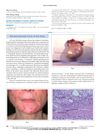
January 2009 in “Repositório Científico do Instituto Politécnico de Viseu (Instituto Politécnico de Viseu)” The skin lesion was diagnosed as a matrical cyst with unusual features.
 9 citations
,
May 2008 in “Journal of Clinical Oncology”
9 citations
,
May 2008 in “Journal of Clinical Oncology” A woman's ovarian tumor causing high testosterone was successfully removed, and her symptoms improved.
 5 citations
,
November 2001 in “PubMed”
5 citations
,
November 2001 in “PubMed” An 80-year-old woman's severe hair loss was caused by a hormone-secreting ovarian tumor.
A thorough diagnostic process and teamwork are crucial for managing complex hyperandrogenism in postmenopausal women.
 1 citations
,
January 2017 in “Tohoku journal of experimental medicine”
1 citations
,
January 2017 in “Tohoku journal of experimental medicine” A woman's mature cystic teratoma caused her virilization by producing testosterone.
 April 2019 in “Journal of the Endocrine Society”
 A woman's severe male-like symptoms were caused by a rare, benign tumor in her ovary that produced male hormones.
 November 2022 in “Journal of the Endocrine Society”
 A woman's masculine features were caused by a rare ovarian tumor that produced male hormones.
12 citations
,
May 2009 in “Ophthalmic plastic and reconstructive surgery” Multiple pilomatrixoma may indicate Turner syndrome.
April 2025 in “Indian Journal of Dermatology” A rare, benign facial tumor called fibrofolliculoma was successfully treated with surgery.
 4 citations
,
September 2010 in “Medical Hypotheses” 3 citations
,
March 2013 in “American Journal of Dermatopathology”
4 citations
,
September 2010 in “Medical Hypotheses” 3 citations
,
March 2013 in “American Journal of Dermatopathology” Ossification in trichilemmal cysts is more common than previously believed.
 2 citations
,
February 2009 in “Clinical and Experimental Dermatology”
2 citations
,
February 2009 in “Clinical and Experimental Dermatology” A man had rare skin tumors with bone formation and cholesterol deposits.
 11 citations
,
November 2006 in “Journal of Veterinary Diagnostic Investigation”
11 citations
,
November 2006 in “Journal of Veterinary Diagnostic Investigation” An alpaca acted like a male and couldn't have babies because of a benign tumor in its ovary that caused high testosterone levels.
January 2003 in “Linchuang pifuke zazhi” A benign skin tumor was removed from a man's leg, and it didn't come back after 9 months.
9 citations
,
November 2013 in “Gynecological Endocrinology” A woman had high testosterone due to an ovarian issue, which was fixed with surgery.
January 2019 in “日本皮膚科学会雑誌” June 2025 in “British Journal of Dermatology” A rare skin condition in a boy is likely due to a specific genetic mutation pattern.
July 2024 in “Journal of the ASEAN Federation of Endocrine Societies” In post-menopausal women, signs of increased male hormones should be checked for possible ovarian cancer.
December 2014 in “Tesis Doctorals en Xarxa (Consorci de Serveis Universitaris de Catalunya)” Reducing SOX2 in colorectal cancer cells decreases tumor growth and self-renewal.
7 citations
,
January 1990 in “Archives of Dermatological Research” Syringomas likely start in the upper dermis and form distinct luminal structures.
29 citations
,
February 1989 in “Journal of Cutaneous Pathology” A unique hair tumor with a rippled pattern was identified, showing incomplete differentiation and unusual cell arrangements.
July 2019 in “Journal of the ASEAN Federation of Endocrine Societies” The woman had a rare adrenal tumor removed, and she recovered well with no signs of the tumor returning.
April 2020 in “Journal of the Endocrine Society” Early diagnosis of PSIS can lead to normal height with growth hormone and testosterone treatment.
1 citations
,
March 2021 in “Journal of Investigative Dermatology” Sirolimus can reduce tumor cell size in TSC-related skin tumors, but continuous treatment is needed to maintain benefits.
3 citations
,
May 2016 in “Dermatopathology” Lrig1 could be a marker for advanced sebaceous carcinoma.
 January 2024 in “Wiadomości Lekarskie”
 Rhabdomyosarcoma is the most common head and neck cancer in children, requiring complex treatment.
October 2025 in “Journal of the Endocrine Society” A rare pituitary tumor in an 18-year-old male caused hormonal issues and vision loss, requiring surgery and further treatment.
 January 2025 in “International Journal of Dermatology”
 Consider TFI in facial hypopigmentation diagnoses and confirm with a biopsy.
8 citations
,
July 2016 in “Oncotarget” Lgr5+ stem cells do not cause skin tumors.