 12 citations
,
November 2022 in “Archives of Dermatological Research”
12 citations
,
November 2022 in “Archives of Dermatological Research” COVID-19 can directly trigger certain skin conditions like pustular dermatoses due to an inflammatory response.
 2 citations
,
July 2024 in “Ibn AL- Haitham Journal For Pure and Applied Science”
2 citations
,
July 2024 in “Ibn AL- Haitham Journal For Pure and Applied Science” PCOS women with COVID-19 have higher cardiometabolic risks.
 April 2022 in “Archives of Medical Case Reports and Case Study”
 COVID-19 pneumonia requires more intensive care, including monitoring liver functions and DVT, due to higher D-dimer and procalcitonin levels.
 March 2022 in “Journal of Clinical Case Studies Reviews & Reports”
 COVID-19 can cause or worsen skin conditions and might show early signs of infection.
 March 2022 in “Journal of clinical case studies reviews & reports”
 COVID-19 can cause different skin issues, including rashes and hair loss.
 June 2020 in “Journal of Dermatological Treatment”
 Use telemedicine and strict hygiene for safe hair and scalp treatments during COVID-19.
 January 2020 in “World Social Psychiatry”
 A global, inclusive approach is needed to address COVID-19 and protect vulnerable groups.
 1 citations
,
September 2022 in “TURKDERM”
1 citations
,
September 2022 in “TURKDERM” Systemic retinoids do not increase COVID-19 risk or severity.
COVID-19 pneumonia may cause lasting lung damage like fibrosis.
 7 citations
,
June 2021 in “JAAD Case Reports”
7 citations
,
June 2021 in “JAAD Case Reports” A woman had hair loss, nail changes, and skin peeling after a COVID-19 infection, which got better on their own.
 7 citations
,
July 2020 in “Journal of The American Academy of Dermatology”
7 citations
,
July 2020 in “Journal of The American Academy of Dermatology” Skin symptoms linked to COVID-19 are hard to confirm, and more testing is needed to identify which are truly caused by the virus.
 5 citations
,
May 2021 in “Journal of Cosmetic Dermatology”
5 citations
,
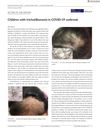
May 2021 in “Journal of Cosmetic Dermatology” More children are showing signs of hair-pulling disorders during the COVID-19 pandemic due to stress and lack of social interaction.
 4 citations
,
October 2021 in “Russian Journal of Cardiology”
4 citations
,
October 2021 in “Russian Journal of Cardiology” After moderate COVID-19, cardiovascular patients had fewer respiratory issues but faced new physical and psychological problems.
 1 citations
,
August 2022 in “Медицинский совет”
1 citations
,
August 2022 in “Медицинский совет” The treatment with an oral drug and topical lotion is effective and well-tolerated for hair loss after COVID-19.
 September 2024 in “Cureus”
 Removing breast implants resolved the patient's symptoms.
 July 2024 in “Dermatology Practical & Conceptual”
 COVID-19-related hair loss may have unique features compared to hair loss from other causes.
 January 2024 in “International Journal of Applied Research”
 COVID-19 may cause hair loss, especially in young adults.
 January 2023 in “Editora Conhecimento Livre eBooks”
 A balanced diet with key nutrients and possible supplements can help manage post-COVID-19 symptoms.
 May 2022 in “Голова и шея.”
 COVID-19-positive patients with prosthetic speech implants face increased risks and need special care.
 May 2022 in “Голова и шея.”
 Laryngectomy patients need special protection and care during COVID-19 to prevent infection.
 March 2022 in “Brazilian Journal of Health Review”
 COVID-19 can cause a type of hair loss that usually starts 3-6 months after the illness, and treatment includes stress reduction and hair care products like Minoxidil.
 122 citations
,
June 2020 in “Aging”
122 citations
,
June 2020 in “Aging” Older age and related diseases increase COVID-19 risk, but anti-aging treatments might help.
 42 citations
,
April 2021 in “Journal of clinical pharmacology”
42 citations
,
April 2021 in “Journal of clinical pharmacology” Baricitinib helps treat several diseases, including COVID-19, but has side effects and needs careful monitoring.
 14 citations
,
January 2021 in “Cureus”
14 citations
,
January 2021 in “Cureus” The AndroCoV Clinical Scoring is a quick, accurate, and free tool for diagnosing COVID-19.
 4 citations
,
May 2021 in “Journal of The European Academy of Dermatology and Venereology”
4 citations
,
May 2021 in “Journal of The European Academy of Dermatology and Venereology” Hair loss doesn't affect COVID-19 severity.
 January 2023 in “Acta dermatovenerologica Alpina, Pannonica et Adriatica (Tiskana izd.)”
 The article concludes that schoolchildren and adolescents experienced various skin issues during the COVID-19 pandemic, including acne from masks and other skin reactions from the virus and vaccines.
 October 2022 in “Journal of experimental and clinical medicine”
 Repurposing existing drugs for COVID-19 shows promise but requires more research to confirm effectiveness.

New-onset fibromyalgia after COVID-19 is poorly understood, needing better definitions and studies.
 14 citations
,
April 2021 in “Frontiers in Psychiatry”
14 citations
,
April 2021 in “Frontiers in Psychiatry” Overall alcohol consumption decreased during lockdown, but heavy drinkers consumed more.
 8 citations
,
February 2021 in “Cureus”
8 citations
,
February 2021 in “Cureus” Hispanic individuals in Northern Nevada were more affected by COVID-19 but had lower mortality rates than non-Hispanics.