COVID-19 can cause skin problems and affect dermatology treatments, with recommendations for skin care and cautious use of certain drugs.
 April 2023 in “Tikrit journal of pharmaceutical sciences”
 Ginger extract helps hair growth and reduces the need for prednisolone in alopecia areata patients.
 April 2023 in “Medizinische Genetik”
 New research has found 14 genes linked to the risk of developing alopecia areata, improving understanding and treatment options.
 January 2023 in “International Journal for Research in Applied Science and Engineering Technology”
 Herbs like Tea Tree Oil and Aloe Vera could be safer, more conditioning antidandruff alternatives to synthetic products.
 January 2023 in “Han'gug mi'saengmul saengmyeong gong haghoeji/Han-guk misaengmul saengmyeong gonghak hoeji”
 NOC-4 extract promotes black hair and hair growth effectively.
 January 2023 in “Scholars journal of applied medical sciences”
 The main causes of hirsutism in Jordanian women are PCOS and idiopathic hirsutism.
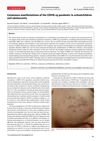 January 2023 in “Acta dermatovenerologica Alpina, Pannonica et Adriatica (Tiskana izd.)”
 The article concludes that schoolchildren and adolescents experienced various skin issues during the COVID-19 pandemic, including acne from masks and other skin reactions from the virus and vaccines.
Nanotechnology can improve alopecia treatments but faces stability challenges.
 November 2022 in “Gene Cell and Tissue”
 Zinc deficiency might affect vitamin B12 levels.
 September 2022 in “Journal of medical sciences and health”
 A person had two different benign skin tumors, a trichoadenoma and melanocytic naevi, at the same time but in different places on the face.
Clinical signs don't match inflammation levels in lichen planopilaris and frontal fibrosing alopecia.
 June 2022 in “IP Indian journal of clinical and experimental dermatology”
 Benign skin adnexal tumors are more common than malignant ones, with trichoepithelioma and chondroid syringoma being the most frequent types.
 June 2022 in “IP Indian journal of clinical and experimental dermatology”
 A woman had a rare, non-cancerous skin growth on her face, which was removed and did not come back after a year.
Vitamin D is crucial for skin health and managing skin diseases.

No single biomarker is reliable enough for diagnosing and assessing SLE.
Ruxolitinib cream shows promise for vitiligo, and early melanoma diagnosis is crucial.
 November 2021 in “Folia Microbiologica”
 Trichophyton bullosum has been found causing severe skin infections in donkeys in North Africa for the first time since 1933.
 October 2021 in “Dermatology Reports”
 Higher IL-17A levels indicate more severe alopecia areata.
 August 2021 in “Annals of pathology and laboratory medicine”
 Most skin tumors in the study were benign, with squamous cell carcinoma being the most common malignant type.
A girl with Crohn's disease developed hair loss due to her increased medication, a rare side effect seen in some children.
 February 2021 in “IP Indian journal of clinical and experimental dermatology”
 A rare non-cancerous tumor that grows like hair was found in an unusual spot, the vulva.
 January 2021 in “Online Publication Service of Würzburg University (Würzburg University)”
 Diphenylcyclopropenon treatment for Alopecia areata is effective and safe, improving patients' quality of life.
 September 2020 in “bioRxiv (Cold Spring Harbor Laboratory)”
 Different fish use the same genes to regrow teeth.
 May 2020 in “International Journal of Engineering Applied Sciences and Technology”
 Bioactive plant materials like lemon, garlic, and neem effectively fight harmful bacteria.
 April 2020 in “Indian Journal of Forensic Medicine & Toxicology”
 Laparoscopic ovarian drilling improves menstrual cycles, hormone levels, and pregnancy rates in women with PCOS.
January 2020 in “Proyecto de investigación:” Longer anogenital distance may indicate a higher chance of having polycystic ovary syndrome, and measuring this distance along with hormone levels could improve diagnosis.
 November 2019 in “Harper's Textbook of Pediatric Dermatology”
 Understanding normal hair growth and loss in children is key to diagnosing and treating hair disorders.
 March 2019 in “Dicle Medical Journal / Dicle Tip Dergisi”
 Hair and scalp diseases affect 11% of Turkish women, with seborrheic dermatitis being the most common.
 December 2018 in “Neuroradiology”
 MRI helps distinguish between pituitary adenomas and craniopharyngiomas, guides treatment for pediatric CNS tumors, and assesses rhinocerebral mucormycosis with a high mortality rate in transplanted patients.
 November 2018 in “International Journal of Current Pharmaceutical Research”
 PCOS is a hormonal disorder causing symptoms like irregular periods and acne, and increases the risk of diabetes and heart disease.