13 citations
,
January 2018 in “Yonsei Medical Journal” A specific gene mutation causes Olmsted syndrome.
22 citations
,
January 1999 in “Dermatology” The condition might be caused by genetic changes after birth.
 3 citations
,
November 2015 in “Endocrinology, Diabetes & Metabolism Case Reports”
3 citations
,
November 2015 in “Endocrinology, Diabetes & Metabolism Case Reports” Ring Chromosome 11 may be linked to conditions like early puberty, excessive hair growth, hair loss, and type 2 diabetes.
10 citations
,
January 1995 in “Dermatology” Dermatologists should consider congenital syndromes like TRPS in young adults with early hair loss.
88 citations
,
March 2004 in “Journal of Investigative Dermatology” 59 citations
,
September 2021 in “Journal of Allergy and Clinical Immunology” Netherton syndrome has two subtypes with shared immune traits but different allergic and immune responses, suggesting targeted treatments.
85 citations
,
March 2008 in “Journal of Cell Science” The mutation causing Hutchinson-Gilford progeria syndrome leads to severe skin problems and early death in mice.
June 2005 in “Journal of Investigative Dermatology” A bull with a gene mutation was asymptomatic, synthetic retinoids cause hair loss, and new therapeutic targets were identified for skin diseases.
14 citations
,
May 2017 in “Journal of Investigative Dermatology” A rare gene mutation causes skin fragility and itching without affecting hair or nails.
 3 citations
,
February 2020 in “The journal of gene medicine”
3 citations
,
February 2020 in “The journal of gene medicine” A mutation in the HR gene causes a rare form of irreversible hair loss in two Kashmiri families. Whole exome sequencing is effective for finding such mutations.
5 citations
,
September 2023 in “Frontiers in Medicine” Early dermatological referrals are important for women and girls with Turner syndrome to improve life quality.

A man with a rare lung-focused form of hypereosinophilic syndrome improved with steroid treatment.
 2 citations
,
August 2022 in “Federal Practitioner”
2 citations
,
August 2022 in “Federal Practitioner” A severe medication reaction required long treatment and led to hair loss and thyroid issues.
 January 2013 in “Journal of dermatology”
 A new medical syndrome may include skin changes, hair loss, sweating issues, bone malformations, leg swelling, and low cortisol.
148 citations
,
May 2012 in “The American Journal of Human Genetics” Cantú syndrome is caused by mutations in the ABCC9 gene.
November 2022 in “Journal of Investigative Dermatology” NCSTN gene mutation causes abnormal skin cell differentiation and more inflammation, contributing to Hidradenitis Suppurativa.
 May 2021 in “Journal of the Endocrine Society”
 The 18-year-old girl likely has a condition called müllerian agenesis, which caused her to not have a uterus and experience no menstrual periods.

A 44-year-old woman with Down's syndrome was diagnosed with both rheumatoid and gouty arthritis and treated with multiple medications.
 62 citations
,
March 2011 in “European journal of endocrinology”
62 citations
,
March 2011 in “European journal of endocrinology” Some parents have a mild form of congenital adrenal hyperplasia without symptoms, and they usually don't need treatment.
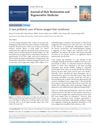
Loose anagen hair syndrome in children may improve with age, but treatment results vary.
3 citations
,
July 2024 in “Frontiers in Medicine” Mutations in the KLHL24 gene cause a skin disorder in some Russian families.
October 2019 in “European Journal of Dermatology” The boy's hair and skin color differences are due to a pigmentation disorder.
 10 citations
,
March 2019 in “Human Genetics”
10 citations
,
March 2019 in “Human Genetics” A genetic mutation in the SGK3 gene causes hairlessness in Scottish Deerhounds and may relate to human hair loss.
 28 citations
,
February 2012 in “PLoS ONE”
28 citations
,
February 2012 in “PLoS ONE” A PKP1 gene mutation causes skin fragility and hair loss in Chesapeake Bay retriever puppies.
18 citations
,
January 1992 in “Dermatology” A 4-year-old girl has a rare condition causing hairlessness and skin bumps, but normal teeth and sweating.
4 citations
,
October 2023 in “Children” Early diagnosis and comprehensive care are crucial for managing Focal Dermal Hypoplasia's complex symptoms.
8 citations
,
June 2020 in “The journal of investigative dermatology/Journal of investigative dermatology” A boy's skin fragility and sparse hair were caused by a genetic mutation affecting skin cell adhesion.
 September 2024 in “Journal of Medicine and Life”
 A specific gene mutation causes a severe skin disorder in a family.
May 2026 in “International Journal of Drug Delivery Technology” Accurate diagnosis of EFFC is crucial for effective counseling and cosmetic care.
11 citations
,
January 2021 in “British Journal of Dermatology” Mutations in the AP1B1 gene cause a new syndrome with skin, hearing, and developmental issues.