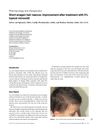
 8 citations
,
July 2007 in “International Journal of Dermatology”
8 citations
,
July 2007 in “International Journal of Dermatology” Using 5% topical minoxidil improved and normalized the hair growth in a girl with short anagen hair naevus.
 43 citations
,
August 2013 in “Pediatric Dermatology”
43 citations
,
August 2013 in “Pediatric Dermatology” Trichoscopy is good for diagnosing and monitoring hair and scalp problems in children but needs more research for certain conditions.
August 2023 in “Journal of Investigative Dermatology” Senescent melanocytes in nevus skin boost hair growth.
 November 2019 in “Harper's Textbook of Pediatric Dermatology”
 Understanding normal hair growth and loss in children is key to diagnosing and treating hair disorders.
 24 citations
,
January 2006 in “Skin Pharmacology and Physiology”
24 citations
,
January 2006 in “Skin Pharmacology and Physiology” Finasteride reverses early hair loss and promotes growth.
 32 citations
,
August 2015 in “Anais Brasileiros de Dermatologia”
32 citations
,
August 2015 in “Anais Brasileiros de Dermatologia” Black women's unique hair characteristics and styling practices can lead to specific scalp conditions, which require early diagnosis and appropriate treatment.
 13 citations
,
March 2018 in “Pediatric Dermatology”
13 citations
,
March 2018 in “Pediatric Dermatology” Children with short anagen syndrome usually see their hair condition improve as they get older.
 10 citations
,
May 2010 in “Journal of The American Academy of Dermatology”
10 citations
,
May 2010 in “Journal of The American Academy of Dermatology” A 38-year-old African American woman has a rare condition that prevents her from growing long hair.
2 citations
,
July 2021 in “Actas dermo-sifiliográficas/Actas dermo-sifiliográficas” Hair shaft disorders are diagnosed through examination and history, with general care and some treatments offering improvement.
 40 citations
,
February 1990 in “Journal of The American Academy of Dermatology”
40 citations
,
February 1990 in “Journal of The American Academy of Dermatology” A 17-year-old developed woolly hair nevus in adolescence, which is unusual, and over time the hair darkened and straightened slightly, but microscopic changes persisted.
 15 citations
,
July 2002 in “Clinical and Experimental Dermatology”
15 citations
,
July 2002 in “Clinical and Experimental Dermatology” Hair microscopy is useful for diagnosing certain hair loss conditions but has limitations and must be interpreted carefully.
 33 citations
,
March 2006 in “Seminars in cutaneous medicine and surgery”
33 citations
,
March 2006 in “Seminars in cutaneous medicine and surgery” The document explains how to identify different hair problems using a microscope.
 3 citations
,
January 2012 in “Elsevier eBooks”
3 citations
,
January 2012 in “Elsevier eBooks” The document says that there are treatments for hair and nail diseases.
 January 2010 in “Elsevier eBooks”
 The document concludes that different types of hair loss have specific treatments, and early diagnosis is crucial for preventing permanent hair loss.
 1 citations
,
May 2016 in “Current Opinion in Pediatrics”
1 citations
,
May 2016 in “Current Opinion in Pediatrics” Children's hair loss can be caused by various factors and should be treated with appropriate, age-specific methods and psychological support.
 September 2003 in “Current Paediatrics”
 The document concludes that accurate diagnosis and understanding the type of hair disorder are crucial for treating hair loss in children.
 July 2018 in “Elsevier eBooks”
 The most common cause of hair loss in children is tinea capitis, followed by alopecia areata and telogen effluvium.
 59 citations
,
June 2008 in “Journal of The American Academy of Dermatology”
59 citations
,
June 2008 in “Journal of The American Academy of Dermatology” The article explains the genetic causes and symptoms of various hair disorders and highlights the need for more research to find treatments.
 6 citations
,
May 1993 in “Archives of Disease in Childhood”
6 citations
,
May 1993 in “Archives of Disease in Childhood” Children's hair loss can be caused by many factors, including autoimmune diseases, emotional stress, genetics, and infections, with treatment and prognosis varying.
 1 citations
,
January 2013 in “Elsevier eBooks”
1 citations
,
January 2013 in “Elsevier eBooks” The document reviews various hair and nail disorders, their causes, and treatments, emphasizing the need for proper diagnosis and the link between nail changes and systemic diseases.
 October 2018 in “Springer eBooks”
 The document concludes that various hair disorders have different treatments, including medication, surgery, and addressing underlying causes.
 30 citations
,
August 1983 in “Pediatric Clinics of North America”
30 citations
,
August 1983 in “Pediatric Clinics of North America” Most hair loss in children is caused by a few common conditions, and it's important to diagnose these properly and support the child's mental health.
 2 citations
,
December 2004 in “Medicine”
2 citations
,
December 2004 in “Medicine” Different hair and scalp disorders cause hair loss or excess hair growth, with various treatments available depending on the specific condition.
 7 citations
,
May 2020 in “Trends in molecular medicine”
7 citations
,
May 2020 in “Trends in molecular medicine” The document concludes that the immune-inhibitory environment of the hair follicle may prevent melanoma development.
 6 citations
,
January 2007 in “Actas dermo-sifiliográficas/Actas dermo-sifiliográficas”
6 citations
,
January 2007 in “Actas dermo-sifiliográficas/Actas dermo-sifiliográficas” Gray hair regained color after thyroid hormone treatment.
 3 citations
,
January 2021 in “Skin appendage disorders”
3 citations
,
January 2021 in “Skin appendage disorders” Hair loss can occur about 4 weeks after scalp surgery but usually grows back within 3 months without treatment.
 May 2017 in “InTech eBooks”
 Early treatment of children's hair loss, which can be caused by various factors, is important due to its emotional impact.
 7 citations
,
December 2008 in “Expert Review of Dermatology”
7 citations
,
December 2008 in “Expert Review of Dermatology” The document concludes that various childhood hair and nail disorders exist, some may improve on their own, and advances in genetics and immunology could enhance treatment and counseling.
 4 citations
,
August 2017 in “International journal of molecular sciences”
4 citations
,
August 2017 in “International journal of molecular sciences” The conclusion is that Pigmented Epithelioid Melanocytoma can start from hair follicle stem cells or from a mole on the skin.
3 citations
,
January 2020 in “JAAD Case Reports” A girl had two rare hair conditions that helped understand their overlap.