 July 2024 in “Annals of Phytomedicine An International Journal”
 Herbal ingredients like aloe vera and hibiscus can help with hair problems like hair loss and dandruff.
 June 2024 in “British Journal of Dermatology”
 Permanent hair loss from chemotherapy significantly impacts patients' mental health and social life, highlighting the need for better patient education and support.
 May 2024 in “Frontiers in medicine”
 A genetic mutation in the LIPH gene causes tightly curled hair that stops growing in some Japanese individuals.
 April 2024 in “Cognizance journal”
 The alexandrite laser effectively reduces unwanted hair by about 75%.
 May 2023 in “Journal of animal science/Journal of animal science ... and ASAS reference compendium”
 Cows that shed more hair in winter have better reproductive success and their calves weigh more at weaning.
 May 2020 in “Research Square (Research Square)”
 Hair follicle stem cells may help treat strokes.
Low-level light therapy, possibly combined with other treatments, may become a leading hair loss treatment, while hirsutism often worsens with age and lacks preventive options.
 September 2017 in “Indian Journal of Plastic Surgery”
 Garg and Garg created an affordable, easy-to-use training program for hair restoration surgery using everyday items, which can teach a technician the basics in 3-4 weeks with two hours of daily practice.
 January 2017 in “Springer eBooks”
 Over 40% of postmenopausal women experience hair loss, with treatments aiming to stop further loss and possibly thicken hair.
 August 2016 in “Journal of Investigative Dermatology”
 Human hair follicles have a scent receptor that can influence hair growth.
 January 2016 in “Chemistry & Industry”
 Two drugs, tofacitinib and ruxolitinib, may help regrow hair by activating hair follicles.
 May 2014 in “JAMA Dermatology”
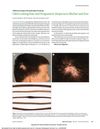
 Mother and son diagnosed with a rare genetic hair loss condition with no effective treatment.
Different hair and nail conditions can indicate health issues and have specific treatments; accurate diagnosis is crucial before treatment.
 October 2012 in “Advanced Materials Research”
 Higher temperatures improve rabbit hair strength up to 50°C, but moisture weakens it.
 August 2011 in “Clinical and Experimental Dermatology”
 About 30% of women feel they lose too much hair, often starting before age 40, and most can't find a reason for it.
 March 1985 in “Head & Neck Surgery”
 Hair transplantation improves life quality by addressing scars, aging, and genetic flaws, but is limited by the availability of the patient's own hair for donation.
 September 1961 in “Archives of Dermatology”
 Colchicine causes hair loss by damaging hair follicles.
 20 citations
,
January 2021 in “Plants”
20 citations
,
January 2021 in “Plants” High energy boosts root hair growth in plants, while low energy stops it.
 5 citations
,
January 2017 in “Laboratory Animal Research”
5 citations
,
January 2017 in “Laboratory Animal Research” Gold thread implantation may help hair grow in humans and mice.
 1 citations
,
September 2016 in “Dermatologic Surgery”
1 citations
,
September 2016 in “Dermatologic Surgery” New hair loss subtype found, mimics common baldness.
 January 2026 in “Theoretical and Natural Science”
 Targeting Lgr5+ stem cells and Wnt signaling may effectively treat hair loss.
 November 2025 in “International Journal of Zoology and Applied Biosciences”
 New technologies like AI, robotics, and stem cells have made hair transplants more effective and natural-looking.
 April 2018 in “Journal of Investigative Dermatology”
 Older hair follicle stem cells have a reduced ability to renew themselves, leading to more hair loss.
 January 2014 in “International Journal of Athletic Therapy and training”
 A female runner's hair loss was caused by stress from surgery and recovery, but her hair returned to normal in 5 months.
 February 2008 in “Basic and clinical dermatology”
 Photographic imaging is crucial for documenting and managing hair loss, requiring careful preparation and standardization to be effective.
 236 citations
,
July 2001 in “Trends in Molecular Medicine”
236 citations
,
July 2001 in “Trends in Molecular Medicine” Future hair loss treatments should aim to extend hair growth, reactivate resting follicles, reverse shrinkage, and possibly create new follicles, with gene therapy showing promise.
 226 citations
,
September 2001 in “Journal of The American Academy of Dermatology”
226 citations
,
September 2001 in “Journal of The American Academy of Dermatology” Hair loss in women is genetic, diagnosed by examination and biopsy, and treated with minoxidil, finasteride, or transplantation.
 150 citations
,
April 1999 in “Dermatologic Clinics”
150 citations
,
April 1999 in “Dermatologic Clinics” Laser hair removal effectiveness depends on targeting hair structures without harming the skin, and improvements require more research and expert collaboration.
 122 citations
,
May 2010 in “Plant Physiology”
122 citations
,
May 2010 in “Plant Physiology” Different PIN proteins affect plant root hair growth by changing how auxin is transported.
 93 citations
,
February 2008 in “Atmospheric environment”
93 citations
,
February 2008 in “Atmospheric environment” Ozone reacts more with unwashed hair, producing compounds due to scalp oils, which could lower ozone exposure but increase exposure to reaction products.