5 citations
,
January 2017 in “Arquivos Brasileiros de Oftalmologia” A rare genetic disorder causes sparse hair and vision loss due to a CDH3 gene mutation.
6 citations
,
November 2019 in “Journal of Cosmetic Dermatology” The compound improved hair growth and reduced hair loss.
 2 citations
,
April 2025 in “Frontiers in Genetics”
2 citations
,
April 2025 in “Frontiers in Genetics” The ASIP gene is crucial for determining cattle coat color.
 1 citations
,
March 2023 in “Frontiers in Cardiovascular Medicine”
1 citations
,
March 2023 in “Frontiers in Cardiovascular Medicine” A specific gene variant is linked to heart disease, increased heart muscle, curly hair, and thick skin on palms and soles.
Lhx2 helps retinal cells respond to signals for eye development.
3 citations
,
April 2022 in “Research Square (Research Square)” PBX1 reduces aging and cell death in stem cells by boosting SIRT1 and lowering PARP1.
August 2025 in “American Journal of Case Reports” Accurate diagnosis and early specialist referral are crucial for managing 46,XY Disorders of Sex Development.
 260 citations
,
July 2010 in “Cell”
260 citations
,
July 2010 in “Cell” Mutations in the SRD5A3 gene cause a new type of glycosylation disorder by blocking the production of a molecule necessary for protein glycosylation.
 10 citations
,
June 2011 in “Movement Disorders”
10 citations
,
June 2011 in “Movement Disorders” THAP1 gene changes do not affect DYT1 dystonia; finasteride may help reduce tics and OCD in Tourette syndrome.
 7 citations
,
October 1985 in “Genetics Research”
7 citations
,
October 1985 in “Genetics Research” Beige and leaden pigment genes act within melanocytes, affecting pigment patterns.
 August 2015 in “International Journal of Genetics and Molecular Biology”
 Certain genetic markers may increase or decrease prostate cancer risk.
December 2010 in “OhioLink ETD Center (Ohio Library and Information Network)” Sry may regulate fatty acid metabolism and shows different expression levels in rat tissues.
 December 2023 in “The journal of investigative dermatology/Journal of investigative dermatology”
 MCPIP1 in myeloid cells is important for skin cancer development and healthy hair growth.
June 2025 in “Korean Journal of Pharmacognosy” Isoalantolactone promotes hair growth by activating specific cell pathways.
The document describes a rare case of IFAP syndrome, a genetic condition with symptoms of hair loss, light sensitivity, and scaly skin.
 2 citations
,
February 2019 in “bioRxiv (Cold Spring Harbor Laboratory)”
2 citations
,
February 2019 in “bioRxiv (Cold Spring Harbor Laboratory)” The Asiatic lion has very low genetic diversity and unique genetic traits, highlighting the need for its conservation.
1 citations
,
March 2007 in “DOAJ (DOAJ: Directory of Open Access Journals)” Skin disorders in Sari differ from other parts of Iran, with acne and hair loss being most common.
 1 citations
,
February 2009 in “Journal of Investigative Dermatology”
1 citations
,
February 2009 in “Journal of Investigative Dermatology” Lipase H is important for hair follicle function and shaping hair fibers.
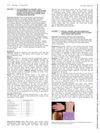
A TNFAIP3 gene mutation can cause unusual and varied symptoms of lupus and Sjogren's syndrome.
 5 citations
,
July 2022 in “Orphanet journal of rare diseases”
5 citations
,
July 2022 in “Orphanet journal of rare diseases” RSPO1 mutations in certain patients lead to skin cells that don't develop properly and are more likely to become invasive, increasing the risk of skin cancer.
5 citations
,
June 2008 in “British Journal of Dermatology” 23 citations
,
January 2017 in “BMC Medical Genetics” A new CDH3 gene mutation was found in a Spanish patient with sparse hair and eye issues.
 118 citations
,
August 2010 in “Developmental Cell”
118 citations
,
August 2010 in “Developmental Cell” MIM is crucial for hair follicle formation and regeneration by controlling cilia formation and hedgehog signaling through its interaction with Cortactin and Src.
11 citations
,
November 2019 in “The FASEB Journal” A mutation in the MAP2 gene causes reduced hair follicle density, leading to hairlessness.
1 citations
,
January 2008  June 2018 in “Surgical Case Reports”
 S-1 treatment led to a complete response in pancreatic cancer with manageable side effects.
11 citations
,
January 2022 in “Experimental Dermatology” Severe CCCA may be biologically and clinically different from milder forms.
 103 citations
,
March 2015 in “Nature Communications”
103 citations
,
March 2015 in “Nature Communications” A genetic region near the PAX1 gene is linked to a higher risk of scoliosis in females.
21 citations
,
March 2018 in “American Journal Of Pathology” Mutations in NIPAL4 cause skin issues by disrupting lipid layers, but some improvement is seen with topical treatment.