 1 citations
,
September 1984 in “Journal of Biological Education”
1 citations
,
September 1984 in “Journal of Biological Education” Plants change their growth in response to shade based on light signals detected by phytochrome.
 7 citations
,
January 2012 in “International Journal of Trichology”
7 citations
,
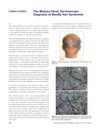
January 2012 in “International Journal of Trichology” A man with Woolly Hair Syndrome had very curly, fragile hair, and doctors used a special scalp examination to diagnose him without invasive tests.
January 2013 in “วารสารเภสัชศาสตร์อีสาน (Isan Journal of Pharmaceutical Sciences, IJPS)” Safflower extract increases melanin production in certain skin cells without harming them.
 15 citations
,
May 2013 in “American Journal of Medical Genetics - Part A”
15 citations
,
May 2013 in “American Journal of Medical Genetics - Part A” People with X-linked hypohidrotic ectodermal dysplasia have no sweat ducts and less, thinner hair.
71 citations
,
January 2011 in “Journal of cutaneous pathology” A rare skin condition was confirmed to be associated with a specific virus in a young girl.
Metabolic processes and key genes like FGF5, FGFR1, and RRAS significantly affect hair follicle growth in Inner Mongolian Cashmere goats.
11 citations
,
December 2013 in “Clinical and experimental dermatology” A child with skin and heart issues had rare genetic mutations affecting skin and heart cell cohesion.
11 citations
,
November 1991 in “Journal of Neuropathology & Experimental Neurology” Brindled mice show abnormal catecholamine neuron development due to copper deficiency.
 5 citations
,
May 2021 in “Veterinary medicine and science”
5 citations
,
May 2021 in “Veterinary medicine and science” Injecting cosyntropin into grizzly bears increases blood cortisol but doesn't change hair cortisol levels.
2 citations
,
January 2010 Tianzhu white yak hair varies in structure and density between fuzz and coarse hair.
30 citations
,
June 2022 in “Animals” Key genes, including KRT39 and KRT74, influence hair length in Inner Mongolia cashmere goats.
3 citations
,
October 2024 in “Animals” An allele of the KRTAP13-2 gene may improve wool quality in sheep.
January 2025 in “Genetics in Medicine Open” A new gene variant in a girl with Coffin-Lowry Syndrome may link the condition to early puberty.
44 citations
,
July 2013 in “Journal of the American Academy of Dermatology” Poliosis circumscripta is a patch of white hair caused by lack of melanin, linked to genetic and acquired conditions.
5 citations
,
November 2012 in “Journal of the American Academy of Dermatology” A 3-year-old girl has short anagen syndrome, causing her hair to stay short.
21 citations
,
March 2015 in “Neurological Sciences” A new genetic mutation linked to CARASIL syndrome and small artery disease was found in a Chinese family.
66 citations
,
August 2007 in “Applied and environmental microbiology” The engineered yeast strain BLYAS can quickly and sensitively detect androgenic chemicals.
8 citations
,
November 2009 in “The Neurologist/The neurologist” If someone has scaly skin, muscle stiffness, and intellectual disability, doctors should consider Sjogren-Larsson Syndrome, but other conditions if more symptoms are present.
3 citations
,
January 2011 in “Proceedings of SPIE, the International Society for Optical Engineering/Proceedings of SPIE” Male mice have thicker skin, causing more light scattering than females.
January 2019 in “Figshare” Redheaded people have higher levels of vitamin D precursor, suggesting their hair color may be an adaptation to low sunlight areas.
July 2026 in “Scientific Reports” 234 citations
,
November 2009 in “American journal of human genetics” Common variants in the Trichohyalin gene are linked to straight hair in Europeans.
February 2025 in “Archives animal breeding/Archiv für Tierzucht” miRNA-211 reduces melanin in Cashmere goats by suppressing AP1S2.
October 2022 in “bioRxiv (Cold Spring Harbor Laboratory)” Musk glands and skin in Chinese forest musk deer are closely related and share many genes.
 5 citations
,
February 2008 in “Experimental Dermatology”
5 citations
,
February 2008 in “Experimental Dermatology” Cyclosporin A promotes hair growth in mice and increases a protein linked to hair growth, but it may not work the same way in humans.
 December 2025 in “Frontiers in Medicine”
 ARWH is a rare hair disorder with no cure, but potential treatments include minoxidil and other therapies.
 6 citations
,
March 2011 in “Experimental Dermatology”
6 citations
,
March 2011 in “Experimental Dermatology” Too much or too little selenium in the diet can cause hair loss and graying in mice.
2 citations
,
July 2025 in “Drug development & registration” A new algorithm accurately analyzes animal coat and skin colors quickly and easily.
 October 2007 in “Journal of Investigative Dermatology”
 The meeting highlighted the genetic basis of female pattern hair loss and various skin health insights.
53 citations
,
March 2006 in “Biopolymers” TTD hair is brittle due to fewer sulfur amino acids and unstable disulfide bonds.