Water and fatty acids affect hair's surface differently based on hair damage, and models can help understand hair-cosmetic interactions.
 5 citations
,
September 2017 in “Colloids and surfaces. B, Biointerfaces”
5 citations
,
September 2017 in “Colloids and surfaces. B, Biointerfaces” Tying a knot can measure hair friction, useful for medical applications.
 34 citations
,
October 1982 in “Journal of applied polymer science”
34 citations
,
October 1982 in “Journal of applied polymer science” Moisture content significantly affects how human hair breaks.
 5 citations
,
May 1983 in “Australian journal of biological sciences”
5 citations
,
May 1983 in “Australian journal of biological sciences” Certain amino acid analogues can inhibit wool and hair growth and affect fiber strength.
 10 citations
,
September 2020 in “Biopolymers”
10 citations
,
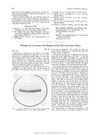
September 2020 in “Biopolymers” Hair's structure and properties change with pH; acidic pH maintains strength and less swelling, while alkaline pH increases water content and swelling.
 7 citations
,
October 1963 in “Textile Research Journal”
7 citations
,
October 1963 in “Textile Research Journal” Merino wool fibers change shape with moisture, while human hair shape stays the same.
 66 citations
,
May 2021 in “Science Advances”
66 citations
,
May 2021 in “Science Advances” Different scaffold patterns improve wound healing and immune response in mouse skin, with aligned patterns being particularly effective.
New methods to classify curly hair types were developed based on shape and strength.
 11 citations
,
January 2014 in “The Scientific World Journal”
11 citations
,
January 2014 in “The Scientific World Journal” Cynatine HNS improves hair and nail quality in 90 days.
 1160 citations
,
November 2018 in “Physiological Reviews”
1160 citations
,
November 2018 in “Physiological Reviews” The document concludes that better targeted treatments are needed for wound healing, and single-cell technologies may improve cell-based therapies.
 28 citations
,
December 2011 in “Biocatalysis and biotransformation”
28 citations
,
December 2011 in “Biocatalysis and biotransformation” PDI helps restore over-bleached hair's strength and structure by attaching special peptides.
 1 citations
,
March 2018 in “bioRxiv (Cold Spring Harbor Laboratory)”
1 citations
,
March 2018 in “bioRxiv (Cold Spring Harbor Laboratory)” The hair treatment made hair grow faster and thicker and strengthened the hair roots.
 July 2026 in “Clinical Cosmetic and Investigational Dermatology”
 Sesbania grandiflora improves hair growth and health.
 45 citations
,
December 2006 in “Biopolymers”
45 citations
,
December 2006 in “Biopolymers” Permanent waving weakens hair by altering its protein structure.
 1 citations
,
March 2019 in “International Journal of Cosmetic Science”
1 citations
,
March 2019 in “International Journal of Cosmetic Science” The model predicts hair breakage based on key hair properties and helps product developers.
 22 citations
,
February 2013 in “Wound Repair and Regeneration”
22 citations
,
February 2013 in “Wound Repair and Regeneration” Mice genetically modified to produce more CD109 in their skin had less inflammation and better healing with less scarring.
 3 citations
,
March 2019 in “Tekstil Ve Konfeksiyon”
3 citations
,
March 2019 in “Tekstil Ve Konfeksiyon” Anatolian native goat down-hair is similar to cashmere and can be used for high-quality textiles.
October 2024 in “Acta Biomaterialia” Collagen makes skin stiff, and preservation methods greatly increase tissue stiffness.
 February 2025 in “International Journal of Cosmetic Science”
 Protein carbonylation is a sensitive marker for oxidative damage in hair, especially from light exposure.
 91 citations
,
January 2009 in “International Journal of Trichology”
91 citations
,
January 2009 in “International Journal of Trichology” Different hair evaluation methods have their own pros and cons, and using multiple methods together is best for accurate hair loss diagnosis and tracking.
 17 citations
,
July 2018 in “International Journal of Cosmetic Science”
17 citations
,
July 2018 in “International Journal of Cosmetic Science” Keratin-based particles safely improve hair strength, smoothness, and heat protection.
 2 citations
,
March 2005 in “International Journal of Cosmetic Science”
2 citations
,
March 2005 in “International Journal of Cosmetic Science” Human hair structure varies by ethnicity, and certain treatments can improve hair condition and appearance.
 March 2005 in “International Journal of Cosmetic Science”
 A new method helps understand hair shine and various products improve hair care.
 29 citations
,
August 2005 in “Biopolymers”
29 citations
,
August 2005 in “Biopolymers” L-cysteine slows down the breaking of bonds in hair due to electrostatic interactions.
 32 citations
,
September 2016 in “Dermatologic Surgery”
32 citations
,
September 2016 in “Dermatologic Surgery” The evidence for using Low-Level Laser Therapy for hair loss is limited and more thorough research is needed.
 11 citations
,
February 2019 in “Frontiers in Physiology”
11 citations
,
February 2019 in “Frontiers in Physiology” Hair properties are interconnected; a comprehensive, cross-disciplinary approach is essential for understanding hair behavior.
 13 citations
,
January 2016 in “Burns & Trauma”
13 citations
,
January 2016 in “Burns & Trauma” Vacuum massage may improve skin elasticity and induce changes in skin cells, but evidence for treating burn scars is insufficient and more research is needed.
 6 citations
,
March 2016 in “PLoS ONE”
6 citations
,
March 2016 in “PLoS ONE” The patient's hair was thinner and had fewer lipids due to a genetic mutation.
 26 citations
,
April 2019 in “Genes”
26 citations
,
April 2019 in “Genes” lncRNA XLOC_008679 and gene KRT35 affect cashmere fineness in goats.
 132 citations
,
January 2017 in “International Journal of Molecular Sciences”
132 citations
,
January 2017 in “International Journal of Molecular Sciences” Fat-derived stem cells show promise for skin repair and reducing aging signs but need more research for consistent results.