 January 2026 in “Acta Dermatovenerologica Alpina Pannonica et Adriatica”
 Accurate diagnosis is crucial for effectively treating severe alopecia and related symptoms.
 September 2025 in “Arthritis Research & Therapy”
 BMS-470539 reduces skin fibrosis and inflammation.

Amino acid storage proteins are essential for maintaining stem cells in female fruit flies.
 June 2025 in “Animal Bioscience”
 miRNA-24 affects goat coat color by controlling proteins involved in pigment production.

CD4 T cells need IFN-γ to cause hair loss in alopecia areata.
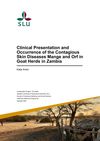 January 2025 in “Epsilon Archive for Student Projects (University of Southampton)”
 Mange and orf are present in some goat herds in Zambia, but more research is needed.

Blocking the Mitochondrial Pyruvate Carrier causes stress in hair follicles, which can be reduced by an ISR inhibitor.
 June 2024 in “Research Square (Research Square)”
 Young women in West Bengal, India, with PCOS often have estrogen resistance, leptin receptor issues, folate deficiency, T2DM, and acanthosis, commonly linked to obesity.

Gender-specific analysis could improve treatment for childhood systemic lupus erythematosus.
 February 2024 in “Biomedical materials”
 Scientists created a lab-grown hair follicle model that behaves like real hair and could improve hair loss treatment research.
 January 2024 in “GeroScience”
 Using radiation to make mice's hair turn gray helps study and find ways to prevent or reverse hair graying.

Black hair's diversity in patterns and textures is influenced by follicle shape and keratin, and it holds cultural, artistic, and mathematical significance.
 December 2023 in “bioRxiv (Cold Spring Harbor Laboratory)”
 AP-2α and AP-2β proteins are essential for healthy adult skin and hair.
 May 2022 in “Gastroenterology”
 Targeting NETs may help reduce fibrosis in Crohn's disease.
 April 2022 in “Research Square (Research Square)”
 Researchers created a stable rabbit cell line for hair research that doesn't age quickly or become cancerous.

Human hair keratins can be turned into useful 3D biomedical scaffolds through a freeze-thaw process.
 July 2021 in “Research Square (Research Square)”
 Semecarpus anacardium leaf extract fights breast cancer and extends survival in mice.

PlacMA hydrogels from human placenta are versatile and useful for cell culture and tissue engineering.

L-PGDS has specific binding sites for its functions and could help in drug delivery system design.
 October 2018 in “Journal of the European Academy of Dermatology and Venereology”
Proretinal nanoparticles are a safe and effective way to deliver retinal to the skin.
 January 2018 in “Stem cell biology and regenerative medicine”
 ATP-dependent chromatin remodeling is crucial for skin development and stem cell function.

TLR3 signaling enhances the immunosuppressive properties of human periodontal ligament stem cells.
 January 2017 in “Springer eBooks”
 The document explains various skin conditions and their treatments.
 April 2016 in “Journal of Investigative Dermatology”
 Blocking Oncostatin M's role in the JAK-STAT pathway can stimulate hair growth in mice.
 April 2016 in “Journal of Investigative Dermatology”
 Blocking Prostaglandin D₂ (PGD₂) could help treat hair loss.
 April 2016 in “Journal of Investigative Dermatology”
 Gypenosides from Gynostemma pentaphyllum were found to have anti-aging effects, increasing skin collagen and reducing wrinkles.
 April 2016 in “Journal of Investigative Dermatology”
 Lithocholic acid helps hair growth and regeneration in alopecia by activating vitamin D receptors.
 January 2015 in “Indian Journal of Medical Biochemistry”
 Men with early balding should be checked for metabolic syndrome, as there's a link between the two.
 January 2012 in “Durham e-Theses (Durham University)”
 Keratin 15 affects cell behavior and characteristics in skin cells.