 January 2024 in “Wiadomości Lekarskie”
 AI can improve early diagnosis and treatment of diabetic foot complications but requires addressing training and ethical challenges.

The system helps lavender plants grow better by monitoring and adjusting their environment.
 March 2026 in “Preprints.org”
 Robotic systems in cosmetic surgery are promising but need more development and research.
 January 2026 in “International Journal of Science and Research (IJSR)”
 AI is now essential in Indian aesthetic medicine.
 June 2023 in “Journal of Cosmetic Dermatology”
 AI and AR are improving cosmetic dermatology but face challenges like data quality and ethical concerns.
 July 2022 in “Bőrgyógyászati és Venerológiai Szemle”
 Technology, like mobile apps and AI, is improving skin condition diagnosis and treatment.
3 citations
,
March 2024 in “arXiv (Cornell University)” The new AI system improves remote skin condition diagnosis and access to care.
SL-HyDE improves medical information retrieval accuracy without needing labeled data.
 November 2025 in “Frontiers in Oncology”
 Sphaeranthus indicus and silver nanoparticles can help treat liver cancer by killing cancer cells.
 January 2024 in “Wiadomości Lekarskie”
 AI and robotics are improving treatment and monitoring of neurodegenerative disorders like Parkinson's.
July 2024 in “Journal of Investigative Dermatology” INTASYL is a promising, adaptable RNAi technology for treating skin cancers.
January 2007 in “Digital Commons @ Butler University (Butler University)” 21 citations
,
January 1997 in “Nephron” Silicon may affect calcium metabolism in dialysis patients, causing symptoms like skin eruptions and abnormal hair growth.
 March 2025 in “Journal of Neonatal Surgery”
 Robotic surgery and AI improve precision and recovery in medicine but face cost and training challenges.
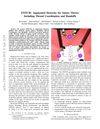 April 2024 in “arXiv (Cornell University)”
 STITCH improves suture accuracy and efficiency, especially with human help.
 45 citations
,
June 2016 in “Anais brasileiros de dermatologia/Anais Brasileiros de Dermatologia”
45 citations
,
June 2016 in “Anais brasileiros de dermatologia/Anais Brasileiros de Dermatologia” Silicon can improve skin and hair health, but more research is needed.
5 citations
,
April 2020 in “Journal of Mind and Medical Sciences” The new device improves surgical accuracy by using a special dye and camera to see inside tissues.
April 2023 in “Journal of Investigative Dermatology” The MDhair app accurately assesses hair loss severity with 94% accuracy.
1 citations
,
March 2007 in “DOAJ (DOAJ: Directory of Open Access Journals)” Skin disorders in Sari differ from other parts of Iran, with acne and hair loss being most common.
 1 citations
,
January 2026 in “Frontiers in Cell and Developmental Biology”
1 citations
,
January 2026 in “Frontiers in Cell and Developmental Biology” AI improves biomaterial design by making it faster, cheaper, and more effective for personalized medicine.
AI can personalize exercise routines to improve skin health.
 October 2025 in “Dermatology Practical & Conceptual”
 ChatGPT 4.0 and Gemini 1.5 Flash are effective for educating patients about androgenetic alopecia, while Deepseek R1 is less reliable.
5 citations
,
April 2024 in “JAAD International” AI can accurately measure hair loss severity in alopecia areata.
 April 2026 in “Cosmetics”
 Robotic systems in cosmetic surgery show promise but face challenges like high costs and need more research and training.
2 citations
,
March 2024 in “JAAD Case Reports” AI can help track and improve hair loss treatment outcomes.
 January 2024 in “Wiadomości Lekarskie”
 Robotic surgery and artificial hearts are revolutionizing cardiac surgery.

AI can predict hair loss patterns to improve care and treatment.
January 2026 in “Vestnik dermatologii i venerologii” AI in dermatology shows high accuracy in diagnosing skin diseases but needs more research for improvement.
December 2025 in “Skin Appendage Disorders” Patients found AI helpful for alopecia diagnosis but want it to support, not replace, doctors.