Search
for
Sort by
Research
690-720 / 1000+ results
research Skin health promoting effects of a proprietary nutraceutical ingredient (SesZen-BioTM): a placebo controlled, double-blind, and randomized clinical study
SesZen-BioTM improves skin health and reduces signs of aging.
research Regulation of the metabolic phenotype of human hepatocytes by glucocorticoids and androgens
Glucocorticoids reduce fat production in liver cells, while androgens increase it in females; manipulating certain enzymes can influence these effects.

research 518 Nutrient and stress sensing as novel physiological regulator of human hair pigmentation and greying: Role of mTORC1 activity
Blocking mTORC1 activity could increase hair pigmentation and potentially reverse greying.
research The Role of Box A ofHMGB1in Enhancing Stem Cell Properties of Human Mesenchymal Cells: A Novel Approach for the Pursuit of Anti-aging Therapy
Box A of HMGB1 can improve stem cell function, aiding anti-aging therapy.
research An unexpected role for keratin 10 end domains in susceptibility to skin cancer
Keratin 10 end domains may increase skin cancer risk by reducing cell death.

research Sphingolipid metabolism orchestrates the establishment of the adult hair follicle stem cell niche to control skin homeostasis
A specific enzyme is essential for proper hair follicle stem cell development and healthy skin.
research Progesterone Pretreatment Enhances Serotonin-Stimulated BDNF Gene Expression in Rat C6 Glioma Cells Through Production of 5α-Reduced Neurosteroids

research Dual deficiency of melatonin and dihydrotestosterone promotes stromal cell damage and mediates prostatitis via the cGAS-STING pathway in sleep-deprived mice
Lack of sleep in mice leads to prostatitis by reducing certain hormones and activating an inflammatory pathway, which can be temporarily fixed with normal sleep.
research Role of sgk1 in cancer: a bibliometric analysis from 2013 to 2023—review article
SGK1 is important in cancer growth and treatment resistance, and targeting it could improve therapies.
research 132 Design of an in vitro skin 3D model mimicking a disruption of the barrier function
Activating the hexosamine pathway can improve skin health and increase hair follicle stem cells.
research Deficiency of kinase suppressor of Ras1 prevents oncogenic ras signaling in mice.
Lack of KSR1 stops certain skin tumors in mice.
research Activation of Nrf2 in keratinocytes causes chloracne (MADISH)‐like skin disease in mice
Activating Nrf2 in skin cells causes skin disease similar to chloracne in mice.

research Minoxidil Stimulates Elastin Expression in Aortic Smooth Muscle Cells
research Ishige sinicola extract stimulates osteoblast proliferation and differentiation via the bone morphogenetic protein 2/runt-related gene 2 signalling pathway
Ishige sinicola extract helps bone-building cells grow and mature, which could aid in treating osteoporosis.
research Grp1-associated scaffold protein regulates skin homeostasis after ultraviolet irradiation
Grasp protein helps maintain skin health after UVB exposure.
research The Parathyroid Hormone Second Receptor PTH2R and its Ligand Tuberoinfundibular Peptide of 39 Residues TIP39 Regulate Intracellular Calcium and Influence Keratinocyte Differentiation
TIP39 and PTH2R help control calcium levels and skin cell development.

research 1117 PX-12 inhibits NLRP3 inflammasome activation to treat psoriasis
PX-12 may help treat psoriasis by blocking inflammation and cell death.

research Vitamin E TPGS based transferosomes augmented TAT as a promising delivery system for improved transdermal delivery of raloxifene
The new delivery system improved raloxifene's skin absorption and effectiveness against cancer cells.

research Expansion of the spectrum of ITGB6-related disorders to adolescent alopecia, dentogingival abnormalities and intellectual disability
A rare ITGB6 gene variant causes intellectual disability, hair loss, and dental issues.
research NEW NON SYNTHETIC MOLECULES ARE ABLE TO INHIBIT APOPTOSIS IN DERMAL PAPILLAR CELLS OF HAIR BULB
New molecules can prevent cell death in hair follicles.
research Pharmacological activities of extracts from different parts of Cirsium japonicum var spinossimum
Cirsium japonicum var. spinossimum seeds may help reduce inflammation and fight cancer.
research 130 Deciphering the role of the hexosamine pathway in skin homeostasis
The hexosamine pathway helps maintain healthy skin by affecting the skin's structure and possibly increasing hair follicle stem cells.
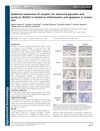
research Epidermal expression of receptor for advanced glycation end products (RAGE) is related to inflammation and apoptosis in human skin
Skin RAGE levels are linked to inflammation and cell death.
research CBL1‐CIPK26‐mediated phosphorylation enhances activity of the NADPH oxidase RBOHC, but is dispensable for root hair growth
A specific protein complex increases the activity of a plant enzyme, but this action is not required for plant root hair growth.
research Close Shave for a Keratin Disorder—K6hf Polymorphism Linked to Pseudofolliculitis Barbae
research Intramembrane Proteolysis of Astrotactins
Astrotactin-2 is cleaved in a specific way that helps understand its maturation.

research 702 dsRNA induces ectopic KRT9 expression via WNT/β-catenin-mediated signaling
Double-stranded RNA activates a pathway that causes a skin protein to be expressed in the wrong place.
research We-P13:320 The clinical significance of serum 7-ketocholesterol levels in patients with metabolic syndrome or acute myocardial infarction
research Keratinocyte-Specific Onset of Serine Protease BSSP Expression in Experimental Carcinogenesis
BSSP may help skin tumors grow and could be a marker or target for skin cancer treatment.