Higher PD-1 levels mean fewer CD8+ T cells in alopecia areata hair follicles.
 January 2023 in “Annals of Dermatology”
 Patients with a specific genetic variant have more severe alopecia areata and higher recurrence rates.
 November 2022 in “Journal of Investigative Dermatology”
 Low oxygen levels affect the behavior of certain proteins in human skin cells.
 September 2022 in “bioRxiv (Cold Spring Harbor Laboratory)”
 Removing Mediator 1 causes teeth cells to turn into hair cells.

Wavy sinus hairs in cats are linked to feline leukemia virus infection.
April 2020 in “BMC endocrine disorders” A woman with childhood growth hormone deficiency had multiple hormone deficiencies and developed serious lung and kidney problems later in life.
 August 2019 in “Journal of Investigative Dermatology”
 The study found that tight junctions reach the top layer of the skin's stratum granulosum, not just the second top layer as previously thought.
January 2019 in “International Journal of Plant Animal and Environmental Sciences” The extract from marine green alga Chlamydomonas sp. W80 has antioxidant, anti-inflammatory, anti-aging, hair growth, immune-boosting, and skin lightening effects.
August 2018 in “Journal of Investigative Dermatology” April 2018 in “The journal of investigative dermatology/Journal of investigative dermatology” A high-fat diet worsens neutrophilic folliculitis by increasing certain chemokines.
 April 2018 in “Journal of Investigative Dermatology”
 Researchers found a substance in chicken egg yolk that helps hair grow.
 January 2018 in “Journal of translational science”
 Eating alfalfa sprouts every day can raise testosterone levels in middle-aged men, but broccoli sprouts don't have this effect.
 September 2016 in “Journal of dermatological science”
 Epidermal stem cells use integrin β1 and α6 as markers and CD271+ cells help maintain skin health and heal wounds.
January 2016 in “Institutional Repositories DataBase (IRDB)” Sebaceous glands help study fatty acid transporters and binding proteins.
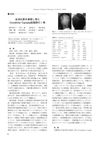 January 2014 in “Progress of Digestive Endoscopy”
 Prednisolone improved symptoms in a woman with Cronkhite-Canada syndrome, but regular screenings are needed due to cancer risk.
 January 2014 in “Sen'i Gakkaishi”
 Researchers developed a method to identify animal fibers in textiles, which works on processed and blended materials.
November 2013 in “Faculty Opinions – Post-Publication Peer Review of the Biomedical Literature” Keratin 79 cells help form and regenerate hair canals.
 June 2013 in “Faculty Opinions – Post-Publication Peer Review of the Biomedical Literature”
 FGF9 from certain cells can trigger new hair growth during wound healing, but humans have fewer of these cells, which may limit hair regrowth.
 December 2012 in “Journal of Dermatological Science”
 Estrogen increases a growth factor in hair cells which might affect hair loss.
July 2009 in “International Journal of Cosmetic Science” Japanese women's curved hair has an uneven internal structure and varied amino acid composition.
New therapies for hair loss are being developed due to advances in understanding hair growth mechanisms.
 June 1996 in “Journal of Dermatological Science”
 Two new compounds were found that could promote hair growth as well or better than minoxidil.
March 1990 in “Journal of Dermatological Science” 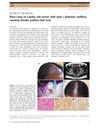 August 2019 in “Journal of Dermatology”
 Woman with diabetes had hair loss due to rare ovarian tumor; surgery improved hair growth.
 September 2012 in “Faculty Opinions – Post-Publication Peer Review of the Biomedical Literature”
 Scientists successfully created fully functional hair follicles using bioengineering methods and stem cells.
 June 2012 in “Faculty Opinions – Post-Publication Peer Review of the Biomedical Literature”
 Six new risk spots for early hair loss were found, which also link to Parkinson's disease and lower fertility. Two genes, FOXA2 and HDAC4, could be new treatment targets. Hair loss might also be connected to heart disease, metabolic syndrome, and prostate cancer.
 May 2012 in “Faculty Opinions – Post-Publication Peer Review of the Biomedical Literature”
 Prostaglandin D2, found in higher levels in bald scalps, stops hair growth, suggesting that blocking its receptor could potentially treat hair loss.
 August 2011 in “Faculty Opinions – Post-Publication Peer Review of the Biomedical Literature”
 5% minoxidil foam used once daily is as effective as 2% minoxidil solution used twice daily for hair loss in women, but with fewer side effects like itching and dandruff.
 January 2011 in “Faculty Opinions – Post-Publication Peer Review of the Biomedical Literature”
 Bald men with male pattern baldness still have hair stem cells, but lack certain cells needed for hair growth.