
Menopause-related skin changes may increase fungal infections and inflammation.
 January 2025 in “International Journal of Dermatology Venereology and Leprosy Sciences”
 Obesity worsens skin health and losing weight can improve skin conditions.
 January 2025 in “Medical Research Archives”
 Sex hormones are crucial for healthy skin and managing skin conditions.
 January 2024 in “International Journal of Homoeopathic Sciences”
 Homeopathy may help improve acne scars and emotional well-being.
 December 2023 in “Acta Facultatis Medicae Naissensis”
 Cosmeceuticals are important for managing skin issues during the COVID-19 pandemic.

Silk sericin dressing with collagen heals wounds faster and improves scar quality better than Bactigras.
 January 2020 in “Veterinary world/Veterinary World”
 The natural topical treatment improved rabbits' skin and hair condition.
 April 2018 in “Deleted Journal”
 Skin grafts are a common, minimally invasive way to close wounds in dogs, but better methods are still being sought.
 November 2017 in “Research Journal of Health Sciences”
 Skin infections and eczema were most common in all ages, acne in teens and young adults, and nutritional skin problems and infestations in children.
 September 2015 in “Actas Dermo-Sifiliográficas”
 People with advanced chronic kidney disease often have skin problems, which can be treated with various medications and procedures to improve their quality of life.
 September 2009 in “Dermato-endocrinology”
 Good nutrition and vitamins are important for healthy skin and can prevent diseases.
 November 2004 in “Medical Journal of Indonesia”
 Hormonal imbalances can cause skin and hair problems in women, and treatments that block male hormones can help.
 April 1955 in “Archives of pediatrics & adolescent medicine”
 Children's skin diseases need special care and treatment.
 April 2026 in “Inflammopharmacology”
 Punica granatum leaf extract may help treat skin fibrosis by reducing inflammation and oxidative stress.
 April 2026 in “Journal of Pharmaceutical Investigation”
 Nanotechnology could improve treatment for scars and atopic dermatitis by targeting skin issues more effectively.
 March 2026 in “Food, Nutrition and Health.”
 Collagen peptides may help reduce skin aging by improving elasticity and hydration.
 March 2026 in “Nature Communications”
 Genetic factors, skin barrier, immune function, and obesity influence risk of fungal skin infections.
 January 2026 in “Forum Dermatologicum”
 Skin symptoms often reveal hormonal imbalances in PCOS.
 October 2025 in “Frontiers in Immunology”
 Platelet-rich plasma might help treat eczema by reducing inflammation and repairing the skin.
 July 2025 in “International Journal of Pharmaceutical Research and Development”
 Exosomes can improve skin treatments with fewer side effects.
 June 2024 in “International Journal of Advanced Research in Science Communication and Technology”
 Herbal extracts like Ficus religiosa may help with hair growth and skin rejuvenation.
 April 2024 in “Cell death and differentiation”
 Cell death shapes skin stem cell environments, affecting inflammation, repair, and cancer.
 November 2022 in “LA Referencia (Red Federada de Repositorios Institucionales de Publicaciones Científicas)”
 Platelet-rich fibrin speeds up burn wound healing in rabbits.
 November 2021 in “International Journal of Research in Medical Sciences & Technology”
 Skin surface chemistry and OCT can improve skin disease diagnosis.
 November 2021 in “Egyptian Journal of Medical Microbiology”
 COVID-19 protective measures led to skin irritation, hair loss, and brittle nails; using skin-friendly products and a healthy diet is recommended.
 April 2020 in “bioRxiv (Cold Spring Harbor Laboratory)”
 Skin healing from blisters can delay hair growth as stem cells focus on repairing skin over developing hair.
 January 2018 in “Stem cell biology and regenerative medicine”
 The conclusion is that the nuclear lamina and LINC complex in skin cells respond to mechanical signals, affecting gene expression and cell differentiation, which is important for skin health and can impact skin diseases.
 April 2017 in “The journal of investigative dermatology/Journal of investigative dermatology”
 HSD11b1 affects skin nerves and increases non-histaminergic itch.
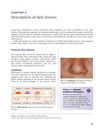
The document explains different types of skin lesions and their characteristics, causes, and related conditions.
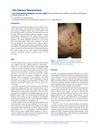 October 2016 in “Elsevier eBooks”
 Common noncancerous skin diseases have various treatments, including topical applications, light therapy, surgery, and medications, with psychological support being important.