 109 citations
,
July 1993 in “The journal of investigative dermatology/Journal of investigative dermatology”
109 citations
,
July 1993 in “The journal of investigative dermatology/Journal of investigative dermatology” Hair color production is closely linked to the active growth phase of hair in mice and may also influence hair growth itself.
 86 citations
,
October 2005 in “Experimental Dermatology”
86 citations
,
October 2005 in “Experimental Dermatology” The Foxn1 gene mutation causes hairlessness and immune system issues, and understanding it could lead to hair growth disorder treatments.
 59 citations
,
September 2007 in “Biochemical and Biophysical Research Communications”
59 citations
,
September 2007 in “Biochemical and Biophysical Research Communications” The TRPV3 gene mutation affects hair growth by keeping mice in the growth phase longer, which could help treat hair loss.
39 citations
,
January 2020 in “Frontiers in Genetics” PDGFC gene may help select goats with desirable curly wool traits.
 15 citations
,
July 2016 in “Biochemical Journal”
15 citations
,
July 2016 in “Biochemical Journal” Wnt proteins from certain skin cells are crucial for normal hair growth and renewal.
 9 citations
,
July 2020 in “Biomedicine & Pharmacotherapy”
9 citations
,
July 2020 in “Biomedicine & Pharmacotherapy” Mitochondrial therapy and platelet-rich plasma therapy both stimulated hair regrowth in aging mice, with mitochondrial therapy showing similar effectiveness to plasma therapy.
1 citations
,
January 2024 in “International journal of molecular sciences” TRPV4 helps cells repair tissue and reduce scarring by controlling calcium levels.
1 citations
,
May 2022 in “International journal of molecular sciences” Faulty LEF1 activation causes faster skin cell differentiation in premature aging syndrome.
 April 2026 in “BMC Genomics”
 Hair type differences in cashmere goats are linked to keratin and cytoskeletal organization.
 April 2019 in “Journal of Investigative Dermatology”
 Researchers fixed gene mutations causing a skin disease in stem cells, which then improved skin grafts in mice.
71 citations
,
February 2012 in “The American Journal of Human Genetics” A specific ATR gene mutation is linked to a hereditary oropharyngeal cancer syndrome.
 28 citations
,
February 2010 in “British journal of dermatology/British journal of dermatology, Supplement”
28 citations
,
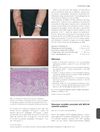
February 2010 in “British journal of dermatology/British journal of dermatology, Supplement” WNT10A mutations cause varied symptoms in patients with odonto-onycho-dermal dysplasia.
 3 citations
,
July 2022 in “Stem Cell Research & Therapy”
3 citations
,
July 2022 in “Stem Cell Research & Therapy” Turning off a specific gene in stem cells speeds up skin healing by helping cells move better.
 1 citations
,
September 2019 in “Journal of Investigative Dermatology”
1 citations
,
September 2019 in “Journal of Investigative Dermatology” The research showed that CRISPR/Cas9 can fix mutations causing a skin disease in stem cells, which then improved skin grafts in mice, but more work on safety and efficiency is needed.
 June 2026 in “Communications Biology”
 Hoxc13 and hair keratin are needed for forming rough skin on frog mating pads.
March 2024 in “International journal of molecular sciences” Three specific genetic variants cause severe skin issues in children with EBS, highlighting the need for early genetic screening.
November 2019 in “Harper's Textbook of Pediatric Dermatology” Netherton syndrome is a genetic skin disorder causing severe skin issues and requires careful treatment to protect the skin barrier.
 April 2017 in “Journal of Investigative Dermatology”
 Deleting the CRIF1 gene in mice disrupts skin and hair formation, certain proteins affect hair growth, a new compound may improve skin and hair health, blood cell-derived stem cells can create skin-like structures, and hair follicle stem cells come from embryonic cells needing specific signals for development.
 38 citations
,
April 2017 in “PLOS Genetics”
38 citations
,
April 2017 in “PLOS Genetics” GRHL3 is important for controlling gene activity in skin cells during different stages of their development.
30 citations
,
June 2022 in “Animals” Key genes, including KRT39 and KRT74, influence hair length in Inner Mongolia cashmere goats.
29 citations
,
December 2004 in “Developmental biology” cDermo-1 causes dense skin, feathers, and scales in chickens.
 20 citations
,
September 2021 in “Nature communications”
20 citations
,
September 2021 in “Nature communications” Cat color patterns are determined early in development by gene expression and epidermal changes, with the Dickkopf 4 gene playing a crucial role.
 16 citations
,
September 2016 in “Experimental Dermatology”
16 citations
,
September 2016 in “Experimental Dermatology” Two-photon microscopy effectively tracks live stem cell activity in mouse skin with minimal harm and clear images.
 14 citations
,
May 2020 in “Archiv für Tierzucht”
14 citations
,
May 2020 in “Archiv für Tierzucht” Researchers identified genes that may affect hair growth in Cashmere goats.
10 citations
,
September 2016 in “Animal genetics” Researchers identified key genes and proteins linked to wool growth in sheep.
2 citations
,
January 2016 in “Sarcoma” Inducing survivin in normal tissues can protect against radiation damage.
 1 citations
,
August 2023 in “Genome research”
1 citations
,
August 2023 in “Genome research” The spiny mouse regenerates ear tissue asymmetrically, with gene expression differences possibly explaining its unique healing abilities.
October 2025 in “Animals” miR-200a reduces goose fibroblast growth by targeting PITX2 in the Wnt pathway.
Tannin improved dermatitis symptoms and may help hair growth in affected mice.
 April 2018 in “Journal of Investigative Dermatology”
 Lymphocytes, a type of immune cell, are crucial for wound healing as they help remodel damaged areas and reduce inflammation.