1 citations
,
September 2015 in “Pathology - Research and Practice” Stress during pregnancy can thin fetal skin.

Silk sericin dressing with collagen heals wounds faster and improves scar quality better than Bactigras.
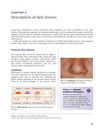
The document explains different types of skin lesions and their characteristics, causes, and related conditions.
 March 2026 in “Buletin Veteriner Udayana”
 The dog's skin condition and worm infection improved with a combination of candlenut oil and other treatments.
23 citations
,
May 2023 in “Cell Proliferation” TGF-β and FGF pathways are crucial for skin development and regeneration.
 479 citations
,
January 2005 in “BioEssays”
479 citations
,
January 2005 in “BioEssays” Hair follicle development is controlled by interactions between skin tissues and specific molecular signals.
 66 citations
,
August 2001 in “Experimental Dermatology”
66 citations
,
August 2001 in “Experimental Dermatology” Human hair follicle cells can grow hair when put into mouse skin if they stay in contact with mouse cells.
25 citations
,
January 2003 in “Plastic & Reconstructive Surgery” Nail-matrical fibroblasts can make non-nail cells produce hard keratin, useful for nail repair.
 20 citations
,
April 2011 in “Dermatologic Surgery”
20 citations
,
April 2011 in “Dermatologic Surgery” Laser therapy helped new hair grow in scarred skin for three patients.
January 2020 in “Open University of Cape Town (University of Cape Town)” Efficient culture methods are needed to keep human keratinocytes undifferentiated for hair follicle induction.
 26 citations
,
June 2005 in “Journal of The American Academy of Dermatology”
26 citations
,
June 2005 in “Journal of The American Academy of Dermatology” Some patients receiving pegylated interferon alfa injections developed skin necrosis, requiring treatment adjustments or discontinuation.
77 citations
,
August 1986 in “Archives of Dermatology” Vitamin B12 deficiency can cause skin and hair color changes, which are reversible with treatment.
 67 citations
,
May 2014 in “International Journal of Molecular Sciences”
67 citations
,
May 2014 in “International Journal of Molecular Sciences” Using your own skin cells can help repair aging skin and promote hair growth.
 23 citations
,
September 2015 in “PLOS ONE”
23 citations
,
September 2015 in “PLOS ONE” Mesenchymal stem cells, especially injected into the skin, heal wounds faster and better than chitosan gel or other treatments.
11 citations
,
August 1986 in “Archives of Dermatology” Vitamin B12 deficiency can cause skin and hair color changes, which can be reversed with treatment.
9 citations
,
February 2013 in “Dermatologic clinics” Some new treatments for children's skin conditions are effective, but risks must be weighed.
 6 citations
,
February 1974 in “The BMJ”
6 citations
,
February 1974 in “The BMJ” The document concludes that scalp disorders can be treated with hair washing, specific shampoos, medications, and sometimes surgery or hair transplants, but hereditary baldness is untreatable.
 3 citations
,
November 2022 in “Facial plastic surgery & aesthetic medicine”
3 citations
,
November 2022 in “Facial plastic surgery & aesthetic medicine” Using ultrasound to guide temple filler injections improves safety and accuracy.
 September 2024 in “Cureus”
 Removing breast implants resolved the patient's symptoms.
September 1986 in “Journal of the American Academy of Dermatology” The conference covered topics like aging skin and acne therapy, with a highlight on steroid injections for alopecia areata.
19 citations
,
March 2016 in “British journal of dermatology/British journal of dermatology, Supplement” Trichodysplasia spinulosa is a rare skin disease in immunocompromised patients caused by a specific virus targeting hair follicle cells.
 16 citations
,
March 2013 in “International Journal of Dermatology”
16 citations
,
March 2013 in “International Journal of Dermatology” Immigrant Latino workers in North Carolina, especially in poultry processing, often have skin diseases like fungal infections and acne.
6 citations
,
September 2013 in “Journal of Evolution of Medical and Dental Sciences” Low CD4 counts in HIV patients are linked to more skin disorders.
 January 2022 in “Turkiye Klinikleri Journal of Dermatology”
 COVID-19 patients with skin signs often stayed in the hospital for less time than those without skin signs.
October 2021 in “Utah State Research and Scholarship (Utah State University)” Folic acid deficiency worsens rotaviral infection, while zinc deficiency affects physical health but not the infection.
 February 2025 in “Buletin Veteriner Udayana”
 The dog's scabies was successfully treated, leading to improved symptoms and hair regrowth.
 October 2021 in “Journal of Investigative Dermatology”
 Dkk4 protein is necessary for the proper development and arrangement of hair follicles.
 30 citations
,
May 2014 in “American Journal of Clinical Dermatology”
30 citations
,
May 2014 in “American Journal of Clinical Dermatology” The conclusion is that better understanding and more research are needed to effectively manage follicular and scarring disorders in skin of color, with an emphasis on patient education and cultural awareness.
 29 citations
,
November 2014 in “Experimental Dermatology”
29 citations
,
November 2014 in “Experimental Dermatology” Injecting alpha-melanocyte-stimulating hormone in mice improved skin healing and reduced scarring.
18 citations
,
January 2015 in “International Journal of Trichology” Intralesional steroids are more effective for hair regrowth in alopecia areata than NBUVB, but combining them doesn't improve results.