 October 2025 in “Indian Journal of Plastic Surgery”
 Stem cells show promise in anti-aging and reconstructive surgery, but more research is needed.
 September 2025 in “The American Journal of Medical Sciences and Pharmaceutical Research”
 Thinning and micro-graduation techniques can effectively and reversibly correct women's hairlines.
 September 2025 in “Tạp chí Da liễu học Việt Nam”
 Combining oral methylprednisolone with microneedle radiofrequency improves hair growth in alopecia areata but may cause pain and side effects.
 January 2025 in “Bright Sky Publications eBooks”
 Aesthetic medicine is rapidly advancing with new technologies for safer, personalized, and less invasive treatments.
 November 2024 in “Journal of Translational Internal Medicine”
 Exosomes from stem cells help hair regrowth by activating a specific signaling pathway.
 October 2024 in “International Journal of Research in Dermatology”
 Mintop serum effectively reduces hair fall and promotes new growth safely.
 August 2024 in “Scholars Journal of Applied Medical Sciences”
 Combining PRP therapy with minoxidil is the most effective treatment for hair loss in men.
 August 2024 in “Journal of Contemporary Medical Practice”
 Professor Ma Shuanquan treats hair loss by using Chinese medicine to improve liver, spleen, and kidney health.
 October 2023 in “Frontiers in medicine”
 Targeted immunotherapy could be a promising new treatment for hair regrowth.
 September 2023 in “Journal of the turkish academy of dermatology”
 Men with male pattern baldness had higher body fat and obesity-related measurements but similar heart fat and artery thickness compared to healthy men.
 September 2023 in “International journal of biomedicine”
 Minoxidil might help treat acne scars by reducing collagen buildup.
 August 2023 in “The Indonesian Biomedical Journal”
 Rosemary essential oil improved hair growth and thickness in UVB-exposed mice.
Various treatments exist for hair loss, but no definitive solution.
 January 2023 in “International Journal of Pharmaceutical Research and Development”
 Nanotechnology therapies can help improve quality of life for those with hair loss.

The document concludes that non-endocrine alopecia in pets varies in treatment effectiveness and often has a poor prognosis, especially in cats.
 January 2019 in “Georg Thieme Verlag eBooks”
 Platelet-Rich Plasma (PRP) therapy can effectively treat various hair loss conditions, improve hair count, thickness, and density, and potentially speed up results when combined with surgical techniques.
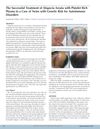 January 2018 in “Hair transplant forum international”
 PRP injections can effectively treat alopecia areata.
 January 2018 in “Stem cells in clinical applications”
 Exosomes show promise for tissue repair and regeneration with advantages over traditional cell therapies.
 April 2014 in “Journal of Aesthetic Nursing”
 Mesotherapy with natural extracts and vitamins can improve hair loss and promote regrowth in most women.
 39 citations
,
March 2018 in “Archives of Dermatological Research”
39 citations
,
March 2018 in “Archives of Dermatological Research” Androgens may block hair growth signals, targeting this could treat hair loss.
 25 citations
,
March 2017 in “Journal of Dermatological Treatment”
25 citations
,
March 2017 in “Journal of Dermatological Treatment” Platelet-rich plasma treatment for non-scarring hair loss shows mixed results and needs more research.
 22 citations
,
October 2018 in “Aesthetic Plastic Surgery”
22 citations
,
October 2018 in “Aesthetic Plastic Surgery” Understanding hair follicle biology and stem cell control could lead to new hair loss treatments.
 6 citations
,
September 2019 in “Archives of Dermatological Research”
6 citations
,
September 2019 in “Archives of Dermatological Research” Found 32 genes linked to male baldness, affecting hair growth and stress-related pathways.
 1 citations
,
July 2019 in “British Journal of Dermatology”
1 citations
,
July 2019 in “British Journal of Dermatology” Minoxidil was more effective than laser therapy for hair loss, and the report also highlighted the need for more research on PRP for a different hair loss condition, the impact of social media on alopecia views, and a warning on turmeric causing nail discoloration.
 January 2026 in “Theoretical and Natural Science”
 Targeting Lgr5+ stem cells and Wnt signaling may effectively treat hair loss.
 December 2024 in “Research Square (Research Square)”
 Placental stem cell exosome therapy improves hair growth and reduces hair loss.
 October 2024 in “International Journal of Biology Pharmacy and Allied Sciences”
 Herbal treatments are gaining interest as alternatives for hair loss.
 February 2024 in “Sohag Medical Journal”
 Various local treatments for alopecia areata show promise, but individualized plans and more research are needed.
 November 2023 in “International Journal of Medical Case Reports and Reviews”
 PRP shows promise in tissue repair but its effectiveness in otolaryngology is still debated.
 September 2023 in “Frontiers in medicine”
 The mTOR signaling pathway is crucial for hair health and targeting it may lead to new hair loss treatments.