 December 2024 in “International Journal of Molecular Sciences”
 Human umbilical cord stem cell vesicles may help treat aging and related diseases.
 August 2024 in “Applied Sciences”
 Plant extracts may help prevent or reverse hair graying.
 June 2024 in “Molecules/Molecules online/Molecules annual”
 Platycladus orientalis flavonoids protect balding hair from UV damage and slow hair color change.
 May 2024 in “Proteome science”
 Bleaching damages hair by reducing the quality of keratin and keratin-associated proteins.
Light exposure is crucial for health, helping prevent and treat illnesses.
 June 2023 in “Frontiers in Bioengineering and Biotechnology”
 The conclusion is that accurately replicating the complexity of the extracellular matrix in the lab is crucial for creating realistic human tissue models.
 April 2023 in “Dentistry”
 Baby teeth stem cells can potentially grow organs and treat diseases.
May 2005 in “Journal of the American Academy of Dermatology” March 2026 in “Journal of Investigative Dermatology” March 2004 in “Journal of the American Academy of Dermatology” Middle-aged women with cicatricial alopecia/lichen planopilaris responded well to treatments like ketoconazole shampoo and steroids.
19 citations
,
January 2013 in “Frontiers in Neuroanatomy” Zebrafish can help study and develop treatments for hearing loss.
15 citations
,
November 2024 in “Materials” PHAs are promising biodegradable materials for medical and dental uses.
1235 citations
,
December 2013 in “Nature” Two fibroblast types shape skin structure and repair differently.
 1039 citations
,
February 2009 in “Nature Reviews Molecular Cell Biology”
1039 citations
,
February 2009 in “Nature Reviews Molecular Cell Biology” Skin stem cells are crucial for maintaining and repairing the skin and hair, using a complex mix of signals to do so.
 788 citations
,
February 2007 in “Nature”
788 citations
,
February 2007 in “Nature” The document concludes that skin stem cells are important for hair growth and wound healing, and could be used in regenerative medicine.
 610 citations
,
April 2014 in “Nature Reviews Immunology”
610 citations
,
April 2014 in “Nature Reviews Immunology” The document concludes that understanding how the skin's immune system and inflammation work is complex and requires more research to improve treatments for skin diseases.
578 citations
,
April 1993 in “Cell” TGFα gene mutation in mice causes abnormal skin, wavy hair, curly whiskers, and sometimes eye inflammation.
 555 citations
,
July 2001 in “Genes & Development”
555 citations
,
July 2001 in “Genes & Development” Tcf3 and Lef1 are key in deciding skin stem cell roles.
527 citations
,
December 2011 in “Proceedings of the National Academy of Sciences” Dextran hydrogels improve burn wound healing and skin regeneration.
 518 citations
,
November 2014 in “Science”
518 citations
,
November 2014 in “Science” Skin grafting and wound treatment have improved, but we need more research to better understand wound healing and create more effective treatments.
 499 citations
,
September 2011 in “Cell”
499 citations
,
September 2011 in “Cell” Fat-related cells are important for initiating hair growth.
467 citations
,
May 1999 in “Molecular Cell” Activating c-Myc in skin causes rapid cell growth and changes, but these effects are reversible.
441 citations
,
May 1996 in “Journal of Cell Science” Keratin 19 helps identify skin stem cells, with its presence varying by body location, age, and culture stage.
 426 citations
,
August 2014 in “Nature Medicine”
426 citations
,
August 2014 in “Nature Medicine” Skin stem cells interacting with their environment is crucial for maintaining and regenerating skin and hair, and understanding this can help develop new treatments for skin and hair disorders.
425 citations
,
June 2020 in “Nature” Scientists created human skin with hair from stem cells, which could help treat hair loss and skin conditions.
 418 citations
,
September 2012 in “Nature”
418 citations
,
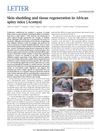
September 2012 in “Nature” African spiny mice can regenerate skin, hair, and cartilage, but not muscle, and their unique abilities could be useful for regenerative medicine.
 405 citations
,
May 2007 in “Journal of The American Academy of Dermatology”
405 citations
,
May 2007 in “Journal of The American Academy of Dermatology” Obesity affects skin health, causing conditions like acanthosis nigricans and may require different treatment approaches.
 401 citations
,
January 2013 in “Postepy Dermatologii I Alergologii”
401 citations
,
January 2013 in “Postepy Dermatologii I Alergologii” The paper concludes that understanding melanocyte development can help in insights into skin diseases and melanoma diversity.
353 citations
,
November 2014 in “Molecular immunology” Porcine skin is very similar to human skin, making it a useful model for research.
318 citations
,
October 1998 in “The Journal of Cell Biology” Keratin 17 is important for skin development and may help define skin cell types.