 1 citations
,
April 2017 in “Journal of Investigative Dermatology”
1 citations
,
April 2017 in “Journal of Investigative Dermatology” Topical glucocorticoids thin the skin and change collagen structure.
67 citations
,
September 2017 in “Cell Reports” Caloric restriction improves skin and fur structure but can cause muscle loss and movement issues.
June 2026 in “Scientific Reports” Testosterone makes XX skin more like male skin by changing its structure and cell makeup.
April 2015 in “The FASEB Journal” Nitrogen mustard causes DNA damage and structural changes in mouse skin hair follicles, but some recovery occurs after 5 days.
 1 citations
,
July 2016 in “Elsevier eBooks”
1 citations
,
July 2016 in “Elsevier eBooks” Understanding skin structure and development helps diagnose and treat skin disorders.
 17 citations
,
February 2015 in “Cell Death and Disease”
17 citations
,
February 2015 in “Cell Death and Disease” Inhibiting AP1 in mice skin causes structural changes and weakens the skin barrier.
14 citations
,
March 2014 in “Experimental and Molecular Pathology” Sulfur mustard damages hair follicles and sebaceous glands in mice.
69 citations
,
May 1997 in “Veterinary Pathology” The angora mouse mutation causes long hair and hair defects due to a gene deletion.
 September 2017 in “Journal of Investigative Dermatology”
 The Siah1 and Siah2 genes are active in mouse skin development and hair growth, especially right after birth.
9 citations
,
October 1976 in “Journal of Cutaneous Pathology” Human growth hormone treatment improved skin thickness and structure in osteoporosis patients.
 September 1998 in “Journal of The European Academy of Dermatology and Venereology”
 The conclusion is that proper recognition and treatment of skin conditions are crucial for the elderly due to changes in skin, nails, and hair with age, and the impact of these conditions on health and mobility.
 20 citations
,
May 2020 in “Experimental Dermatology”
20 citations
,
May 2020 in “Experimental Dermatology” Aging scalp skin contributes to hair aging and loss, and more research is needed to develop better hair loss treatments.
28 citations
,
September 2021 in “EMBO reports” Osthole inhibits the TRPV3 channel by binding to specific sites, potentially aiding drug development for skin diseases and cancers.
 3 citations
,
January 2019 in “Jikken doubutsu ihou/Jikken doubutsu/Experimental animals/Jikken Dobutsu”
3 citations
,
January 2019 in “Jikken doubutsu ihou/Jikken doubutsu/Experimental animals/Jikken Dobutsu” Pigs without the Hairless gene showed skin and thymus changes, useful for studying human hair disorders.
2 citations
,
June 2013 in “Journal of Clinical Pathology” The LMNA mutation affects skin structure even in asymptomatic carriers.
January 2011 in “Leather Science and Engineering” Processing changes Sichuan rabbit skin structure by altering collagen fiber arrangement and porosity.
252 citations
,
November 1995 in “The EMBO Journal” Blocking EGFR in mice causes hair loss and skin changes.
1 citations
,
January 2021 in “Brazilian Journal of Medical and Biological Research” Constant light exposure during pregnancy changes newborn rabbits' skin, affecting hair follicles, skin thickness, and pigment cells.
 April 2023 in “The journal of investigative dermatology/Journal of investigative dermatology”
 Developing hair follicles form from ring-shaped patterns, with future stem cells originating from the outer ring, not the upper layers, as previously thought.
 4 citations
,
January 2023 in “Experimental dermatology”
4 citations
,
January 2023 in “Experimental dermatology” Skin thickness decreases and structural changes occur with both ageing and sun exposure in certain skin types.
2 citations
,
October 2024 in “Journal of Cosmetic Dermatology” Thioglycolate compounds in brow lamination can cause skin irritation and other health issues.
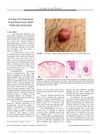 1 citations
,
February 2017 in “The American journal of dermatopathology/American journal of dermatopathology”
1 citations
,
February 2017 in “The American journal of dermatopathology/American journal of dermatopathology” A man with a skin nodule was diagnosed with a rare skin condition called cutaneous focal mucinosis, which can be confused with other skin cancers.
 108 citations
,
January 2003 in “Journal of Cosmetic Dermatology”
108 citations
,
January 2003 in “Journal of Cosmetic Dermatology” Wrinkles form due to structural skin changes and vary in type and treatment response.
 April 2023 in “The journal of investigative dermatology/Journal of investigative dermatology”
 The TRPV3 channel structure changes linked to severe itch and hyperkeratosis were identified using cryo-EM.
 April 2018 in “Journal of Investigative Dermatology”
 Hair follicle stem cells can change their role to ensure proper hair development.
November 2025 in “BMC Genomics” Wrinkled skin in Xiang pigs is linked to gene changes related to oxidative stress and the extracellular matrix.
9 citations
,
January 2023 in “Langmuir” Solubility in skin changes with hydration, affecting chemical absorption.
 96 citations
,
January 1997 in “Clinics in Dermatology”
96 citations
,
January 1997 in “Clinics in Dermatology” Pregnancy can cause skin pigmentation, stretch marks, and changes in hair, nails, and sweat glands, with most resolving after birth.
 October 2021 in “Journal of Investigative Dermatology”
 The study concludes that as skin matures from infancy to childhood, there are major changes in cell differentiation, stemness, and growth, leading to a stronger skin barrier in older children.
86 citations
,
April 2009 in “Journal of anatomy” Hard skin features like scales, feathers, and hair evolved through specific protein changes in different animal groups.