 May 2024 in “Animal genetics”
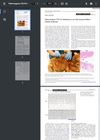
 A cat's poor wound healing was linked to a genetic deletion in the COL5A1 gene.
December 1978 in “Indian Journal of Otolaryngology and Head & Neck Surgery”  5 citations
,
January 2016 in “Skin appendage disorders”
5 citations
,
January 2016 in “Skin appendage disorders” A rare skin condition called linear lichen planopilaris caused itchy red bumps and hair loss on a man's face.
 14 citations
,
February 2007 in “The Journal of Bone and Joint Surgery”
14 citations
,
February 2007 in “The Journal of Bone and Joint Surgery” A baby's toe was saved from serious damage by quickly removing a hair wrapped tightly around it.
22 citations
,
September 2003 in “Journal of Investigative Dermatology” New mutations in the EBP gene cause CDPX2, affecting bones, skin, eyes, and hair, with females generally less affected than males.
 2 citations
,
October 2007 in “Kafrelsheikh Veterinary Medical Journal”
2 citations
,
October 2007 in “Kafrelsheikh Veterinary Medical Journal” Buffalo lips are well-suited for eating plants.
2 citations
,
January 2017 in “International Journal of Trichology” Trichoscopy can reveal specific hair and scalp changes in linear morphea.
 June 2023 in “JAAD case reports”
 A rare scalp condition, cutis verticis gyrata, was found in a woman with primary scarring alopecia.
 34 citations
,
December 1995 in “Pediatric Dermatology”
34 citations
,
December 1995 in “Pediatric Dermatology” Congenital Triangular Alopecia is a rare, non-scarring hair loss that can be surgically treated in females for cosmetic reasons.
28 citations
,
December 2016 in “Journal of Biomedical Materials Research Part A” Bone-forming cells grow well in 3D polymer scaffolds with 35 µm pores.
11 citations
,
March 2002 in “Pediatric Dermatology” Temporal triangular alopecia is a non-scarring hair loss seen in some Asian children.
21 citations
,
December 2014 in “Pediatric Dermatology” Most children with pediatric trachyonychia improve over time, regardless of treatment.
 31 citations
,
December 2010 in “Journal of the American Academy of Dermatology”
31 citations
,
December 2010 in “Journal of the American Academy of Dermatology” Loose anagen hair syndrome is caused by structural abnormalities in the hair follicle's inner root sheath.
28 citations
,
August 1992 in “Differentiation” A new pair of mouse keratins, 65 kD and 48 kD, are found in specific skin areas and are linked to a unique skin differentiation type.
 5 citations
,
August 2014 in “Archivos Argentinos de Pediatria”
5 citations
,
August 2014 in “Archivos Argentinos de Pediatria” A girl with Turner syndrome had psoriasis, alopecia areata, and trachyonychia.
 2 citations
,
April 2018 in “International Journal of Research in Dermatology”
2 citations
,
April 2018 in “International Journal of Research in Dermatology” Linear skin conditions are rare, more common in females, and often misdiagnosed without tissue analysis.
 March 2026 in “The Open Dentistry Journal”
 Males in Jazan generally have larger foreheads than females, except in width.
 14 citations
,
January 2018 in “Endocrine”
14 citations
,
January 2018 in “Endocrine” Cantú syndrome may be linked to pituitary adenomas.
 October 2023 in “Case reports in dermatological medicine”
 A Jordanian family with Clouston syndrome has a common GJB6 gene mutation.
 June 2026 in “Journal of Korean Medicine”
 Long-term repeated cupping therapy can cause unexpected localized hair growth.
March 2026 in “Skin Appendage Disorders” Diagnosing and treating monilethrix is challenging when it occurs with other hair disorders.
1 citations
,
August 2024 in “Pediatric Dermatology” A rare, harmless hair condition was found in an infant's eyebrow, needing no treatment.
 7 citations
,
August 2008 in “Cases Journal”
7 citations
,
August 2008 in “Cases Journal” A hair tightly wrapped around a toddler's toe caused severe crying and was treated by surgery.
9 citations
,
December 2012 in “Indian Journal of Dermatology Venereology and Leprology” Two sisters had rare, widespread cysts and complete hair loss, suggesting a genetic link.
 1 citations
,
January 2009
1 citations
,
January 2009 A 25-year-old Malay fireman had skin bumps on his neck that were removed successfully after other treatments failed.
 1 citations
,
September 2015 in “Serbian Journal of Dermatology and Venereology/Serbian Journal of Dermatology and Venerology”
1 citations
,
September 2015 in “Serbian Journal of Dermatology and Venereology/Serbian Journal of Dermatology and Venerology” A 19-year-old male had two rare skin conditions causing scarring and permanent hair loss.
53 citations
,
March 2006 in “Biopolymers” TTD hair is brittle due to fewer sulfur amino acids and unstable disulfide bonds.
 December 2025 in “TURKDERM”
 Facial trichostasis spinulosa is a chronic condition with significant cosmetic impact, especially in young women.
October 2013 in “Revue de Chirurgie Orthopédique et Traumatologique”  4 citations
,
August 2023 in “Nature Communications”
4 citations
,
August 2023 in “Nature Communications” Mouse zigzag hair bends form due to a 3-day cycle of changes in hair progenitors and their environment.