 147 citations
,
September 2006 in “Developmental Cell”
147 citations
,
September 2006 in “Developmental Cell” Too much Smad7 changes skin and hair development by breaking down a protein called β-catenin, leading to more oil glands and fewer hair follicles.
 111 citations
,
June 2002 in “The EMBO Journal”
111 citations
,
June 2002 in “The EMBO Journal” Too much Smad7 can cause serious changes in skin tissues, including problems with hair growth, thymus shrinkage, and eye development issues.
79 citations
,
January 2002 in “Nucleic Acids Research” BMP-2 activates the Dlx3 gene in mouse skin cells, important for hair and skin development.
 59 citations
,
March 2008 in “The journal of investigative dermatology/Journal of investigative dermatology”
59 citations
,
March 2008 in “The journal of investigative dermatology/Journal of investigative dermatology” Smad-4 and Smad-7 are key in hair follicle development, with other Smads being less important.
 43 citations
,
December 2008 in “Molecular biology of the cell”
43 citations
,
December 2008 in “Molecular biology of the cell” Disrupting Smad4 in mouse skin causes early hair follicle stem cell activity that leads to their eventual depletion.
 31 citations
,
September 2013 in “Stem Cells”
31 citations
,
September 2013 in “Stem Cells” Smad1 and Smad5 are essential for hair follicle development and stem cell sleepiness.
 28 citations
,
July 2008 in “Developmental Biology”
28 citations
,
July 2008 in “Developmental Biology” Smad4 is important for healthy hair follicles because it helps produce a protein needed for hair to stick together and grow.
12 citations
,
June 2020 in “The anatomical record” miR-203a-3p helps hair follicle stem cells become specialized by targeting Smad1.
4 citations
,
May 2025 in “Cells” miR-370-3p slows sheep hair cell growth by blocking SMAD4.
 1 citations
,
April 2022 in “Cell Death Discovery”
1 citations
,
April 2022 in “Cell Death Discovery” Increasing Smurf2 hinders hair follicle stem cell differentiation and wound healing.
 April 2026 in “International Journal of Molecular Sciences”
 Targeting non-Smad pathways in TGF-β signaling may improve keloid treatment.

Higher TGF-β signaling may increase skin cancer risk in organ transplant recipients.
139 citations
,
May 2020 in “Stem Cell Research & Therapy” Exosomes from stem cells help wounds heal faster by affecting specific cell signals.
59 citations
,
September 2011 in “Lasers in Medical Science” The 800-nm laser boosts skin collagen production, improving skin structure.
 19 citations
,
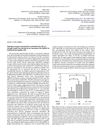
September 2011 in “Journal of Dermatological Science”
19 citations
,
September 2011 in “Journal of Dermatological Science” TGF-β1 increases androgen receptor activity in hair loss, but Hic-5/ARA55 can counter this effect.
 16 citations
,
February 2007 in “Plastic and Reconstructive Surgery”
16 citations
,
February 2007 in “Plastic and Reconstructive Surgery” Keratinocytes show more TGF-β system activity and collagen production as they age, which might affect wound scarring.
14 citations
,
April 2008 in “PROTEOMICS” Increased 14-3-3 proteins may block hair cycle regression, causing hair loss.
 12 citations
,
September 2007 in “Wound repair and regeneration”
12 citations
,
September 2007 in “Wound repair and regeneration” Smad2/3-dependent TGF-β signaling increases during wound healing.
11 citations
,
February 2018 in “Oncotarget” Lower SMAD2/3 activation predicts more severe skin cancer.
10 citations
,
August 2020 in “Acta histochemica” All-trans-retinoic acid stops mink hair growth by affecting cell growth and causing cell death.
4 citations
,
February 2022 in “PeerJ” Hair follicle stem cell transplants can reverse liver cirrhosis by blocking harmful cell activation.
3 citations
,
July 2022 in “Brain and Behavior” The HtrA1L364P mutation causes brain dysfunction and blood vessel damage.
1 citations
,
February 2023 in “Tropical Journal of Pharmaceutical Research” Polysulfonic acid mucopolysaccharide can reduce skin scarring.
1 citations
,
May 2020 in “Research Square (Research Square)” Exosomes from stem cells help wounds heal faster by affecting specific cell signals.
 June 2026 in “Food Science and Human Wellness”
 Tail fat from Lanzhou Fat-Tailed sheep helps heal skin wounds by reducing inflammation and promoting tissue repair.
 March 2026 in “Frontiers in Veterinary Science”
 All-trans retinoic acid slows cell growth and increases cell death in goat hair follicles through a specific pathway.
 October 2025 in “Records of Natural Products”
 Kaempferol promotes hair growth and could be a natural treatment for hair loss.
January 2025 in “International Journal of Biological Macromolecules” Decorin helps hair growth by influencing specific cell signals.
 December 2024 in “Biomaterials Research”
 Exosomes from hair stem cells can reduce skin aging from UVB exposure.

YH0618 helps reduce chemotherapy-induced hair loss by targeting specific proteins and pathways.