3 citations
,
October 2024 in “Frontiers in Pharmacology” Compounds from Pterocarpus indicus may help treat benign prostatic hyperplasia by stopping cell growth.
April 2017 in “The FASEB Journal” Soy foods may lower colon cancer risk.
 3 citations
,
August 2013 in “Stem cells”
3 citations
,
August 2013 in “Stem cells” Certain inhibitors applied to the skin can promote hair growth by maintaining a key hair growth signal.
4 citations
,
January 2023 in “Marine Drugs” Marine compounds from gorgonians and soft corals show promise for drug development, especially for chronic disorders.
18 citations
,
April 2011 in “Neuropharmacology” 11β-Hydroxylase inhibitors help prevent seizures in mice by boosting natural neurosteroid production.
January 2025 in “Archives of Dermatological Research” 7 citations
,
October 2015 in “Julius Kühn-Institut” Inhibiting plant sterols reduces grapevine pathogen reproduction.
 37 citations
,
September 2003 in “Journal of Medicinal Chemistry”
37 citations
,
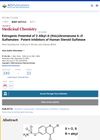
September 2003 in “Journal of Medicinal Chemistry” A substance called Compound 2g can strongly block STS (a hormone-related enzyme) without affecting estrogen levels, making it potentially good for treating breast cancer.
18 citations
,
August 2020 in “bioRxiv (Cold Spring Harbor Laboratory)” Two existing drugs may help treat COVID-19 by inhibiting a key viral protein.
January 2023 in “Rasayan journal of chemistry/Rasayan journal of Chemistry” Methyl pyropheophorbide A from Sansevieria trifasciata leaves may help treat hair loss.
 May 2026 in “Open Science Framework”
 Biochanin A from soy is a promising and safe candidate for treating hair loss.
2 citations
,
January 2023 in “Uro” UHP-sCESr is as effective as HESr for treating BPH symptoms.
 20 citations
,
June 2007 in “Recent Patents on Endocrine, Metabolic & Immune Drug Discovery”
20 citations
,
June 2007 in “Recent Patents on Endocrine, Metabolic & Immune Drug Discovery” Certain inhibitors can potentially treat prostate cancer and other hormone-dependent conditions by controlling sex hormone levels in cells.
40 citations
,
July 2023 in “Clinical Pharmacology & Therapeutics” Targeted protein degraders show promise in treating cancer but need to target more diverse proteins.
29 citations
,
November 2021 in “FEBS Open Bio” Cepharanthine analogues, especially tetrandrine, show potential for treating COVID-19.
April 2026 in “Future Medicinal Chemistry” PROTACs have become a breakthrough in medicine by effectively targeting and degrading specific proteins to treat diseases.
September 2002 in “Research Repository (Kingston University London)” Mimicking the steroid A-ring may help create effective enzyme inhibitors for prostate disease treatment.
 May 2026 in “Zenodo (CERN European Organization for Nuclear Research)”
 Biochanin A from soy is a promising and safe candidate for treating hair loss.
New pyridine compounds effectively inhibit GSK3, a diabetes treatment target.
 1 citations
,
April 2006 in “International Journal of Oncology”
1 citations
,
April 2006 in “International Journal of Oncology” Lysocellin helps stop cell damage from etoposide and may prevent hair loss.
May 2010 in “Europe PMC (PubMed Central)” Near-infrared probes can safely and effectively image cysteine protease activity for disease diagnosis.
 16 citations
,
March 2015 in “Clinical Cancer Research”
16 citations
,
March 2015 in “Clinical Cancer Research” The document concludes that side effects from Smoothened inhibitor drugs for skin cancer are reversible and can be managed with a team approach to maintain quality of life.
Soy can improve skin and hair health and protect against sun damage.
2 citations
,
October 2025 in “Antimicrobial Agents and Chemotherapy” Cepharanthine can block enterovirus entry and protect against infection.
12 citations
,
November 2024 in “Plants” Phytosterols may help manage prostate issues but are less effective than synthetic drugs.
 25 citations
,
May 2003 in “Expert Opinion on Therapeutic Patents”
25 citations
,
May 2003 in “Expert Opinion on Therapeutic Patents” Steroid Sulfatase inhibitors show promise in treating hormone-dependent disorders like cancers, hair loss, and acne, with 667COUMATE being a potential candidate for breast cancer treatment trials.
December 2013 in “Estudo Geral (Universidade de Coimbra)” Modified steroidal inhibitors showed promise in treating hormone-dependent cancers.
 161 citations
,
August 2013 in “Journal of experimental botany”
161 citations
,
August 2013 in “Journal of experimental botany” Certain inhibitors slow down plant growth by causing early cell specialization without changing the cell development pattern.

Newly designed proteins can effectively degrade specific proteins in cells, offering a potential new therapy method.
April 2020 in “The FASEB journal” Poncirin is a promising inhibitor of Janus Kinase 3, potentially better than tofacitinib.