 76 citations
,
April 2013 in “PLoS ONE”
76 citations
,
April 2013 in “PLoS ONE” Chronic stress can cause hair loss by increasing oxidative stress, but antioxidants may help.
Light tickling can be unpleasant and may feel worse for individuals with autism.
April 2017 in “Journal of Investigative Dermatology” Deleting Crif1 in mouse skin disrupts skin balance and hair growth.
 June 2024 in “ACTA SCIENTIAE VETERINARIAE”
 qPCR is effective for quickly diagnosing fungal infections in horses.
September 2021 in “CRC Press eBooks” Erosive pustular dermatosis of the scalp causes painful, scarring skin lesions on the scalp, mainly in elderly people with sun-damaged skin.
4 citations
,
November 2016 in “The Journal of Dermatology” Pili torti hair is fragile due to loose keratin filaments and weak disulfide bonds.
 7 citations
,
January 2023 in “Frontiers in cell and developmental biology”
7 citations
,
January 2023 in “Frontiers in cell and developmental biology” Celsr1 is crucial for skin cell alignment, while Celsr2 has little effect on this process.
 28 citations
,
February 2012 in “PLoS ONE”
28 citations
,
February 2012 in “PLoS ONE” A PKP1 gene mutation causes skin fragility and hair loss in Chesapeake Bay retriever puppies.
 22 citations
,
June 2004 in “Journal of The European Academy of Dermatology and Venereology”
22 citations
,
June 2004 in “Journal of The European Academy of Dermatology and Venereology” A woman had both Graham Little-Piccardi-Lassueur syndrome, causing hair loss, and complete androgen insensitivity syndrome, making her genetically male but physically female. This suggests androgens don't affect the hair loss condition.
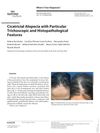 November 2018 in “Skin appendage disorders”
 The document concludes that a woman has both Frontal Fibrosing Alopecia and Lichen Simplex Chronicus, a previously unreported combination of conditions.
 December 2022 in “Gastroenterology”
 A man with Cronkhite-Canada syndrome improved significantly with immunosuppressive therapy.
207 citations
,
September 1973 in “Entomologia Experimentalis et Applicata” B-type hairs on female butterfly legs help them choose where to lay eggs.
24 citations
,
October 2019 in “Genes” A new sheep gene, KRTAP36-1, may help breed sheep with better wool by reducing prickle factor.
January 2014 in “Redalyc (Universidad Autónoma del Estado de México)” A Persian cat had a rare skin condition that didn't improve with treatment.
 April 2017 in “Journal of Investigative Dermatology”
 Removing the Crif1 gene in mouse skin disrupts skin balance and hair growth.
April 2026 in “Human Genome Variation” Long-read RNA sequencing can identify complex gene changes in IFAP syndrome.
December 2022 in “Journal of Paediatrics and Child Health” The girl's itchy armpit and pubic lesions didn't improve with antifungal cream.
61 citations
,
April 1980 in “Journal of the American Academy of Dermatology” A new syndrome may link skin, growth, mental, and hair issues.
 2 citations
,
December 2018 in “Journal of cosmetic dermatology”
2 citations
,
December 2018 in “Journal of cosmetic dermatology” Higher CRBP1 levels are linked to more severe alopecia areata.
A rare skin condition in a 17-year-old was diagnosed late, stressing the need for careful evaluation and genetic testing.
Lichen planopilaris and frontal fibrosing alopecia are likely the same disease with different clinical appearances.
3 citations
,
September 2017 in “Archives of dermatological research” Early diagnosis and tailored treatments are crucial for managing ichthyosis syndromes with hair abnormalities.
 March 2025 in “Buletin Veteriner Udayana”
 The cat's scabies and pneumonia improved significantly with treatment.
October 2025 in “Brazilian Journal of Veterinary Research and Animal Science” Neotropical porcupines can get co-infected with poxvirus and Toxoplasma gondii.
April 2016 in “Journal of Investigative Dermatology” Mutations in the TSPEAR gene cause a new form of ectodermal dysplasia affecting hair and tooth development.
 August 2018 in “Journal of The American Academy of Dermatology”
 A 16-year-old girl's skin rash was likely caused by an infection and improved with topical steroids.
 April 2018 in “bioRxiv (Cold Spring Harbor Laboratory)”
 A gene variant causes patched hair loss in mice, similar to alopecia areata in humans.
22 citations
,
September 1993 in “Archives of Dermatology” The child has a scaly rash and fever, but tests show no infection.
 January 2023 in “Indian dermatology online journal”
 Skin problems after waxing led to a sarcoidosis diagnosis.