 33 citations
,
January 2022 in “Scientific Reports”
33 citations
,
January 2022 in “Scientific Reports” The method improved CoQ10's stability and effectiveness for anti-ageing skincare.
 February 2026 in “International Research Journal of Modernization in Engineering Technology and Science”
 Protect lips from aging with sunscreen, repair barriers, and boost collagen.
4 citations
,
January 2007 in “Iraqi postgraduate Medical Journal”  August 2010 in “The Journal of Dermatology”
 The document concludes that low-dose acne treatment is most suitable for moderate acne, with high patient satisfaction and low relapse rates.
May 2026 in “Advanced Pharmaceutical Bulletin” Black cumin oil-based carriers improve psoriasis treatment better than standard creams.
 January 2024 in “Dermatology Review”
 Combining PRP with hydroquinone is more effective for treating melasma than using hydroquinone alone.
 3 citations
,
October 2024 in “Frontiers in Medicine”
3 citations
,
October 2024 in “Frontiers in Medicine” Sun-exposed skin shows different cell activity and gene expression, suggesting targets to prevent skin aging and cancer.
 December 2023 in “Biological & pharmaceutical bulletin”
 IPM enhances skin penetration of hydrophilic drugs.
3 citations
,
July 2025 in “International Immunopharmacology” 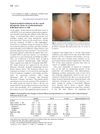 14 citations
,
July 2012 in “Journal of the American Academy of Dermatology”
14 citations
,
July 2012 in “Journal of the American Academy of Dermatology” Topical tacalcitol ointment can help improve symptoms of EFFC.
23 citations
,
October 2008 in “Journal of medicinal chemistry” PF-998425 is a new, effective, and non-phototoxic treatment for skin conditions related to androgens.
 33 citations
,
July 2021 in “Clinical, Cosmetic and Investigational Dermatology”
33 citations
,
July 2021 in “Clinical, Cosmetic and Investigational Dermatology” Nanocarrier technology in cosmetics improves ingredient delivery and effectiveness while reducing side effects.
2 citations
,
March 2024 in “Dermatologic Surgery” The chemical peel improved the appearance of hand spots safely and effectively.
 September 1995 in “American Journal of Contact Dermatitis”
 Antiyeast treatments work better for seborrheic dermatitis than steroids, and other findings include increased skin bacteria under plastic wrap, a nasal cell defect in Staphylococcus aureus carriers, quick resolution of certain skin reactions, high rubber latex allergy in spina bifida patients, and glyceryl monopentadecanoate's effectiveness for male hair loss.
July 2024 in “Journal of Investigative Dermatology”  June 2022 in “Farmacevtičnij časopis”
 The conclusion is that the technology for making "Biosedum plus" gel, which treats radiation skin damage, is validated.
 January 2026 in “Frontiers in Pharmacology”
 Sanhuang Fukang oil helps heal radiation skin injuries by reducing inflammation and cell death.
February 2020 in “The Pharmaceutical Society of Japan” 4 citations
,
June 2024 in “Journal of Cosmetic Dermatology” Fractional radiofrequency effectively and safely improves rosacea symptoms.
 September 2024 in “Journal of the American Academy of Dermatology”
 Selenium disulfide shampoo effectively reduces dandruff and is well-liked by users.
4 citations
,
April 2022 in “Microorganisms” Povidone iodine reduced skin bacteria more than chlorhexidine gluconate, but neither met FDA reduction standards.
1 citations
,
December 2023 in “Frontiers in Behavioral Neuroscience” UVB exposure increases appetite by activating p53 in skin cells.
Liposomes with minoxidil and PEP penetrate skin slowly but reach deeper layers than foam.
 15 citations
,
February 2015 in “Han-gug chugsan sigpum hag-hoeji/Korean journal for food science of animal resources”
15 citations
,
February 2015 in “Han-gug chugsan sigpum hag-hoeji/Korean journal for food science of animal resources” Egg shell membrane hydrolysates can reduce wrinkles and improve skin health.
159 citations
,
July 2014 in “Molecular pharmaceutics” New micelle nanocarriers deliver Tacrolimus more effectively to skin layers for psoriasis treatment than the current Protopic ointment.
 September 2017 in “Journal of Investigative Dermatology”
 The new scalp treatment preserves hair color, reduces hair loss, and maintains hair strength.
35 citations
,
January 2020 in “Journal of the American Academy of Dermatology” Avoiding certain allergens in personal care products may improve symptoms for some patients with lichen planopilaris or frontal fibrosing alopecia.
 2 citations
,
December 2019 in “Electronic Journal of General Medicine”
2 citations
,
December 2019 in “Electronic Journal of General Medicine” Combining microfocused ultrasound with PRP-therapy improves skin quality and patient satisfaction more than ultrasound alone.
September 2022 in “Pharmacy Today”