 19 citations
,
December 2016 in “PLOS ONE”
19 citations
,
December 2016 in “PLOS ONE” Early-stage skin cells help regenerate hair follicles, with proteins SDF1, MMP3, biglycan, and LTBP1 playing key roles.
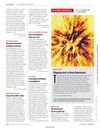
Activin A increases inner ear hair cell development, while follistatin decreases it.
1 citations
,
October 2021 in “bioRxiv (Cold Spring Harbor Laboratory)” Heat shock proteins help basal cell carcinoma grow by responding to inflammation signals.
 6 citations
,
January 2017 in “Advances in Experimental Medicine and Biology”
6 citations
,
January 2017 in “Advances in Experimental Medicine and Biology” Runx genes are important for stem cell regulation and their roles in aging and disease need more research.
29 citations
,
January 2013 in “The journal of investigative dermatology/Journal of investigative dermatology” P-cadherin is crucial for hair follicle pigmentation but not skin pigmentation.
132 citations
,
February 2002 in “Journal of Biological Chemistry” HOXC13 is crucial for regulating hair keratin genes in hair follicles.
10 citations
,
January 2004 in “Journal of Investigative Dermatology” Krt6a-Cre transgenic mice help study gene effects on hair follicle development and tumor suppression.
5 citations
,
July 2024 in “Journal of Microbiology and Biotechnology” ICP5249 helps hair grow by activating a specific cell pathway.
5 citations
,
March 2012 in “Journal of Investigative Dermatology” Vitamin D receptor and mediator 1 are crucial for healthy skin and hair growth.
73 citations
,
November 2000 in “Proceedings of the National Academy of Sciences of the United States of America” There are two ways to start hair growth: one needs Stat3 and the other does not, but both need PI3K activation.
24 citations
,
May 2009 in “The FASEB Journal” Akt2 and SGK3 are both important for normal hair growth and development.
99 citations
,
February 2000 in “PubMed” Overexpressing PKCepsilon in mice reduces papillomas but increases carcinomas.
January 2025 in “Biochemical Pharmacology” Peficitinib can turn human fibroblasts into cells that help grow hair.
 April 2018 in “Journal of Investigative Dermatology”
 DPP4 is important for scarring and skin regeneration, and managing its activity could improve skin healing treatments.
3 citations
,
July 2025 in “Stem Cell Research & Therapy” lncRNA VIM-AS1 helps heal diabetic wounds by boosting energy production and reducing cell aging.
 17 citations
,
June 2017 in “Gene”
17 citations
,
June 2017 in “Gene” A rare genetic mutation found in an Indian family can be detected through prenatal screening.
10 citations
,
July 2022 in “Electronic Journal of Biotechnology” Lower IGFBP4 promoter methylation is linked to finer wool in sheep.
December 2015 in “OPAL (Open@LaTrobe) (La Trobe University)” QLT0267 stops hair follicle cell growth and movement.
12 citations
,
June 2020 in “The anatomical record” miR-203a-3p helps hair follicle stem cells become specialized by targeting Smad1.
 February 2025 in “bioRxiv (Cold Spring Harbor Laboratory)”
 Keratin 15 helps keep skin cells in a young, undifferentiated state.
 243 citations
,
October 2003 in “Developmental biology”
243 citations
,
October 2003 in “Developmental biology” Ectodin integrates BMP, SHH, and FGF signals in developing ectodermal organs.
2 citations
,
September 2004 in “Experimental Dermatology” VR1 signaling can inhibit hair growth by affecting cell processes and increasing hair growth inhibitors.
 225 citations
,
April 2018 in “Journal of Investigative Dermatology”
225 citations
,
April 2018 in “Journal of Investigative Dermatology” Two main types of fibroblasts with unique functions and additional subtypes were identified in human skin.
 134 citations
,
January 2011 in “Development”
134 citations
,
January 2011 in “Development” Adam10 enzyme is crucial for healthy skin and proper Notch signaling.
 1 citations
,
June 2023 in “Journal of steroid biochemistry and molecular biology/The Journal of steroid biochemistry and molecular biology”
1 citations
,
June 2023 in “Journal of steroid biochemistry and molecular biology/The Journal of steroid biochemistry and molecular biology” Vitamin D helps skin stem cells heal wounds by working with a key skin protein.
 June 2021 in “bioRxiv (Cold Spring Harbor Laboratory)”
 KIF18B is important for correctly positioning cell division machinery in skin cells, affecting hair follicle development.
172 citations
,
July 2007 in “Journal of Dermatological Science” Stat3 helps skin heal but can also cause skin diseases if overactive.
 June 2024 in “British Journal of Dermatology”
 A rare case of a transplant patient developing a skin condition linked to HPV-49.
December 2019 in “Thèses en ligne de l'Université Toulouse III (Université Toulouse III)” EGM2 and SOX2 help form beige adipocytes by maintaining ASC immaturity and activating brown adipocytes.
January 2012 in “DigtalCommons @ Texas Medical Center Library (Texas Medical Center)” Stat3 affects skin cancer development by altering keratinocyte stem cell behavior.