Deleting the MAD2L1 gene is tolerated in certain mouse cancer models.
Deleting the MAD2L1 gene in mice led to rapid tumor growth despite chromosomal instability.
153 citations
,
April 1998 in “Current Biology” The risk of skin tumors becoming malignant depends on the specific skin cell type affected.
January 2002 in “Linchuang pifuke zazhi” A young woman had a rare scalp tumor usually found in older women.
 1 citations
,
February 2017 in “The American journal of dermatopathology/American journal of dermatopathology”
1 citations
,
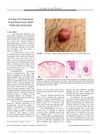
February 2017 in “The American journal of dermatopathology/American journal of dermatopathology” A man with a skin nodule was diagnosed with a rare skin condition called cutaneous focal mucinosis, which can be confused with other skin cancers.
April 2016 in “Archivio Istituzionale della Ricerca (Universita Degli Studi Di Milano)” Sox9 is important in the development of tumors in domestic animals.
 76 citations
,
June 2018 in “EMBO Reports”
76 citations
,
June 2018 in “EMBO Reports” YAP and TAZ proteins are necessary for the development of two types of skin cancer.
 80 citations
,
June 2000 in “Modern Pathology”
80 citations
,
June 2000 in “Modern Pathology” Long-standing benign tumors can become cancerous, especially in people with weakened immune systems.
 36 citations
,
January 2019 in “Nature communications”
36 citations
,
January 2019 in “Nature communications” High lactate dehydrogenase activity is not necessary for the growth of squamous cell carcinoma.
 8 citations
,
January 2023 in “Journal of Clinical and Translational Hepatology”
8 citations
,
January 2023 in “Journal of Clinical and Translational Hepatology” Advancements in cultured models improve understanding and treatment of gallbladder cancer.
 4 citations
,
July 2015 in “Journal of Feline Medicine and Surgery Open Reports”
4 citations
,
July 2015 in “Journal of Feline Medicine and Surgery Open Reports” A cat with hair loss and illness was found to have cancer spread from its colon.
 174 citations
,
November 2016 in “Cell stem cell”
174 citations
,
November 2016 in “Cell stem cell” Different types of skin cells have unique genetic markers that affect how likely they are to spread cancer.
 10 citations
,
July 2021 in “Archiv für Pathologische Anatomie und Physiologie und für Klinische Medicin”
10 citations
,
July 2021 in “Archiv für Pathologische Anatomie und Physiologie und für Klinische Medicin” LRIG1 is linked to better survival in Merkel cell carcinoma.
 8 citations
,
March 2014 in “American Journal of Pathology”
8 citations
,
March 2014 in “American Journal of Pathology” Damaged hair follicles make mice more prone to skin inflammation and skin cancer after UV exposure.
 111 citations
,
March 1951 in “Annals of the New York Academy of Sciences”
111 citations
,
March 1951 in “Annals of the New York Academy of Sciences” Understanding the mouse hair cycle is crucial for cancer research.
 30 citations
,
February 1994 in “Journal of Cutaneous Pathology”
30 citations
,
February 1994 in “Journal of Cutaneous Pathology” A woman's hair loss was initially mistaken for a common hair loss condition but was later found to be caused by breast cancer cells in her scalp.
 January 2025 in “Dermatology Review”
 Giant keratoacanthoma can look like squamous cell carcinoma, requiring careful diagnosis and surgical removal.
8 citations
,
April 2016 in “Experimental Dermatology” The type of tumor suppressor affects the form of skin cancer from hair follicle stem cells.
June 2023 in “Dermatopathology” A woman had a unique skin growth with hair follicle, oil glands, fat cells, spindle cells, and nerve fibers.
 August 2012 in “Nature Cell Biology”
 A pathway helps maintain long telomeres in both stem and cancer cells.
157 citations
,
October 2002 in “Journal of Cutaneous Pathology” p63 may influence skin cancer development and cell differentiation.
 7 citations
,
February 2021 in “Dermatologic Therapy”
7 citations
,
February 2021 in “Dermatologic Therapy” Sebaceous glands are involved in various skin disorders, some treatable with medications like finasteride and minoxidil.
3 citations
,
March 2019 in “American Journal of Dermatopathology” Recognizing rare tumor combinations is crucial for accurate diagnosis and treatment.
 August 2012 in “Nature Cell Biology”
 Hair grows when stem cell offspring in the follicle base proliferate, influenced by the dermal papilla.
 June 2023 in “jurnal veteriner”
 The combination of Typhonium flagelliforme extract and natural interferons effectively reduces tumor growth in mice.
 54 citations
,
April 2020 in “Experimental & Molecular Medicine”
54 citations
,
April 2020 in “Experimental & Molecular Medicine” Cox-2 significantly contributes to the development and progression of skin and esophageal cancers.
 15 citations
,
July 2013 in “Cell Reports”
15 citations
,
July 2013 in “Cell Reports” Indian Hedgehog helps control skin cell growth and protects against aggressive skin cancer.
31 citations
,
October 2019 in “Genes & Diseases” Basal cell carcinomas and squamous cell carcinomas have different gene activity patterns, suggesting unique treatment approaches.
 28 citations
,
April 1996 in “Cell biology international”
28 citations
,
April 1996 in “Cell biology international” Changes in keratin affect skin health and can lead to skin disorders like blistering diseases and psoriasis.
 22 citations
,
April 1998 in “Dermatologic Clinics”
22 citations
,
April 1998 in “Dermatologic Clinics” Interferons are effective for some skin conditions and cancers, but can have side effects and need more research for optimal use.