35 citations
,
January 2000 in “Journal of comparative neurology” Rat vibrissae have sensory terminals with specific structures that help detect hair movements.
 10 citations
,
January 2014 in “BioMed research international”
10 citations
,
January 2014 in “BioMed research international” Rat whisker cells can help turn other cells into nerve cells and might be used to treat brain injuries or diseases.
64 citations
,
May 2015 in “Cell Cycle” Hair follicle stem cells can become heart muscle cells.
 36 citations
,
September 2013 in “PLoS ONE”
36 citations
,
September 2013 in “PLoS ONE” Sweat gland stem cells help maintain glands, aid wound healing, and can regenerate skin structures.
30 citations
,
January 1999 in “Journal of Cutaneous Pathology” Spiny keratoderma may be ectopic hair formation on palms and soles.
142 citations
,
June 2003 in “The journal of investigative dermatology. Symposium proceedings/The Journal of investigative dermatology symposium proceedings” Hair follicle stem cells can generate all hair cell types, skin, and sebaceous glands.
 77 citations
,
July 2020 in “Cell”
77 citations
,
July 2020 in “Cell” Muscles and nerves that cause goosebumps also help control hair growth.
April 2017 in “Journal of dermatological science” Human hair follicles can produce stem cells that turn into heart muscle cells.
7 citations
,
September 1980 in “Zoological Journal of the Linnean Society” Dendritic cells help regulate skin development and hair growth in mice.
11 citations
,
December 2009 in “Cell stem cell” Sox2-expressing cells can help grow hair and heal skin.
33 citations
,
September 2008 in “Biochemical and Biophysical Research Communications” Hair follicles can be used to easily create neurons and glial cells for potential nerve repair.
26 citations
,
January 1964 in “Experimental Cell Research”  1 citations
,
December 2020 in “bioRxiv (Cold Spring Harbor Laboratory)”
1 citations
,
December 2020 in “bioRxiv (Cold Spring Harbor Laboratory)” Sox9 levels in brain stem cells affect whether they stay as stem cells or become neurons.
December 2004 in “Reproduction Fertility and Development” Porcine hair follicles are useful for studying keratinocyte function, with galectin-1 as a potential stem cell marker.
2 citations
,
January 2009 in “Human cell culture” 46 citations
,
August 1977 in “Journal of Morphology” The big-clawed shrew's sinus hair follicles are highly specialized for sensing vibrations.
 68 citations
,
December 1991 in “Annals of the New York Academy of Sciences”
68 citations
,
December 1991 in “Annals of the New York Academy of Sciences” Hair growth can be induced by certain cells found at the base of hair follicles, and these cells may also influence hair development and regeneration.
January 2009 in “Xumu shouyi xuebao” Sheep cells were successfully modified to include a spider silk protein gene.
80 citations
,
September 2007 in “Cell Cycle” Stem cells in hair follicles can become various cell types, including neurons.
 14 citations
,
February 2020 in “Scientific reports”
14 citations
,
February 2020 in “Scientific reports” Telocytes in the scalp may help with skin regeneration and maintenance.
106 citations
,
April 1986 in “British Journal of Dermatology” Dermal papilla cells from human hair follicles form unique structures and don't live as long as other skin cells in lab conditions.
319 citations
,
November 2005 in “Proceedings of the National Academy of Sciences” Hair follicle stem cells can help repair damaged nerves.
November 2012 in “Transplantation” Large corneum layer cells can cover wounds effectively.
January 2008 in “Infoscience (Ecole Polytechnique Fédérale de Lausanne)” Thymic epithelial cells may be related to skin stem cells.
 11 citations
,
June 2019 in “Tissue & Cell”
11 citations
,
June 2019 in “Tissue & Cell” Hair stem cells produce a protein called COL17A1 that plays a key role in their development and is linked to hair thinning and baldness.
18 citations
,
August 2015 in “International Journal of Molecular Sciences” Ovine hair follicle stem cells can regenerate haired skin and may improve wool production.
5 citations
,
September 2019 in “bioRxiv (Cold Spring Harbor Laboratory)” Basal stem cells in the skin have distinct types that are crucial for skin structure and health.
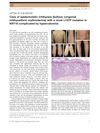 October 2011 in “Journal of dermatology”
 A man with a rare skin condition and a new gene mutation developed high calcium levels due to his treatment.
4 citations
,
January 2016 in “Methods in molecular biology” HAP stem cells can repair nerves, grow hair follicle nerves, and become heart muscle cells, making them useful for regenerative medicine.
5 citations
,
July 1999 in “Journal of Anatomy” Methylene blue staining effectively highlights detailed nerve structures in rat fur.