 10 citations
,
October 2015 in “Journal of the International Association of Providers of AIDS Care”
10 citations
,
October 2015 in “Journal of the International Association of Providers of AIDS Care” A woman with HIV had a severe skin condition that improved with antiretroviral therapy.
June 2005 in “Journal of Investigative Dermatology” A bull with a gene mutation was asymptomatic, synthetic retinoids cause hair loss, and new therapeutic targets were identified for skin diseases.
12 citations
,
June 2013 in “International Journal of Dermatology” Seborrheic keratosis shows varied cell differentiation, and keratin analysis helps diagnose skin tumors.
3 citations
,
September 2016 in “Pediatric Dermatology” Hypertrichosis (excessive hair growth) can help diagnose superficial epidermolytic ichthyosis.
April 2016 in “Journal of the American Academy of Dermatology” Treatment improved some symptoms but not all.
 September 2019 in “Journal of Investigative Dermatology”
 Scientists used stem cells to create a model of the skin disease Epidermolysis Bullosa simplex, which helped them understand its molecular mechanisms and could aid in finding treatments.
 April 2023 in “The journal of investigative dermatology/Journal of investigative dermatology”
 The TRPV3 channel structure changes linked to severe itch and hyperkeratosis were identified using cryo-EM.
 8 citations
,
April 2022 in “The journal of investigative dermatology/Journal of investigative dermatology”
8 citations
,
April 2022 in “The journal of investigative dermatology/Journal of investigative dermatology” Certain genetic changes in the LSS gene cause a rare skin and hair condition.
September 2016 in “Journal of Dermatological Science” Polarizing light microscopy can easily and reliably diagnose congenital keratinizing disorders like Netherton syndrome.
 2 citations
,
August 2013 in “British Journal of Dermatology”
2 citations
,
August 2013 in “British Journal of Dermatology” Chemotherapy improved a girl's painful foot condition linked to pachyonychia congenita.
26 citations
,
April 1996 in “Journal of Investigative Dermatology” 189 citations
,
July 2009 in “The Journal of clinical investigation/The journal of clinical investigation” Epidermolysis bullosa simplex causes easily blistered skin due to faulty skin cell proteins, leading to new treatment ideas.
14 citations
,
June 1989 in “Journal of dermatology” Three siblings had both Vohwinkel's disease and congenital alopecia, with no effective treatment.
November 2012 in “Transplantation” Large corneum layer cells can cover wounds effectively.
September 2019 in “The journal of investigative dermatology/Journal of investigative dermatology” New RIPK4 gene mutations were found to cause a type of skin and limb birth defect.
May 2025 in “International Journal of Trichology” Oral Acitretin effectively resolved symptoms in a child with Netherton syndrome.
 September 2025 in “OBM Genetics”
 Early diagnosis and comprehensive management improve life quality for Netherton syndrome patients.
 3 citations
,
July 2018 in “Elsevier eBooks”
3 citations
,
July 2018 in “Elsevier eBooks” Erosive pustular dermatosis of the scalp is a rare condition that causes scarring hair loss, mainly in older women, and requires ongoing treatment.
 5 citations
,
January 2018 in “Acta Dermatovenerologica Alpina Pannonica et Adriatica”
5 citations
,
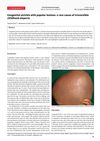
January 2018 in “Acta Dermatovenerologica Alpina Pannonica et Adriatica” Congenital atrichia with papular lesions causes permanent hair loss in children.
1 citations
,
March 2006 in “Journal of Cosmetic Dermatology” The woman's forehead lesion was caused by ointment use and resolved with treatment.
August 1993 in “Journal of Dermatological Science” 18 citations
,
May 2006 in “Journal of Cutaneous Medicine and Surgery” Linear lichen planopilaris can affect the trunk, not just the face.
Giant axonal neuropathy changes the structure of keratin in human hair, making it stiffer and stronger.
 December 2005 in “Journal of the American Academy of Physician Assistants”
 The woman was diagnosed with lichen planopilaris and can be treated with corticosteroids.
10 citations
,
July 1984 in “British Journal of Dermatology” Epidermal cysts come from the skin, while pilar cysts come from hair follicles.
The woman was diagnosed with lichen sclerosus, a rare skin condition, after initial misdiagnosis and ineffective treatments.
7 citations
,
March 2020 in “Journal of the American Academy of Dermatology” EGFR inhibitors often cause dry, brittle hair and eyebrow/eyelash changes.
9 citations
,
January 1975 in “Munich Personal RePEc Archive (Ludwig Maximilian University of Munich)” Rothmund-Thomson syndrome causes skin changes, hair loss, and slightly high lysine and cystine in urine.
 February 2020 in “Definitions”
 Mutations in the KRT16 gene can cause skin and nail disorders.