 6 citations
,
May 2004 in “Facial Plastic Surgery Clinics of North America”
6 citations
,
May 2004 in “Facial Plastic Surgery Clinics of North America” By 2004, Follicular Unit Transplantation (FUT) was the most effective method for surgical hair restoration, while the newer Follicular Unit Extraction (FUE) had more disadvantages and was less recommended.
 6 citations
,
September 1997 in “Dermatologic Surgery”
6 citations
,
September 1997 in “Dermatologic Surgery” Chest hair can be used for scalp hair transplants when there's not enough scalp hair.
 6 citations
,
September 1993 in “The Journal of Dermatologic Surgery and Oncology”
6 citations
,
September 1993 in “The Journal of Dermatologic Surgery and Oncology” Using tissue adhesive in hair transplants improves results and patient satisfaction, with fewer complications.
 5 citations
,
November 2019 in “Dermatology and therapy”
5 citations
,
November 2019 in “Dermatology and therapy” Beard hair extraction improves scalp hair restoration results in East Asian men with severe hair loss.
 5 citations
,
June 2016 in “Dermatologic Surgery”
5 citations
,
June 2016 in “Dermatologic Surgery” Hair restoration for East Asians should consider their unique characteristics like head shape, hair thickness, and hair density, and use modified procedures and treatments to minimize scarring and maintain hair density.
 5 citations
,
September 2000 in “Dermatologic Surgery”
5 citations
,
September 2000 in “Dermatologic Surgery” Lower hairlines using the rule of thirds can be used in hair transplants due to improved techniques.
 5 citations
,
July 1999 in “Plastic and Reconstructive Surgery”
5 citations
,
July 1999 in “Plastic and Reconstructive Surgery” Unsatisfactory hair restoration results can be significantly improved with strategic hair redistribution and new donor hair placement, despite previous surgery challenges.
 3 citations
,
October 2017 in “Journal of Cosmetic Dermatology”
3 citations
,
October 2017 in “Journal of Cosmetic Dermatology” Dr. Muhammad Ahmad created a hair classification system to help improve hair restoration surgery outcomes.
 3 citations
,
May 2011 in “International Journal of Dermatology”
3 citations
,
May 2011 in “International Journal of Dermatology” Using an epidural needle in hair restoration surgery can reduce grafts popping out, make the procedure easier, and result in natural-looking hairlines without obvious scarring.
 2 citations
,
September 2019 in “Dermatologic Surgery”
2 citations
,
September 2019 in “Dermatologic Surgery” The two-step procedure of fat grafting followed by hair grafting improves scalp and facial scar correction.
 2 citations
,
November 2002 in “Dermatologic Surgery”
2 citations
,
November 2002 in “Dermatologic Surgery” The authors' 10-year experience shows that a personalized approach to hair restoration surgery, using various techniques, leads to natural results and high patient satisfaction.
 2 citations
,
June 1997 in “The American Journal of Cosmetic Surgery”
2 citations
,
June 1997 in “The American Journal of Cosmetic Surgery” Hair transplant megasessions are safe up to 1500 grafts but larger sessions have more risks and challenges.
 2 citations
,
August 1994 in “The Journal of Dermatologic Surgery and Oncology”
2 citations
,
August 1994 in “The Journal of Dermatologic Surgery and Oncology” The article concludes that hair transplantation is advancing, but a reliable way to ensure complete tumor removal is still needed.
 1 citations
,
January 1993 in “Facial Plastic Surgery”
1 citations
,
January 1993 in “Facial Plastic Surgery” Surgical hair restoration has improved since 1959, with new techniques like minigrafts, micrografts, and scalp reductions creating more natural hairlines and reducing bald skin, despite some risks and potential for scarring.
 June 2026 in “Journal of Cutaneous and Aesthetic Surgery”
 Recipient site scalp necrosis in hair transplantation is linked to microvascular injury and regional vascular vulnerability, especially in the frontal and mid-scalp areas.
 February 2026 in “Frontiers in Medicine”
 FUE hair transplants are generally safe but require careful planning to avoid rare complications.
 January 2026 in “RIGGS Journal of Artificial Intelligence and Digital Business”
 A pomade with peppermint oil and minoxidil can effectively promote hair growth, with the best formulation having a balanced texture and stability.
 January 2026 in “Journal of Innovative and Creativity (Joecy)”
 The 4% and 9% celery hair tonics are stable and suitable for herbal cosmetics.
 December 2024 in “International Journal of Advanced Research in Science Communication and Technology”
 The herbal hair tonic is safe, effective for hair growth, and treats scalp issues.
 June 2023 in “Journal of Pharmaceutical and Health Research”
 Caffeine hair tonic with 0.001% concentration was more effective in promoting hair growth on guinea pigs.
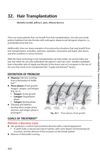 January 2018 in “Georg Thieme Verlag eBooks”
 Hair transplantation is a surgical procedure to move hair to bald areas, requires good donor hair, and results show in about a year.
 January 2017 in “International journal of transplantation & plastic surgery”
 Hair restoration techniques have improved over time, focusing on better results and less scarring, but skilled doctors are essential for natural-looking outcomes.
 January 2016 in “Georg Thieme Verlag eBooks”
 Hair transplantation in East Asians needs special techniques to ensure natural results and prevent complications due to their unique hair and scalp characteristics.
 September 2006 in “Plastic and Reconstructive Surgery”
 Hair transplant surgeries can be improved by preserving follicles in a special solution, and surgeries done at outpatient facilities are more profitable than those at hospitals.
 November 2002 in “Dermatologic Surgery”
 Scalp reduction gives the most natural result for significant crown baldness, despite potential complications, and a systematic approach to surgical hair restoration results in few complications and high graft survival.
 September 2002 in “Dermatologic Surgery”
 The best results in surgical hair restoration come from careful techniques, optimal use of limited hair supply, correct hair direction, saving hair for key areas, understanding scarring effects, and adjusting hair graft density.
 June 1999 in “Proceedings of SPIE”
 The CO₂ laser is better for hair transplantation because it causes less damage than the Ho:YAG laser.
 May 1993 in “Medical Clinics of North America”
 Surgical hair replacement is a viable option for male pattern baldness when done with proper planning and realistic expectations.
 11 citations
,
January 2004 in “Exogenous dermatology”
11 citations
,
January 2004 in “Exogenous dermatology” Outside factors like grooming, chemicals, and the environment can damage hair and cause disorders.
 June 2026 in “International Journal of Ayurvedic Medicine (Hyderabad)”
 Combining trichoscopy with Ayurveda can improve hair loss diagnosis and treatment.