 December 2021 in “Molecular genetics and genomics”
 Cats with abnormal hair had DSG4 gene changes causing hair problems.
 May 2019 in “Australasian Journal of Dermatology”
 The conclusion is that managing hair loss conditions like FFA and melanoma requires individualized approaches, considering new findings and balancing treatment benefits with potential risks.
 May 2019 in “Australasian Journal of Dermatology”
 A new diagnostic tool for Vulvovaginal Lichen Planus is highly accurate, and updated treatments for various skin conditions, including melanoma and Hidradenitis Suppurativa, were discussed.
 April 2019 in “Journal of Investigative Dermatology”
 Caffeine can protect scalp hair follicles from damage caused by UV radiation.

Accurate diagnosis and timely, tailored treatments improve outcomes in obstetrics and gynecology.
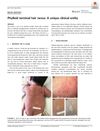 August 2018 in “Pediatric Dermatology”
 A baby had a unique skin condition with a pale patch and surrounding dark hairs, not linked to other health issues.
 August 2018 in “Journal of the American Academy of Dermatology”
 Calcipotriol may effectively treat hair loss in alopecia areata, working better in children than adults.
 August 2017 in “Journal of Investigative Dermatology”
 Activin increases skin tumor formation, skin Tregs help hair growth, lymph-node removal doesn't improve melanoma survival, cells can revert to stem cells in wound healing, and skin bacteria produce peptides that may treat infections.
 March 2014 in “Journal of The American Academy of Dermatology”
 Azathioprine may help with severe hair loss, a new topical treatment could counteract hair thinning, and trichoscopy can diagnose hair-pulling disorder effectively.
 March 2014 in “Journal of The American Academy of Dermatology”
 Azathioprine may be an effective treatment for severe hair loss.
 March 2014 in “Journal of The American Academy of Dermatology”
 Cortexolone 17a-propionate may be an effective new treatment for hair loss.
 March 2014 in “Journal of The American Academy of Dermatology”
 Azathioprine treatment led to rapid hair regrowth in a woman with alopecia universalis.
 July 2013 in “Our Dermatology Online”
 Oral methylprednisolone pulse therapy helped an 11-year-old regrow 80% of his hair in six months.
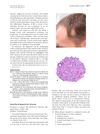
The man has Temporal Triangular Alopecia, a stable, non-scarring hair loss condition best treated with hair transplantation.
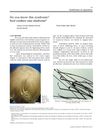
The document concludes that Loose Anagen Hair Syndrome is a benign condition where hair is thin and easily pulled out, often improving with age.
 11 citations
,
May 2016 in “Naunyn-Schmiedeberg's Archives of Pharmacology”
11 citations
,
May 2016 in “Naunyn-Schmiedeberg's Archives of Pharmacology” A substance called 15-deoxy prostaglandin J2 can cause hair follicle cells to die, which might explain how prostaglandin D2 can lead to hair loss.
 89 citations
,
January 2009 in “Advances in Clinical Chemistry”
89 citations
,
January 2009 in “Advances in Clinical Chemistry” Fetal skin heals without scarring due to unique cells and processes not present in adult skin healing.
June 2024 in “Clinical and Experimental Obstetrics & Gynecology” Blood count parameters are not reliable for predicting recurrent implantation failure.
 3 citations
,
August 2015 in “Diabetes and Metabolic Syndrome: Clinical Research and Reviews”
3 citations
,
August 2015 in “Diabetes and Metabolic Syndrome: Clinical Research and Reviews” Married women with type 2 diabetes had a surprisingly low infertility rate, suggesting type 2 diabetes and PCOS may be different conditions.
 1 citations
,
February 2022 in “International Journal of Dermatology”
1 citations
,
February 2022 in “International Journal of Dermatology” Some skin changes from pregnancy like hair loss, excessive hair growth, palm redness, and stretch marks may not go away after birth and could suggest a misdiagnosis or hidden condition.
December 2018 in “European Journal of Pediatric Dermatology/PD. European journal of pediatric dermatology” Segmental vitiligo affects hair follicle melanocytes, causing small, uniform depigmented spots.
 1 citations
,
July 1976 in “Archives of Dermatology”
1 citations
,
July 1976 in “Archives of Dermatology” Some women experienced hair loss after stopping chorionic gonadotropin injections and a low-calorie diet.
 September 2021 in “CRC Press eBooks”
 Pregnancy can cause normal skin changes, including darkening of certain areas, nail changes, vascular changes, and breast changes like stretch marks.
 2 citations
,
July 2022 in “Dermatology Reports”
2 citations
,
July 2022 in “Dermatology Reports” EPDS and MS might share an immune-related cause.
 June 2003 in “Obstetrical & Gynecological Survey”
 Postmenopausal ovary stromal cells have a unique makeup and limited steroid production, suggesting androgens come from the adrenal gland.
 March 2026 in “International Journal of Health Science”
 Pregnancy causes temporary skin changes that are usually harmless.
 208 citations
,
July 2001 in “Journal of The American Academy of Dermatology”
208 citations
,
July 2001 in “Journal of The American Academy of Dermatology” Pregnancy can cause various skin changes and diseases, with PUPPP being the most common skin condition specific to pregnancy.
 April 2017 in “International journal of current advanced research”
 Pregnant women often have skin changes, but only a small percentage have skin conditions caused by or specific to pregnancy; doctors need to tell them apart for proper treatment.
 June 1995 in “International Journal of Gynecology & Obstetrics”
 The new method showed that endometriotic tissue has lower estrogen receptor levels but similar progesterone levels compared to normal endometrium, with both following a similar cycle.

Individualized treatments may help manage Dercum's disease symptoms.