28 citations
,
May 2000 in “Proceedings of the National Academy of Sciences” The Walleye dermal sarcoma virus cyclin causes excessive skin cell growth in mice.
31 citations
,
February 2007 in “Molecular Carcinogenesis” Overexpressing ATF3 in mice's epithelial cells may lead to oral cancer.
100 citations
,
May 2006 in “American Journal Of Pathology” Matriptase is crucial for skin barrier, hair growth, and may contribute to skin cancer.
47 citations
,
January 1998 in “Molecular Carcinogenesis” ErbB2 signaling is crucial for skin cell growth and cancer development in mice.
 1 citations
,
June 2021 in “bioRxiv (Cold Spring Harbor Laboratory)”
1 citations
,
June 2021 in “bioRxiv (Cold Spring Harbor Laboratory)” Activating β-catenin in mammary cells leads to changes that cause early-stage abnormal growths similar to skin structures.

Inhibiting AP-1 changes skin tumor types and affects tumor cell identity.
1 citations
,
January 2022 in “Anais brasileiros de dermatologia/Anais Brasileiros de Dermatologia” Reflectance confocal microscopy may help diagnose trichofolliculoma by showing specific skin features.
70 citations
,
August 2006 in “Cancer Research” AP-1 controls tumor cell type by affecting key signaling pathways.

Inhibiting AP-1 changes skin tumor types and affects tumor cell identity.
 12 citations
,
March 2011 in “Journal of pathology”
12 citations
,
March 2011 in “Journal of pathology” Oncogenic K-ras causes rapid cancerous changes in the mouth's lining.
 8 citations
,
September 2016 in “The American Journal of Dermatopathology”
8 citations
,
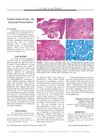
September 2016 in “The American Journal of Dermatopathology” Enlarged sweat gland ducts may indicate scarring hair loss.
1 citations
,
April 2010 in “Cancer Research” WYE-130600 may cause skin thickening and irritation.
 69 citations
,
August 1999 in “Developmental biology”
69 citations
,
August 1999 in “Developmental biology” The nude gene causes skin cell overgrowth and improper development, leading to hair and urinary issues.
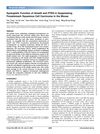
Deleting Smad4 and PTEN genes in mice causes rapid, invasive forestomach cancer.

Deleting Smad4 and PTEN genes in mice causes rapid, invasive stomach cancer.
 27 citations
,
August 2014 in “Wiley interdisciplinary reviews. Developmental biology”
27 citations
,
August 2014 in “Wiley interdisciplinary reviews. Developmental biology” The skin and thymus develop similarly to protect and support immunity.
 66 citations
,
December 2013 in “Nature Cell Biology”
66 citations
,
December 2013 in “Nature Cell Biology” Inactive hair follicle stem cells help prevent skin cancer.
 13 citations
,
September 2019 in “EBioMedicine”
13 citations
,
September 2019 in “EBioMedicine” sPLA2-IIA increases growth in hair follicle stem cells and cancer cells, suggesting it could be targeted for hair growth and cancer treatment.
 184 citations
,
September 2006 in “PLoS Genetics”
184 citations
,
September 2006 in “PLoS Genetics” The Apc gene is crucial for normal skin and thymus development.
8 citations
,
July 2015 in “European journal of histochemistry” Sox9 is present in most canine skin tumors and may help understand stem cells' role in these cancers.
 232 citations
,
January 2013 in “Nature Cell Biology”
232 citations
,
January 2013 in “Nature Cell Biology” Understanding where cancer cells come from helps create better prevention and treatment methods.
 5 citations
,
July 2022 in “Orphanet journal of rare diseases”
5 citations
,
July 2022 in “Orphanet journal of rare diseases” RSPO1 mutations in certain patients lead to skin cells that don't develop properly and are more likely to become invasive, increasing the risk of skin cancer.
 5 citations
,
January 2022 in “PloS one”
5 citations
,
January 2022 in “PloS one” Deleting the p63 gene in certain cells causes problems in thymus development and severe hair loss in mice.
 32 citations
,
January 2015 in “Annals of diagnostic pathology”
32 citations
,
January 2015 in “Annals of diagnostic pathology” The document concludes that recognizing oral lesions is important for diagnosing syphilis.
 3 citations
,
January 2018 in “Reproduction, Fertility and Development”
3 citations
,
January 2018 in “Reproduction, Fertility and Development” Birth control pills increase certain receptor activities in female gerbil prostate glands and can lead to prostate changes.
 56 citations
,
March 2015 in “Cell death and differentiation”
56 citations
,
March 2015 in “Cell death and differentiation” Older skin has higher cancer risk due to inflammation and stem cell issues.
35 citations
,
April 1998 in “PubMed” Activated erbB-2 in mice skin causes severe skin and hair abnormalities.
 89 citations
,
June 2012 in “Anais Brasileiros de Dermatologia”
89 citations
,
June 2012 in “Anais Brasileiros de Dermatologia” Actinic keratosis can lead to skin cancer, is more common in fair-skinned people, and can be reduced with sunscreen and treated effectively.
1 citations
,
August 2022 in “Veterinary medicine and science” The main prostate diseases in dogs are benign growth, infections, and cancer, with various treatments ranging from drugs to surgery, but cancer treatments have limited success.
8 citations
,
January 2017 in “Journal of Oral and Maxillofacial Pathology” Keratoacanthomas on lips may originate differently than those on skin.