 2 citations
,
January 2018 in “Journal of clinical & experimental dermatology research”
2 citations
,
January 2018 in “Journal of clinical & experimental dermatology research” Both fat-derived stem cells and platelet-rich plasma are effective and safe for hair loss, but stem cells give better results with more side effects.
 1 citations
,
August 2023 in “Nature communications”
1 citations
,
August 2023 in “Nature communications” Hdac1 and Hdac2 help maintain and protect the cells that control hair growth.
 1 citations
,
May 2021 in “Journal of Cosmetic Dermatology”
1 citations
,
May 2021 in “Journal of Cosmetic Dermatology” Cosmetic foam product reduces hair loss and increases hair density in men.
 1 citations
,
April 2019 in “Acta Medica Philippina”
1 citations
,
April 2019 in “Acta Medica Philippina” Azathioprine may help treat severe alopecia areata, but more research is needed.
 1 citations
,
May 2018 in “Journal of Evolution of medical and Dental Sciences”
1 citations
,
May 2018 in “Journal of Evolution of medical and Dental Sciences” Platelet Rich Plasma (PRP) injections can effectively reduce hair loss and improve hair growth in both men and women suffering from androgenic alopecia.
 1 citations
,
January 2017 in “Elsevier eBooks”
1 citations
,
January 2017 in “Elsevier eBooks” The document concludes that new treatments for hair loss may involve a combination of cosmetics, clinical methods, and genetic approaches.
 1 citations
,
January 2017 in “International Journal of Dermoscopy”
1 citations
,
January 2017 in “International Journal of Dermoscopy” Dermoscopy is useful for identifying and tracking different types of hair loss without scarring.
 1 citations
,
January 2014 in “Hair therapy & transplantation”
1 citations
,
January 2014 in “Hair therapy & transplantation” Platelet-rich plasma treatment is not very effective for chronic severe alopecia areata.
 1 citations
,
February 2004 in “Journal of The European Academy of Dermatology and Venereology”
1 citations
,
February 2004 in “Journal of The European Academy of Dermatology and Venereology” Hair loss improved with treatment and successful transplant.
 May 2026 in “Journal of Basic and Clinical Health Sciences”
 FAGA shows varied hair thickness, while TE has more empty follicles.
 April 2026 in “Journal of Education Health and Sport”
 Invasive treatments can improve hair growth, but effectiveness varies and more research is needed.
 April 2026 in “Research Square”
 Trichoscopy is reliable for diagnosing different types of frontal non-scarring hair loss.
 January 2026 in “International Research Journal of Modernization in Engineering Technology and Science”
 Alopecia areata causes patchy hair loss and is often treated with corticosteroids.
 January 2026 in “Journal of Clinical Practice and Research”
 Bitemporal alopecia often occurs with other hair conditions and can help predict and monitor these issues.
 December 2025 in “Clinical & Experimental Dermatology and Therapies”
 Cosmerna ARI effectively reduces hair loss and increases hair density in Europeans with androgenetic alopecia.
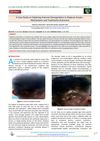 July 2025 in “International Journal of Pharmaceutical Sciences Review and Research”
 Individualized treatment and psychological support improved the patient's quality of life and appearance despite medication side effects.
 November 2024 in “Benha Journal of Applied Sciences”
 Reduced alpha smooth muscle actin may cause hair loss in androgenetic alopecia.
 September 2024 in “Portuguese Journal of Dermatology and Venereology”
 CCCA and LPP may be related hair loss conditions influenced by genetics and environment, needing early treatment.
 September 2024 in “Archives of Medical Science”
 Alopecia areata is linked to immune system differences, with specific biomarkers like CXCL9 and CXCL10 being key for diagnosis and potential treatment targets.
 August 2024 in “Scholars Journal of Applied Medical Sciences”
 Combining PRP therapy with minoxidil is the most effective treatment for hair loss in men.
 July 2024 in “Frontiers in Pharmacology”
 Pilose antler extracts help hair growth by activating hair follicle stem cells.
 July 2024 in “Revista Científica de Estética e Cosmetologia”
 The babassu fiber exfoliating product for hair loss should be stored in a cool place to stay effective.
 February 2024 in “Sohag Medical Journal”
 Various local treatments for alopecia areata show promise, but individualized plans and more research are needed.
 June 2023 in “International Journal of Research in Dermatology”
 Early diagnosis and treatment of alopecia areata in children is crucial to prevent severe progression.
 September 2022 in “Skin appendage disorders”
 Seborrheic dermatitis may contribute to the development of central centrifugal cicatricial alopecia.
 May 2022 in “Rossijskij žurnal kožnyh i veneričeskih boleznej”
 Alopecia areata is complex, often recurring, and needs personalized treatment, especially with other health issues.
 March 2021 in “bioRxiv (Cold Spring Harbor Laboratory)”
 Removing a specific gene in certain skin cells causes hair loss on the body by disrupting normal hair development.
 March 2021 in “Actas Dermo-Sifiliográficas”
 The microbiome may be linked to hair loss and could be a target for new treatments.
 November 2020 in “Journal of The American Academy of Dermatology”
 Certain immune markers may predict chemotherapy response in mesothelioma, and nivolumab is a tolerable and effective treatment for advanced non-small cell lung cancer.
 April 2018 in “Journal of Investigative Dermatology”
 The role of γδT-cells in causing alopecia areata remains unclear.