24 citations
,
August 2007 in “Journal of pediatric surgery” Surgery is not the right treatment for a fungal scalp infection; proper medical treatment is needed.
 3 citations
,
January 2017 in “Journal of Pakistan Association of Dermatology”
3 citations
,
January 2017 in “Journal of Pakistan Association of Dermatology” Tinea capitis affected 4.3% of school children, mostly boys, with T. violaceum as the main cause.
 36 citations
,
October 2016 in “Medical mycology”
36 citations
,
October 2016 in “Medical mycology” PCR-ELISA is better for identifying the fungus causing scalp infections in Ugandan children than traditional methods.
11 citations
,
March 2012 in “Actas Dermo-Sifiliográficas” Tinea capitis is increasingly common in elderly women and requires accurate diagnosis with fungal cultures for effective treatment.
 44 citations
,
March 1991 in “International Journal of Dermatology”
44 citations
,
March 1991 in “International Journal of Dermatology” Prompt treatment of inflammatory tinea capitis (kerion) is crucial to prevent scarring and hair loss.
 3 citations
,
April 2021 in “Berkala ilmu kedokteran/Journal of the medical sciences”
3 citations
,
April 2021 in “Berkala ilmu kedokteran/Journal of the medical sciences” A fungus called Epidermophyton floccosum can cause scalp infections.
July 2024 in “Indian Dermatology Online Journal” Tinea capitis can occur in adults and should be considered if scalp issues persist.
 3 citations
,
January 2015 in “Journal of clinical and diagnostic research”
3 citations
,
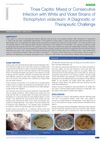
January 2015 in “Journal of clinical and diagnostic research” Treating a boy's scalp infection was challenging because two different colors of the same fungus appeared.
Griseofulvin is still the best treatment for tinea capitis.
December 2020 in “Jurnal RSMH Palembang (Online)” A man with a fungal scalp infection got better after treatment with griseofulvin, cetirizine, and ketoconazole shampoo.
 2 citations
,
April 2015 in “Dermatology practical & conceptual”
2 citations
,
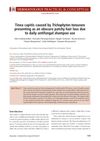
April 2015 in “Dermatology practical & conceptual” Daily use of antifungal shampoo can hide symptoms and make it hard to diagnose fungal scalp infections.
 January 2022 in “International Journal of Research Publications”
 Griseofulvin effectively treats tinea capitis caused by Microsporum canis.
 3 citations
,
September 2020 in “Case reports in dermatological medicine”
3 citations
,
September 2020 in “Case reports in dermatological medicine” Misdiagnosing kerion as a bacterial infection can lead to unnecessary surgery and permanent hair loss.
125 citations
,
May 2010 in “Pediatric dermatology” Systemic treatment is necessary for tinea capitis in children, with griseofulvin preferred for Microsporum infections.
 January 2026 in “Pediatria Polska”
 Early diagnosis and treatment of tinea capitis in children is crucial to prevent permanent hair loss and scarring.
13 citations
,
March 2011 in “Acta Paediatrica” Tinea capitis needs systemic treatment to avoid severe outcomes.
 May 2025 in “Scholars Journal of Medical Case Reports”
 A 10-year-old boy's scalp infection was cured with oral medication in two months.
1 citations
,
November 2009 in “Nurse prescribing” Oral griseofulvin for 6-12 weeks cures most scalp fungal infections in children.
24 citations
,
July 2009 in “Mycoses” A scalp infection was treated successfully, leading to full hair regrowth.
June 2023 in “Journal of Paediatrics and Child Health” Early treatment of a rare scalp infection led to full recovery and hair regrowth.
 January 2021 in “Advances in health sciences research/Advances in Health Sciences Research”
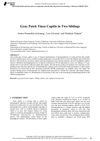
 Two siblings with gray patch tinea capitis were successfully treated after identifying risk factors.
 1 citations
,
July 2023 in “Clinical case reports”
1 citations
,
July 2023 in “Clinical case reports” Tinea capitis should be considered for scalp infections in infants.
3 citations
,
June 2021 in “Case Reports in Infectious Diseases” Fungal infections should be considered in scalp swelling to avoid misdiagnosis.
1 citations
,
October 2024 in “BMC Pediatrics” Kerion in Fars Province mainly affects boys under 11 linked to animal contact, with varied treatment outcomes.
July 2026 in “Cosmoderma” Trichoscopy can identify specific hair patterns in tinea capitis before and after treatment.
 December 2025 in “Medical & Clinical Case Reports Journal”
 Corynebacterium minutissimum might cause hair loss on the scalp, but it's rarely diagnosed.
13 citations
,
December 2012 in “Medical mycology case reports” Misdiagnosis led to permanent hair loss, stressing the need for proper scalp tests.
 7 citations
,
May 2012 in “Actas Dermo-Sifiliográficas”
7 citations
,
May 2012 in “Actas Dermo-Sifiliográficas” Scalp fungus infections in Spain are a health concern, with changing causes and a need for better treatment and prevention.

A Moroccan athlete got a rare scalp infection, stressing the need for better hygiene in sports.
 January 2025 in “Journal of Clinical Medicine”
 Unsanitary barber practices can spread scalp infections, treatable with oral antifungals.