49 citations
,
January 2010 in “Plant and Cell Physiology” LPR1 regulates root growth under low phosphate stress independently of SIZ1 in Arabidopsis thaliana.
 18 citations
,
June 1999 in “Statistical Methods in Medical Research”
18 citations
,
June 1999 in “Statistical Methods in Medical Research” The document concludes that PK/PD modeling is important for determining the safe and effective dosages of drugs.
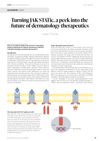 August 2024 in “New Zealand Medical Student Journal”
 JAK inhibitors show promise for treating skin diseases effectively and safely.
 April 2018 in “Journal of Investigative Dermatology”
 Kaempferol helps skin stem cells grow and may improve skin thickness due to its 3-OH group.
 April 2018 in “Journal of Investigative Dermatology”
 Removing STAT5 from 3D-cultured human skin cells reduces their ability to grow hair.
 April 2018 in “Journal of Investigative Dermatology”
 Ginsenoside Rd may help improve skin aging by increasing collagen in the skin.
 April 2018 in “Journal of Investigative Dermatology”
 Aging reduces skin cell renewal and defense against germs due to TGFbeta, but blocking TGFbeta could help restore these functions.
 April 2018 in “Journal of Investigative Dermatology” 32 citations
,
March 2013 in “EMBO journal”
April 2018 in “Journal of Investigative Dermatology” 32 citations
,
March 2013 in “EMBO journal” The plant hormone auxin activates the TOR pathway, affecting gene expression related to growth and cell size.
3 citations
,
June 2021 in “Frontiers in genetics” The protein STAT3 slows down cell growth by blocking the FST gene, which affects hair development in sheep.
14 citations
,
August 2014 in “The FASEB Journal” CAP1/Prss8 does not activate PAR2 or inhibit PN-1.
 226 citations
,
January 2002 in “Biological and Pharmaceutical Bulletin”
226 citations
,
January 2002 in “Biological and Pharmaceutical Bulletin” A new method quickly extracts and identifies proteins from hair and other keratin sources.
2 citations
,
September 2016 in “Journal of Dermatological Science” Reduced TRPS1 leads to increased STAT3 and SOX9 in hair follicles, affecting hair growth.
1 citations
,
January 2023 in “Elsevier eBooks” Phospholipases help maintain and restore skin and hair health, potentially leading to new treatments for related conditions.
 81 citations
,
February 2019 in “Experimental & Molecular Medicine”
81 citations
,
February 2019 in “Experimental & Molecular Medicine” PAK4 is crucial in cancer progression, brain development, and could be a therapeutic target, especially through the PAK4-CREB axis.
16 citations
,
September 2022 in “Plant Cell & Environment” Iron affects root hair growth in Arabidopsis during phosphate deficiency by influencing auxin signaling and vesicle trafficking.
 December 2023 in “Journal of ethnopharmacology”
 Tribuloside can increase skin pigmentation by enhancing melanin production and distribution.
 January 2025 in “Nature Communications”
 CPK1 helps root hair growth in Arabidopsis by activating channels for calcium signaling.
October 2014 in “Cancer research” Blocking mTORC1 reduces skin tumor growth in mice.
114 citations
,
July 2003 in “PubMed” Lack of KSR1 stops certain skin tumors in mice.
ERK activation spreads between cells in mouse skin, linked to cell division and influenced by TPA and EGF receptors.
January 2005 in “Life sciences” Targeting LPA could help treat skin disorders.
28 citations
,
January 2005 in “Photochemistry and Photobiology” Protein kinase C epsilon may increase skin cancer risk by affecting nearby cells.
 April 2023 in “Journal of Investigative Dermatology”
 Changing YBX1 protein activity affects skin stem cell function and aging.
 25 citations
,
July 2024 in “Frontiers in Pharmacology”
25 citations
,
July 2024 in “Frontiers in Pharmacology” Rimegepant causes more nausea and skin issues, while ubrogepant causes more muscle issues; personalized treatment is important.
 23 citations
,
January 2012 in “International Food Research Journal”
23 citations
,
January 2012 in “International Food Research Journal” Tofacitinib effectively treated a woman's severe symptoms from a rare autoimmune condition.
 4 citations
,
May 2020 in “bioRxiv (Cold Spring Harbor Laboratory)”
4 citations
,
May 2020 in “bioRxiv (Cold Spring Harbor Laboratory)” Migrants from certain regions had a higher risk of COVID-19 than Spaniards.
 2 citations
,
January 2023 in “Prague Medical Report”
2 citations
,
January 2023 in “Prague Medical Report” JAK inhibitors, like baricitinib, are effective and safe for treating alopecia areata.
 2 citations
,
June 2020 in “AIDS”
2 citations
,
June 2020 in “AIDS” Recreational drug use can cause misdiagnosed conditions and drug interactions in HIV patients.
 November 2025 in “SKIN The Journal of Cutaneous Medicine”
 Baricitinib shows promise in improving frontal fibrosing alopecia symptoms.