 2 citations
,
January 2025 in “动物学研究”
2 citations
,
January 2025 in “动物学研究” YAP1 helps fat cell formation by influencing the Hippo pathway.
 1 citations
,
August 2016 in “Journal of Investigative Dermatology”
1 citations
,
August 2016 in “Journal of Investigative Dermatology” Activating STAT5 in the skin's dermal papilla is key for starting hair growth, regenerating hair follicles, and healing wounds.
 December 2012 in “Journal of Dermatological Science”
 Wnt/beta-catenin signaling in the skin helps fat cell development during hair growth and repair.
 55 citations
,
October 2019 in “Dermatology and therapy”
55 citations
,
October 2019 in “Dermatology and therapy” Drugs targeting the JAK/STAT pathway can improve atopic dermatitis but vary in effectiveness for vitiligo and alopecia areata, with generally mild safety concerns.
 April 2018 in “Journal of Investigative Dermatology”
 Removing STAT5 from 3D-cultured human skin cells reduces their ability to grow hair.
 1 citations
,
January 2019 in “Annals of dermatology/Annals of Dermatology”
1 citations
,
January 2019 in “Annals of dermatology/Annals of Dermatology” STAT5 is crucial for hair growth in 3D cultured human dermal papilla cells.
 January 2025 in “Fitoterapia”
 Signaling pathways are key targets for developing effective drugs.
 232 citations
,
June 2012 in “Cold Spring Harbor Perspectives in Biology”
232 citations
,
June 2012 in “Cold Spring Harbor Perspectives in Biology” Wnt signaling helps heal injuries and could lead to new treatments.
 139 citations
,
August 2018 in “Development”
139 citations
,
August 2018 in “Development” The niche environment controls stem cell behavior and plasticity, which is important for tissue health and repair.
 81 citations
,
February 2019 in “Experimental & Molecular Medicine”
81 citations
,
February 2019 in “Experimental & Molecular Medicine” PAK4 is crucial in cancer progression, brain development, and could be a therapeutic target, especially through the PAK4-CREB axis.
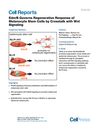 59 citations
,
April 2016 in “Cell Reports”
59 citations
,
April 2016 in “Cell Reports” EdnrB signaling helps melanocyte stem cells regenerate and could be targeted to treat pigmentation issues.
 49 citations
,
February 2008 in “Stem Cells”
49 citations
,
February 2008 in “Stem Cells” Wnt10b helps blood stem cells grow after injury.
 19 citations
,
September 2019 in “PLOS genetics”
19 citations
,
September 2019 in “PLOS genetics” Telomere damage affects skin and hair follicle stem cells by messing up important growth signals.
 14 citations
,
June 2018 in “Frontiers in pharmacology”
14 citations
,
June 2018 in “Frontiers in pharmacology” Green tea compound EGCG helps mink hair follicles grow by affecting certain cell growth pathways.
 1 citations
,
May 2017 in “InTech eBooks”
1 citations
,
May 2017 in “InTech eBooks” Hair loss in Androgenetic alopecia (AGA) is due to altered cell sensitivity to hormones, not increased hormone levels. Hair growth periods shorten over time, causing hair to become thinner and shorter. This is linked to miscommunication between cell pathways in hair follicles. There's also a change in gene expression related to blood vessels and cell growth in balding hair follicles. The exact molecular causes of AGA are still unclear.
 March 2024 in “Vestnik Rossijskogo universiteta družby narodov. Seriâ Agronomiâ i životnovodstvo”
 Wnt and Shh signaling are key in noggin-induced tumors, and blocking them can slow tumor growth.
 October 2021 in “Research Square (Research Square)”
 Hair follicle stem cells in hairpoor mice are disrupted, causing hair loss.
 April 2019 in “Journal of Investigative Dermatology”
 Calcium signals and SHH guide the direction of feather growth in chicken skin.
 27 citations
,
June 2023 in “Nature”
27 citations
,
June 2023 in “Nature” Senescent melanocytes can boost hair growth by activating hair stem cells.
 49 citations
,
October 2009 in “Cancer research”
49 citations
,
October 2009 in “Cancer research” Disrupting Stat3 in hair follicle stem cells greatly reduces skin tumor formation.
 21 citations
,
January 2023 in “The International Journal of Developmental Biology”
21 citations
,
January 2023 in “The International Journal of Developmental Biology” The Wnt signaling pathway is crucial for regeneration and could help advance human medicine.
 1 citations
,
June 2025 in “Scientific Reports”
1 citations
,
June 2025 in “Scientific Reports” Hydroxychloroquine may help treat benign prostatic hyperplasia by reducing inflammation and promoting cell death.
 1 citations
,
September 2023 in “eLife”
1 citations
,
September 2023 in “eLife” TLR2 is important for hair growth and can be targeted to treat hair loss.
 January 2026 in “Frontiers in Bioscience-Landmark”
 Araliadiol protects skin cells from damage by boosting antioxidant defenses.
 January 2022 in “Journal of Biomedical Research & Environmental Sciences”
 Certain gene variations may increase the risk of PCOS in South Indian women.

Plant roots respond to fungus smells by possibly using certain proteins and a plant hormone to change root growth, but more research is needed.
 April 2018 in “Journal of Investigative Dermatology”
 BMP signaling is important for skin color, affecting melanin production, pigment spread, and cell movement.

TLR3 signaling enhances the immunosuppressive properties of human periodontal ligament stem cells.
 April 2016 in “The journal of investigative dermatology/Journal of investigative dermatology”
 BMP signaling controls hair growth and skin color.
 April 2016 in “Journal of Investigative Dermatology”
 Double-stranded RNA activates a pathway that causes a skin protein to be expressed in the wrong place.