 September 2023 in “Journal of microbiology and biotechnology”
 A type of collagen helps hair grow by boosting cell growth and activating a specific hair growth pathway.
 July 2023 in “bioRxiv (Cold Spring Harbor Laboratory)”
 The mesenchyme can start hair growth, but the exact signal that causes this is still unknown.
 December 2022 in “Frontiers in plant science”
 CCDC22 and CCDC93 are essential for root and root hair growth in Arabidopsis.
 December 2022 in “theses.fr (ABES)”
 Microplastics in the Lebanese Mediterranean carry harmful pollutants, posing environmental and health risks.
 October 2022 in “Research Square (Research Square)”
 The conclusion is that certain chemicals from Bacillus subtilis help improve plant root growth through a hormone-related process.
 June 2022 in “Research Square (Research Square)”
 Hair follicle stem cells can help heal intestinal injuries in rats.
 September 2021 in “Research Square (Research Square)”
 Not having enough or having too much of the protein Grainyhead-like 3 leads to various developmental problems.
 June 2021 in “bioRxiv (Cold Spring Harbor Laboratory)”
 The gene Tfap2b is essential for creating a type of stem cell in zebrafish that can become different pigment cells.

Plant roots respond to fungus smells by possibly using certain proteins and a plant hormone to change root growth, but more research is needed.
 January 2020 in “Research Portal Denmark”
 A short male anogenital distance may indicate incomplete masculinization due to disrupted androgen action.

Proretinal nanoparticles are a safe and effective way to deliver retinal to the skin.
 March 2017 in “bioRxiv (Cold Spring Harbor Laboratory)”
 Plant root hair growth is controlled by the hormone auxin, which affects the production of certain oxygen-related molecules through a specific process.
 January 2017 in “International journal of transplantation & plastic surgery”
 Hair restoration techniques have improved over time, focusing on better results and less scarring, but skilled doctors are essential for natural-looking outcomes.
Avicennia Marina extract and avicequinone C can reduce hair loss hormone production and increase hair growth factors, suggesting they could be used to treat androgenic alopecia.
 March 2015 in “Polish Journal of Public Health”
 Blood vessel patterns in skin diseases relate to certain blood markers in systemic sclerosis but not in psoriasis or psoriatic arthritis, and may indicate circulation issues in alopecia.

Chrysanthemum zawadskii extract may help treat hair loss by promoting hair growth and affecting growth factors.
 January 2010 in “Nihon Hou Kagaku Gijutsu Gakkaishi”
 The modified staining method can determine the ABO blood group of hair samples accurately.
 November 2009 in “Actas dermo-sifiliográficas/Actas dermo-sifiliográficas”
 Hair transplantation effectively treated a bald patch in an 18-year-old woman with Temporal Triangular Alopecia.
 July 2009 in “International Society of Hair Restoration Surgery”
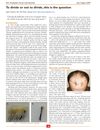
 Dividing hair grafts may make hair look fuller, but more research is needed.

Hair restoration surgery has improved to transplant hair in natural groupings, but it's labor-intensive and can't fully restore normal hair density.
 January 2006 in “The Journal of Korean Medicine Ophthalmology and Otolaryngology and Dermatology”
 Rubus coreanum may help hair growth but not through the tested mechanisms, and none of the herbal extracts help with acne.
 October 2002 in “Dermatologic Surgery”
 The document concludes that careful planning, efficient use of every hair graft, and setting surgical priorities are crucial for successful hair restoration surgery.
 May 2002 in “British Journal of Dermatology”
 A pregnant woman's skin condition improved after giving birth, possibly due to high estrogen levels during pregnancy.
 January 1998 in “Lasers in Surgery and Medicine”
 Lasers are effective and safe for various medical treatments, including cancer, wound healing, and skin conditions.

Avicennia marina extract and avicequinone C can potentially promote hair growth and treat hair loss by interfering with hair loss mechanisms and boosting growth factors.
 April 2019 in “Journal of emerging technologies and innovative research”
 Early treatment of Female Pattern Hair Loss is important to stop it from getting worse, and various treatments can help, especially in mild to moderate cases.
 November 2003 in “Dermatologic Surgery”
 Minoxidil, finasteride, and hair transplantation combined give best results for hair loss.
 May 2002 in “British Journal of Dermatology”
 Hair loss caused by longer latent hair cycle and sudden miniaturization, not gradual follicle size reduction.
1 citations
,
May 2023 in “bioRxiv (Cold Spring Harbor Laboratory)” A new tool allows easier long-term imaging of live skin cells, helping study diseases like skin cancer.
27 citations
,
January 2016 in “Indian Dermatology Online Journal” Dermoscopy is better than a magnifying lens for examining skin because it shows deeper details.