 1 citations
,
March 2013 in “International Society of Hair Restoration Surgery”
1 citations
,
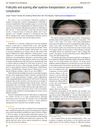
March 2013 in “International Society of Hair Restoration Surgery” Eyebrow transplants can rarely cause scarring due to folliculitis.
 1 citations
,
January 2006 in “Dermatologic Surgery”
1 citations
,
January 2006 in “Dermatologic Surgery” The SAFE System may reduce hair transplant transection rates but has been critiqued for not being as minimally invasive as claimed.
 1 citations
,
May 2002 in “British Journal of Dermatology”
1 citations
,
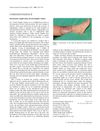
May 2002 in “British Journal of Dermatology” Hair loss caused by longer latent hair cycle and sudden miniaturization, not gradual follicle size reduction.

PmtHEE is a better model for studying pigmented skin because it includes melanocytes and shows improved cell differentiation.
 June 2026 in “Scientific Reports”
 Hypericin and berberine may help hair growth by activating oxytocin signals.
 June 2026 in “Research Square”
 THBS4 helps hair grow by activating hair follicle stem cells.
 May 2026 in “Scientific Reports”
 Kukui nut oil helps hair and eyelash growth.
 May 2026 in “Clinical Cosmetic and Investigational Dermatology”
 White hair can make the scalp look more visible, which may be mistaken for hair loss.
 April 2026 in “Communications Biology”
 The development of breeding tubercles in male zebrafish relies on a specific enzyme that processes hormones.
 April 2026 in “Frontiers in Cell and Developmental Biology”
 CD200- cells in hair follicles have a higher ability to regenerate hair.

Fraser's Dolphin can heal skin wounds with minimal scarring, unlike humans.
 February 2026 in “Journal of Regenerative Medicine and Biology Research”
 Exosomes show promise for anti-aging and regenerative treatments.

Ca²⁺-mediated protein citrullination controls cell growth in the CNS and may help treat brain tumors.
 November 2025 in “International Journal of Zoology and Applied Biosciences”
 New technologies like AI, robotics, and stem cells have made hair transplants more effective and natural-looking.
 November 2025 in “Archives of Dermatological Research”
 Limelight (CB-EVs) safely promotes hair growth.
 October 2025 in “Frontiers in Veterinary Science”
 Quercetin boosts hair follicle stem cell growth and survival in cashmere goats.
 September 2025 in “International Journal of Innovative Technologies in Social Science”
 Dutasteride is more effective than finasteride for hair loss, but more research is needed on safety and dosing.
 September 2025 in “Research in Agriculture Livestock and Fisheries”
 Cattle in Mymensingh, Bangladesh, face high parasitic disease rates, needing better deworming and management.

Hair growth is maintained by specific cell signals.
 May 2025 in “Animal Bioscience”
 Inhibiting prolactin reduces hair follicle activation in cashmere goats.
 January 2025 in “Open Life Sciences”
 Overexpression of the HE4 gene in mice causes eye inflammation and cloudiness.
 April 2024 in “bioRxiv (Cold Spring Harbor Laboratory)”
 A gene network led by RSL4 is crucial for early root hair growth in response to cold in Arabidopsis thaliana.
 February 2024 in “Planta”
 TRM21 helps control flavonoid production and root hair growth in Arabidopsis thaliana.
 February 2024 in “Biomedical materials”
 Scientists created a lab-grown hair follicle model that behaves like real hair and could improve hair loss treatment research.
 January 2024 in “bioRxiv (Cold Spring Harbor Laboratory)”
 The gene Ascl4 is not necessary for the development of hair, teeth, or mammary glands.
 January 2024 in “Indian Journal of Animal Research”
 Nerium oleander leaf extract effectively kills scabies mites in rabbits.
 January 2024 in “Theranostics”
 HDAC6 helps keep ovarian follicles dormant, extending female fertility.
 December 2023 in “Biological & pharmaceutical bulletin”
 IPM enhances skin penetration of hydrophilic drugs.
 December 2023 in “International Journal of Medical Arts”
 Transplanted hair follicles show significant changes after FUE, needing more research.
 November 2023 in “Animal Bioscience”
 miR-133a-3p and miR-145-5p help goat hair follicle stem cells differentiate by controlling NANOG and SOX9.