 January 2014 in “Sen i Gakkaishi”
 Liposome-encapsulated thioglycolic acid improves hair perming effectiveness and durability.
 July 2013 in “International Society of Hair Restoration Surgery”
 Effective storage of hair follicles is crucial for successful hair transplants, especially in patients with heart issues.
 November 2011 in “Advanced Materials Research”
 Adding 1% hair fibers to brake materials improves friction and wear, making them more effective.
 July 2010 in “Journal of Investigative Dermatology”
 Scientists found gene mutations that affect hair loss, skin stem cells, and skin disorders, and identified drugs that may help treat blood vessel and skin conditions.
 July 1997 in “Journal of Cutaneous Medicine and Surgery”
 Finasteride significantly increases scalp hair and prevents hair loss in young and middle-aged men.
 July 1996 in “Annals of Internal Medicine”
 Long-term high-dose fluconazole can cause reversible hair loss.
 July 1996 in “Annals of Internal Medicine”
 International medical graduates scored higher than U.S. graduates on a medical exam.
 February 1960 in “Journal of the American Medical Association”
 Treatments for hair loss include estrogen therapy and special shampoos.
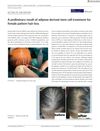 April 2021 in “Journal of Cosmetic Dermatology”
 Stem cell treatment improved hair density in female hair loss patient.
 April 2018 in “Radiotherapy and Oncology”
 Prostaglandin helps regenerate hair follicles after radiation damage.
 April 2017 in “Journal of Investigative Dermatology”
 Found new possible treatments for hair loss.
 August 2003 in “International Journal of Cosmetic Surgery and Aesthetic Dermatology”
 Fiber implants effectively treat permanent hair loss with few complications.
 355 citations
,
August 2013 in “Acta Biomaterialia”
355 citations
,
August 2013 in “Acta Biomaterialia” The nanofibers with two growth factors improved wound healing by supporting structure, preventing infection, and aiding tissue growth.
 350 citations
,
June 1989 in “The American Journal of Medicine”
350 citations
,
June 1989 in “The American Journal of Medicine” Itraconazole is potentially effective for treating invasive aspergillosis, but more research is needed.
 239 citations
,
December 2013 in “Scientific Reports”
239 citations
,
December 2013 in “Scientific Reports” A new method quickly creates controllable cell clusters for tissue engineering and drug testing.
 218 citations
,
April 2012 in “British Journal of Dermatology”
218 citations
,
April 2012 in “British Journal of Dermatology” Guidelines suggest various treatments for alopecia areata, but leaving it untreated is also an option as 80% cases may recover on their own.
 208 citations
,
January 2013 in “Lab on a Chip”
208 citations
,
January 2013 in “Lab on a Chip” The Multi-Organ-Chip improves the growth and quality of skin and hair in the lab, potentially replacing animal testing.
 200 citations
,
November 1997 in “Planta”
200 citations
,
November 1997 in “Planta” Calcium affects where root hairs grow, but other unknown factors determine their growth direction.
 193 citations
,
January 2015 in “International journal of trichology”
193 citations
,
January 2015 in “International journal of trichology” Dermatologists need to understand hair products to treat hair and scalp issues better.
 193 citations
,
February 2015 in “Nature Communications”
193 citations
,
February 2015 in “Nature Communications” Fungi-produced compounds can change plant root growth.
 182 citations
,
June 2017 in “Biomaterials”
182 citations
,
June 2017 in “Biomaterials” Special fiber materials boost the healing properties of certain stem cells.
 182 citations
,
October 2003 in “British Journal of Dermatology”
182 citations
,
October 2003 in “British Journal of Dermatology” The 2003 guidelines suggest that while some treatments can regrow hair in alopecia areata, none alter the disease's progression, and wigs may be the best option for extensive hair loss.
 169 citations
,
June 2010 in “Molecular & cellular proteomics”
169 citations
,
June 2010 in “Molecular & cellular proteomics” Pectin biosynthesis is essential for the growth of cotton fibers and Arabidopsis root hairs.
 162 citations
,
July 2011 in “Biomacromolecules”
162 citations
,
July 2011 in “Biomacromolecules” Chitosan nanofiber scaffolds improve skin healing and are promising for wound treatment.
 161 citations
,
August 2013 in “Journal of experimental botany”
161 citations
,
August 2013 in “Journal of experimental botany” Certain inhibitors slow down plant growth by causing early cell specialization without changing the cell development pattern.
 151 citations
,
July 2011 in “Archives of Dermatological Research”
151 citations
,
July 2011 in “Archives of Dermatological Research” Liposomal systems show promise for delivering drugs through the skin but face challenges like high costs and stability issues.
 149 citations
,
June 2002 in “Veterinary record/The veterinary record”
149 citations
,
June 2002 in “Veterinary record/The veterinary record” Trilostane effectively improved symptoms in dogs with a certain adrenal gland disorder.
 140 citations
,
August 2011 in “Biomaterials”
140 citations
,
August 2011 in “Biomaterials” Keratose, derived from human hair, is a non-toxic biomaterial good for tissue regeneration and integrates well with body tissues.
 137 citations
,
October 2009 in “The American journal of pathology”
137 citations
,
October 2009 in “The American journal of pathology” Matriptase is crucial for keeping epithelial tissues healthy and functioning properly.
 130 citations
,
September 2018 in “Cell Reports”
130 citations
,
September 2018 in “Cell Reports” Macrophages help heal nerves by aiding the maturation of Schwann cells and are important for nerve repair.