 8 citations
,
May 2017 in “Current traditional medicine”
8 citations
,
May 2017 in “Current traditional medicine” Stinging nettle has compounds that help with joint pain, arthritis, and prostate issues.
Stinging nettle infusions improve the strength and antioxidant properties of k-carrageenan hydrogels.
 69 citations
,
July 1997 in “Der Urologe”
69 citations
,
July 1997 in “Der Urologe” Sabal and Urtica extract works as well as finasteride for treating BPH, with fewer side effects.
 67 citations
,
February 2015 in “Life Sciences”
67 citations
,
February 2015 in “Life Sciences” Some plant-based treatments can help with benign prostatic hyperplasia symptoms, but more research is needed to confirm their safety and effectiveness.
32 citations
,
January 2012 in “Chinese Medicine” Urtica dioica (stinging nettle) is a potential natural antioxidant for medicinal and cosmetic use.
 29 citations
,
November 2013 in “Expert Review of Dermatology”
29 citations
,
November 2013 in “Expert Review of Dermatology” Sensitive skin often causes discomfort, affects many people, especially women and older adults, and should be managed with careful product selection.
14 citations
,
June 2014 in “World Journal of Urology” The herbal combination of saw palmetto and stinging nettle reduces nighttime urination in men with urinary issues.
14 citations
,
January 2014 in “Tropical Journal of Pharmaceutical Research” Urtica dioica L. extract may help treat tinea corporis but is less effective than terbinafine.
4 citations
,
October 2013 in “Botanics Targets and Therapy” The herbal preparation may help manage alopecia by reducing inflammation and boosting the immune response.
 3 citations
,
January 2019 in “Therapeutic advances in urology”
3 citations
,
January 2019 in “Therapeutic advances in urology” WS PRO 160 I 120 mg effectively treats urinary symptoms from BPH with good safety and tolerability.
3 citations
,
July 2018 in “DergiPark (Istanbul University)” Medicinal plants in European Turkey are used to treat skin issues like hemorrhoids, hair loss, burns, acne, and injuries.
 2 citations
,
December 2021 in “ScienceRise”
2 citations
,
December 2021 in “ScienceRise” The best way to extract oil from Urtica dioica roots is by using corn oil, a 1:5 ratio of raw material to extract, extracting for 6 hours, and using the maceration method.
 November 2022 in “The journal of investigative dermatology/Journal of investigative dermatology”
 Ivermectin 1% cream effectively reduces visible and invisible symptoms of rosacea.
December 2020 in “Zenodo (CERN European Organization for Nuclear Research)” Certain herbs like stinging nettle, Indian gooseberry, and St. John's Wort can help improve hair growth and health.
Urtica dioica L. extract may help treat skin fungus but is less effective than standard treatment.
 January 2009 in “Elsevier eBooks”
 Some plant-based treatments may help with ovary function, insulin resistance, and excess male hormones in PCOS, but more research is needed to confirm their safety and effectiveness.
February 2023 in “Current Pharmaceutical Design” Natural remedies like certain plants can help reduce hair loss and promote hair growth.
 November 2023 in “Dermatologic therapy”
 The scalp serum reduced scalp discomfort and symptoms without affecting skin moisture loss.
20 citations
,
August 2021 in “Journal of Cosmetic Dermatology” Cannabinoids might help with skin diseases and hair growth, but more research is needed.
 13 citations
,
October 2015 in “Journal of the European Academy of Dermatology and Venereology”
13 citations
,
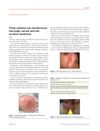
October 2015 in “Journal of the European Academy of Dermatology and Venereology” The document concludes that early recognition and appropriate treatment of red scalp, red ear, and red scrotum syndromes can lead to remission.
July 2026 in “Clinical Cosmetic and Investigational Dermatology” Combining concentrated growth factor with intense pulsed light is more effective and safer for sensitive skin than using intense pulsed light alone.
June 2026 in “British Journal of Dermatology” Scalp sensations like burning are linked to psychological distress in some types of hair loss.
 July 2022 in “Dermatology practical & conceptual”
 Henna ointment may help reduce itching and improve wound healing in patients with epidermolysis bullosa.
September 2020 in “Journal of Mind and Medical Sciences” Combining NdYag laser with pulsed light effectively treats rosacea with manageable side effects.
September 2015 in “Research Portal (King's College London)” Human hair movement is affected by its inner structure and chemical treatments.
 5 citations
,
March 2005 in “Journal of The American Academy of Dermatology”
5 citations
,
March 2005 in “Journal of The American Academy of Dermatology”  94 citations
,
January 2016 in “Journal of the European Academy of Dermatology and Venereology”
94 citations
,
January 2016 in “Journal of the European Academy of Dermatology and Venereology” Sensitive skin is often caused by nerve fibers and environmental factors, and can be managed with mild skincare and professional advice.
 63 citations
,
March 1998 in “Archives of Dermatology”
63 citations
,
March 1998 in “Archives of Dermatology” Antidepressants may improve or resolve scalp dysesthesia in most patients.
 April 2017 in “InTech eBooks”
 Many people with hair loss experience scalp pain known as trichodynia, but the causes are unclear and treatments vary.
 May 2026 in “International Journal of Veterinary Science”
 Higher dihydrotestosterone levels reduce crowing complexity in Kokok Balenggek roosters.