 September 2018 in “PubMed”
 Hair becomes thinner, grayer, and may fall out more as people get older, and styling habits can worsen these effects.
Thermal straightening can damage ethnic hair and may pose health risks.
January 2013 in “프로그램북(구 초록집)” Hair perms or treatments seem safe to use up to 3 to 4 times during pregnancy.
 1 citations
,
November 2020 in “Journal of The American Academy of Dermatology”
1 citations
,
November 2020 in “Journal of The American Academy of Dermatology” The commentary suggests that certain hair and skin care products may be linked to frontal fibrosing alopecia, but not sunscreens, and calls for more thorough research on the causes.
May 2026 in “International Journal of Health Management Review” Alkaline substances can severely damage hair and scalp health.
 May 2014 in “Hair transplant forum international”
 Scalp tools, tracking progress, targeting scalp inflammation, and avoiding certain hair treatments can improve female hair loss treatment.
October 2024 in “UNESP Institutional Repository (São Paulo State University)” Straightening and dyeing damage hair structure.
 7 citations
,
August 2018 in “Journal of cosmetic dermatology”
7 citations
,
August 2018 in “Journal of cosmetic dermatology” Chemical hair straightening improves smoothness and shine but may cause side effects, suggesting a need for safer methods.
 40 citations
,
June 2013 in “Journal of cosmetic dermatology”
40 citations
,
June 2013 in “Journal of cosmetic dermatology” Brazilian keratin treatments can straighten hair but may contain harmful formaldehyde.
February 2022 in “Fibers” Scientists created a non-toxic, sugar-based hair product that can style hair without damage.
 3 citations
,
January 2004 in “Sen i Gakkaishi”
3 citations
,
January 2004 in “Sen i Gakkaishi” DTDG in hair treatments reduces damage and preserves hair structure.

Brazilian keratin treatment can cause skin reactions like eczema.
 3 citations
,
January 2019 in “Skin Research and Technology”
3 citations
,
January 2019 in “Skin Research and Technology” Frequent use of hair straighteners can cause hair loss similar to scarring alopecia in young Turkish women.
2 citations
,
January 2022 in “Anais brasileiros de dermatologia/Anais Brasileiros de Dermatologia” Chemical hair straighteners can cause scalp and hair damage, but long-term effects are unclear.
 October 2012 in “CRC Press eBooks”
 HIV can cause hair loss and changes in nails, which may indicate disease progression.
 98 citations
,
June 2008 in “Human mutation”
98 citations
,
June 2008 in “Human mutation” A genetic change in the EDAR gene causes the unique hair traits found in East Asians.
1 citations
,
January 2025 in “JAAD reviews.” Personalized hair care strategies are needed for Black cancer patients to prevent hair loss during chemotherapy.
 February 2025 in “International Journal of Cosmetic Science”
 A new amino acid derivative, ATS, improves hair texture and moisture, making it easier to straighten curly hair.
 47 citations
,
January 2017 in “RSC Advances”
47 citations
,
January 2017 in “RSC Advances” Keratin peptides can change hair shape gently without harsh chemicals.
 32 citations
,
August 2015 in “Anais Brasileiros de Dermatologia”
32 citations
,
August 2015 in “Anais Brasileiros de Dermatologia” Black women's unique hair characteristics and styling practices can lead to specific scalp conditions, which require early diagnosis and appropriate treatment.
 June 2024 in “Bangladesh Journal of Medicine”
 Effective alopecia treatment depends on the specific cause and includes medications and procedures.
 September 2020 in “Benha Journal of Applied Sciences”
 Protein hair straighteners damage the hair more than hair dyes.
 May 2018 in “European Journal of Dermatology”
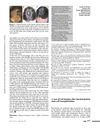
 Adjusting the medication tacrolimus resolved a boy's red nail beds after a stem cell transplant.
 November 2011 in “Informa Healthcare eBooks”
 Environmental, chemical, mechanical, and personal health factors can all damage hair and contribute to hair loss or changes in hair quality.
 August 2005 in “Microscopy and Microanalysis”
 Polymethylene wax in hair relaxers makes hair smooth and shiny with less damage.
 February 2005 in “The Journal of Urology”
 Finasteride for hair loss doesn't harm erectile function; weight loss and exercise improve it.
 105 citations
,
April 2004 in “Dermatologic Therapy”
105 citations
,
April 2004 in “Dermatologic Therapy” The document concludes that proper diagnosis and a combination of medical, hair-care, and surgical treatments are important for managing alopecia in black women.
 72 citations
,
July 2003 in “Journal of cosmetic dermatology”
72 citations
,
July 2003 in “Journal of cosmetic dermatology” Frequent hair coloring and styling can damage hair and cause breakage or loss.
 57 citations
,
September 2005 in “International Journal of Dermatology”
57 citations
,
September 2005 in “International Journal of Dermatology” Frequent use of chemical hair relaxants is linked to increased scarring hair loss in Nigerian women.
 55 citations
,
October 2003 in “Dermatologic Clinics”
55 citations
,
October 2003 in “Dermatologic Clinics” Different hair care practices and conditions affect African American hair and scalp health, requiring specialized knowledge for treatment.