 May 2015 in “Plastic and Reconstructive Surgery”
 A new method using bands and finger sheaths from gloves to manage hair during surgery is effective, quick, and reduces hair damage.
 1 citations
,
January 1998 in “Seminars in Plastic Surgery”
1 citations
,
January 1998 in “Seminars in Plastic Surgery” Hair transplantation using micro- and minigraft megasessions is safe, effective, and provides natural results with high patient satisfaction.
 2 citations
,
May 2010 in “Hair transplant forum international”
2 citations
,
May 2010 in “Hair transplant forum international” Different hair restoration techniques like follicular unit extraction, scalp reduction, and body hair transplantation can improve results for patients unhappy with their initial surgery, but they also have potential risks.
 October 2021 in “Indian Journal of Plastic Surgery”
 Hair transplant techniques have improved and become less invasive over time, but there are concerns about unregulated centers. The market is growing, with potential for more growth in India due to increasing hair loss cases. New technologies like robotic transplants are promising for the future. Surgeons are encouraged to prioritize patient safety and understand the science behind their techniques.
 1 citations
,
May 2018 in “Hair transplant forum international”
1 citations
,
May 2018 in “Hair transplant forum international” Hair transplant techniques and scalp micropigmentation can effectively hide scars and hair loss after cranial surgery.
 3 citations
,
May 2021 in “Indian Dermatology Online Journal”
3 citations
,
May 2021 in “Indian Dermatology Online Journal” FUE is a versatile hair transplant technique with many uses and good outcomes when performed with skill.
 2 citations
,
September 2007
2 citations
,
September 2007 Surgical hair restoration involves moving hair from a non-balding area to a balding area, with the transplanted hair not subject to male pattern baldness. Medications can slow hair loss and regrow some hair, but successful treatment needs careful planning, skill, and ethical responsibility due to progressive hair loss and limited donor hair.
3 citations
,
January 2010 Refined open donor harvesting techniques can reduce hair follicle damage in hair restoration surgery.
The FUE hair transplant technique provides a natural and satisfying solution for male pattern baldness.
Understanding hair follicle structure and techniques improves hair restoration outcomes.
 January 2018 in “Georg Thieme Verlag eBooks”
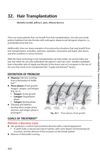
 Hair transplantation is a surgical procedure to move hair to bald areas, requires good donor hair, and results show in about a year.
 9 citations
,
April 2000 in “Plastic and Reconstructive Surgery”
9 citations
,
April 2000 in “Plastic and Reconstructive Surgery” The document concludes that appearance can be significantly improved after one hair restoration correction procedure, but often multiple operations are needed for the best results.
 1 citations
,
July 2022 in “Clinical dermatology review”
1 citations
,
July 2022 in “Clinical dermatology review” Hair transplantation is an effective hair loss treatment with two main techniques, requires careful planning, and can improve beard and eyebrows appearance.
 29 citations
,
January 2010 in “PubMed”
29 citations
,
January 2010 in “PubMed” FUE hair transplants offer minimal scarring and are good for short hairstyles but are time-consuming and can be costly.
 25 citations
,
May 2011 in “Annals of Plastic Surgery”
25 citations
,
May 2011 in “Annals of Plastic Surgery” Nonhead hair transplantation is effective for patients with limited head donor hair, but more research is needed.
 August 2014 in “Plastic Surgery”
 Dr. WP Unger suggested that traditional strip harvesting might be better for hair transplants than Follicular Unit Extraction due to higher hair survival rates and less risk of a patchy look at the donor site.
 43 citations
,
October 2003 in “Journal of The American Academy of Dermatology”
43 citations
,
October 2003 in “Journal of The American Academy of Dermatology” Hair transplanting is a useful, often overlooked treatment for female pattern hair loss.
 15 citations
,
January 1999 in “Archives of Facial Plastic Surgery”
15 citations
,
January 1999 in “Archives of Facial Plastic Surgery” Advancements in hair transplantation have resulted in more natural-looking hair and increased patient satisfaction.
1 citations
,
January 2020 FUE is a preferred hair restoration method because it avoids large scars and offers less pain.
 6 citations
,
May 2004 in “Facial Plastic Surgery Clinics of North America”
6 citations
,
May 2004 in “Facial Plastic Surgery Clinics of North America” By 2004, Follicular Unit Transplantation (FUT) was the most effective method for surgical hair restoration, while the newer Follicular Unit Extraction (FUE) had more disadvantages and was less recommended.
 30 citations
,
June 2008 in “Dermatologic Surgery”
30 citations
,
June 2008 in “Dermatologic Surgery” The SAFE System may improve hair transplant results but isn't suitable for everyone.
 10 citations
,
June 2001 in “International Journal of Cosmetic Surgery and Aesthetic Dermatology”
10 citations
,
June 2001 in “International Journal of Cosmetic Surgery and Aesthetic Dermatology” Splitting single-hair grafts seems to improve perceived hair fullness without affecting growth, intact grafts grow slightly better, and the Mantis microscope is clear but slower without reducing damage to grafts.
 1 citations
,
June 2017 in “Actas Dermo-Sifiliográficas”
1 citations
,
June 2017 in “Actas Dermo-Sifiliográficas” Follicular Unit Extraction (FUE) is a hair transplant method with less scarring and discomfort but requires skilled surgeons and has limitations on graft numbers per session.

Managing oxidative stress and inflammation is crucial for better hair transplant results.
 November 2024 in “International Society of Hair Restoration Surgery”
 FUT is a hair restoration method that should be chosen based on individual patient needs and preferences.
 July 2023 in “Clinical, Cosmetic and Investigational Dermatology”
 The sharp implanter method for hair graft placement is simpler and faster, allowing for dense packing of grafts with natural results.
 January 2018 in “Journal of Cleft Lip Palate and Craniofacial Anomalies”
 The FUE technique can effectively restore moustaches in patients with cleft lips and alopecia, with few complications.
 September 2012 in “Hair transplant forum international”
 The document concludes with the creation of a Hair Transplant Foundation after reviewing the early hair transplant techniques and discussions from a forum.
 32 citations
,
September 1997 in “Dermatologic Surgery”
32 citations
,
September 1997 in “Dermatologic Surgery” Mini-micrografting in hair transplants can give similar density to older methods with fewer sessions.
 1 citations
,
June 1979 in “The Journal of Dermatologic Surgery and Oncology”
1 citations
,
June 1979 in “The Journal of Dermatologic Surgery and Oncology” Doctors successfully rebuilt a sideburn using skin and hair from near the ear in one surgery.