October 2022 in “Hair Transplantation” FUE is popular due to no linear scar, but choice depends on personal preference and specific factors.
October 2022 in “Hair Transplantation” Improving donor scar appearance in hair transplants involves careful technique and addressing factors like tension, scalp elasticity, and patient habits.
 September 2021 in “Hair transplant forum international”
 The P&P Hairline Laser is a new, hands-free device that improves hairline symmetry in hair restoration surgery and can create a symmetrical hairline in less than a minute.
 June 2020 in “Journal of cosmetic medicine”
 Eyebrow transplants use hair from the scalp or pubic area, with blonde hair looking more natural, and can leave scars depending on the method used.
 January 2020 in “Hair transplant forum international”
 The type of previous hair restoration surgery might affect the success of a later one, with strip harvesting possibly leading to fewer damaged hair follicles.
 November 2018 in “Springer eBooks”
 The document concludes that hair transplant methods are often selected for provider convenience over patient benefit, highlighting the need for less invasive techniques and careful physician involvement for better results.
 April 2018 in “Deleted Journal”
 Skin grafts are a common, minimally invasive way to close wounds in dogs, but better methods are still being sought.

The document provides a step-by-step training guide for beginner surgeons and assistants to learn hair restoration surgery, emphasizing careful practice to avoid irreversible loss of hair follicles.
 January 2016 in “Georg Thieme Verlag eBooks”
 Hair transplantation in East Asians needs special techniques to ensure natural results and prevent complications due to their unique hair and scalp characteristics.
 January 2015 in “Plastic and Reconstructive Surgery”
 The book is a valuable guide for hair restoration surgeons.
 November 2014 in “PubMed”
 A robotic device could improve surgical hair restoration, but it needs more testing to confirm its effectiveness compared to current methods.
 August 2014 in “Plastic Surgery”
 Dr. WP Unger suggested that traditional strip harvesting might be better for hair transplants than Follicular Unit Extraction due to higher hair survival rates and less risk of a patchy look at the donor site.
Robotic-assisted hair transplant is effective and less painful, but needs more evaluation for long-term results.
 July 2013 in “Hair transplant forum international”
 Dr. James Harris successfully incorporated Follicular Unit Extraction into his hair restoration practice, offering more surgical options and achieving natural results with the help of a team approach.
 May 2013 in “Trends in Urology & Men's Health”
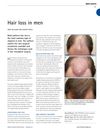
 Male-pattern hair loss is normal, often involves hormone effects on hair follicles, and can be treated with medication or surgery, but new treatments are being researched.
 January 2013 in “프로그램북(구 초록집)”
 Hair restoration surgery is improving, with less painful techniques like FUE and robotic systems, but they can be costly and require training.
Hair transplantation can effectively restore hair in stabilized hair loss cases.
 January 2009 in “Indian Journal of Plastic Surgery”
 Surgical methods for hair loss due to scarring should be chosen based on the size, location, and shape of the area, with most patients seeing good results.
 November 2006 in “Dermatologic Surgery”
 Cutting hair follicles into pieces for transplantation results in poor growth and thinner hair, and the technique is more invasive than previously thought.
 June 1997 in “The American Journal of Cosmetic Surgery”
 Reharvesting hair from donor sites using punch and strip methods can provide more hair for transplants and improve scar appearance.
June 2021 in “Cosmoderma” Hair transplantation techniques have improved, making the process safer and more effective with less visible scarring.
 March 2021 in “Dermatological reviews”
 Hair transplant works well, but needs more research for better results.
 August 2014 in “Aesthetic Surgery Journal”
 Book covers all aspects of hair restoration surgery, highly recommended.
 33 citations
,
September 1998 in “Dermatologic Surgery”
33 citations
,
September 1998 in “Dermatologic Surgery” Surgeons suggested a standard system for hair transplant methods to improve communication and results.
 28 citations
,
November 2008 in “Facial Plastic Surgery”
28 citations
,
November 2008 in “Facial Plastic Surgery” Follicular Unit Transplantation (FUT) can give great results and patient satisfaction when done carefully and by a skilled surgeon.
 11 citations
,
June 2005 in “Journal of Cosmetic Dermatology”
11 citations
,
June 2005 in “Journal of Cosmetic Dermatology” Lasers in hair transplantation show promise but are not yet standard, with current methods causing some side effects and needles still being preferred for creating recipient sites.
 10 citations
,
January 2013 in “Journal of Cutaneous and Aesthetic Surgery”
10 citations
,
January 2013 in “Journal of Cutaneous and Aesthetic Surgery” Narrower donor strips and special closure techniques in hair transplants lead to smaller scars and happier patients.
 10 citations
,
January 1997 in “Scandinavian journal of plastic and reconstructive surgery and hand surgery”
10 citations
,
January 1997 in “Scandinavian journal of plastic and reconstructive surgery and hand surgery” A new technique using a multibladed knife makes preparing hair transplant minigrafts faster and more uniform, leading to natural-looking results.
 7 citations
,
June 2004 in “Dermatologic Surgery”
7 citations
,
June 2004 in “Dermatologic Surgery” A new hair transplant method combines individual and group follicles for better results and efficiency.
 7 citations
,
September 1977 in “PubMed”
7 citations
,
September 1977 in “PubMed” A new technique called hair-lifting was introduced to treat male-pattern baldness and can also give a partial face-lift.