 February 2024 in “International journal of medical science and clinical research studies”
 CCCA is a scarring hair disorder mainly affecting people of African descent, needing better awareness and treatment.
 December 2023 in “International Journal of Science and Research (IJSR)”
 FUE is a safe and effective method for beard and moustache transplants.
 April 2023 in “Han'gug miyong haghoeji/Journal of the Korean society of cosmetology”
 Direct heat perms cause more damage to hair than softening heat perms.
 November 2015 in “European journal of dermatology/EJD. European journal of dermatology”
 A 55-year-old woman with several health conditions did not see hair regrowth after a transplant.
 January 2015 in “Hair therapy & transplantation”
 Hair restoration greatly improved George's confidence and self-identity.
 January 2013 in “The Pan African medical journal”
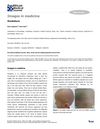
 Monilethrix causes short, fragile hair with no specific treatment available.
 June 2001 in “International Journal of Cosmetic Surgery and Aesthetic Dermatology”
 Dr. Shiell concludes that good communication, proper training, and thorough documentation can help avoid legal issues in cosmetic surgery.
Hair loss in African American women, caused by hair care, genetics, and environment, needs more research for better treatment.
December 2023 in “Biblioteca Digital - Universidad Icesi” Chebe offers natural hair care products to prevent hair loss in Afro-Colombian women.
 February 2019 in “PubMed”
 The research found that twisting hair fibers can show changes in stiffness and damage, and help tell apart different hair treatments.
 November 2024 in “Dermatitis”
 Men's personal care products often cause allergic skin reactions.
10 citations
,
January 1994 Hair can be straightened using different chemicals, not just strong alkali.
 July 2018 in “Elsevier eBooks”
 Stopping tight hairstyles can prevent and reduce traction alopecia.
July 2007 in “International Journal of Cosmetic Science” The new polymer improves dyed hair's color, moisture, shine, and smoothness.
1 citations
,
January 2010 in “LA Referencia (Red Federada de Repositorios Institucionales de Publicaciones Científicas)” Conditioners improved hair protein retention and combing ease, with some providing thermal protection.
May 2026 in “International Journal of Health Management Review” Alkaline substances can severely damage hair and scalp health.
January 2018 in “Turkiye Klinikleri Journal of Dermatology” Commonly used plants in hair products can guide future research and help professionals recommend treatments.
 December 2024 in “Media Farmasi Jurnal Ilmu Farmasi”
 The optimized chia seed oil shampoo formula is stable and meets all required characteristics.
1 citations
,
November 2023 in “Cosmetics” Surfactants damage hair, but sealing the cuticle can prevent this.
 29 citations
,
December 2011 in “British Journal of Dermatology”
29 citations
,
December 2011 in “British Journal of Dermatology” A new hair treatment with caffeine and other ingredients makes hair thicker and less likely to break.
 January 2011 in “Journal of Society of Cosmetic Chemists of Japan”
 18-MEA and SPDA can restore damaged hair's smoothness and reduce frizz.

Herbal ingredients in cosmetics are popular for their benefits and fewer side effects.

Personalized care and evidence-based treatments are crucial for managing skin and hair conditions.
28 citations
,
January 2016 in “RSC Advances” A non-toxic formula using polycarboxylic acids strengthens and improves hair.
 February 2026 in “American Scientific Research Journal for Engineering, Technology, and Sciences (Global Society of Scientific Research and Researchers)”
 Gray hair requires special coloring techniques and care to maintain quality and strength.
 10 citations
,
June 2001 in “International Journal of Cosmetic Science”
10 citations
,
June 2001 in “International Journal of Cosmetic Science” Natural shampoos made in the lab conditioned hair better than commercial ones with chemicals.
3 citations
,
January 2013 in “Journal of cosmetics, dermatological sciences and applications” HAIRCARECUBE TM (HCC) helps hair products work better by getting active ingredients deeper into the hair.
4 citations
,
January 2006 in “International Journal of Cosmetic Science” The method shows how hair lipids form specific patterns and their roles in hair structure.
3 citations
,
July 2023 in “Skin Research and Technology” Instrumental methods accurately and conveniently show hair care products repair hair.
2 citations
,
July 2019 in “Cosmetics” Beautiful hair is flexible and elastic due to its unique double-layered structure and can be enhanced with succinic acid treatment.