 19 citations
,
February 2016 in “Journal of The American Academy of Dermatology”
19 citations
,
February 2016 in “Journal of The American Academy of Dermatology” CD3+ T-cell presence is a reliable marker to tell apart alopecia areata from pattern hair loss.
2 citations
,
September 2024 in “Skin Research and Technology” The study initially suggested a genetic link between thyroid issues and hair loss.
 9 citations
,
January 2017 in “Dermatology Online Journal”
9 citations
,
January 2017 in “Dermatology Online Journal” Some hair loss drugs can cause a unique type of hair loss that resembles both psoriasis and alopecia.
 1 citations
,
October 2013 in “Expert Review of Dermatology”
1 citations
,
October 2013 in “Expert Review of Dermatology” Diagnosing alopecia areata is challenging and requires careful examination and various tests to distinguish it from other hair loss types.
 36 citations
,
May 2011 in “Dermatologic therapy”
36 citations
,
May 2011 in “Dermatologic therapy” No treatments fully cure or prevent alopecia areata; some help but have side effects or need more research.
 3 citations
,
May 2018 in “Journal of Cosmetic Dermatology”
3 citations
,
May 2018 in “Journal of Cosmetic Dermatology” Biopsy can differentiate between alopecia areata and androgenic alopecia, and if more information is needed, testing for CD3 and CD8 can help.
 3 citations
,
January 2018 in “Dermatology”
3 citations
,
January 2018 in “Dermatology” Scalp biopsies help tell apart androgenetic alopecia and alopecia areata.
 May 2023 in “Tạp chí Da liễu học Việt Nam”
 Histopathological examination is essential for diagnosing alopecia areata.
 April 2021 in “Sohag Medical Journal”
 Alopecia areata is an autoimmune condition causing hair loss, linked to genetic factors and immune system issues, with no cure yet.
 March 2017 in “The American Journal of Cosmetic Surgery”
 Transplanted hair follicles can resist hair loss from an autoimmune condition better than natural hair.
 391 citations
,
January 2010 in “Journal of The American Academy of Dermatology”
391 citations
,
January 2010 in “Journal of The American Academy of Dermatology” Half of people with Alopecia Areata may see hair regrowth within a year without treatment, but recovery is unpredictable.
 7 citations
,
December 2016 in “British Journal of Dermatology”
7 citations
,
December 2016 in “British Journal of Dermatology” The report suggests that hair loss in Cronkhite-Canada syndrome may be caused by alopecia areata incognita, as shown by a patient's improvement with treatment.
 85 citations
,
October 2012 in “Dermatologic Clinics”
85 citations
,
October 2012 in “Dermatologic Clinics” Alopecia Areata is an autoimmune condition often starting before age 20, with varied treatment success and a need for personalized treatment plans.
 81 citations
,
July 2011 in “Lasers in Medical Science”
81 citations
,
July 2011 in “Lasers in Medical Science” The Lexington LaserComb helped regrow hair in mice with a condition similar to human hair loss.
 56 citations
,
January 2021 in “Clinical and Experimental Medicine”
56 citations
,
January 2021 in “Clinical and Experimental Medicine” The document concludes that while there are various treatments for Alopecia Areata, there is no cure, and individualized treatment plans are essential due to varying effectiveness.
 49 citations
,
November 1992 in “Archives of dermatology”
49 citations
,
November 1992 in “Archives of dermatology” Different treatments for alopecia areata have varying success rates and side effects; intralesional steroids are most effective.
 41 citations
,
February 2001 in “Current pharmaceutical design”
41 citations
,
February 2001 in “Current pharmaceutical design” Current and future treatments for alopecia areata focus on immunosuppression, immunomodulation, and protecting hair follicles.
 36 citations
,
April 2016 in “British journal of dermatology/British journal of dermatology, Supplement”
36 citations
,
April 2016 in “British journal of dermatology/British journal of dermatology, Supplement” A substance called VIP might protect hair follicles from being attacked by the immune system, and problems with VIP signaling could lead to hair loss in alopecia areata.
 29 citations
,
June 2013 in “Journal of the Saudi Society of Dermatology & Dermatologic Surgery”
29 citations
,
June 2013 in “Journal of the Saudi Society of Dermatology & Dermatologic Surgery” Alopecia areata is an autoimmune hair loss condition treated with corticosteroids, and histologic confirmation is the best diagnosis method.
 29 citations
,
October 2012 in “Anais Brasileiros De Dermatologia”
29 citations
,
October 2012 in “Anais Brasileiros De Dermatologia” Diagnosing hair loss disorders needs clinical, dermoscopic, and histological differences, and checking menstrual cycle, weight changes, drug therapy, and nail changes.
 24 citations
,
January 2008 in “KARGER eBooks”
24 citations
,
January 2008 in “KARGER eBooks” The document concludes that ongoing research using animal models is crucial for better understanding and treating Alopecia Areata.
 22 citations
,
June 2013 in “Australasian Journal of Dermatology”
22 citations
,
June 2013 in “Australasian Journal of Dermatology” Early stage bald spots are linked to skin inflammation and damage to the upper part of the hair follicle.
 19 citations
,
September 2014 in “JAMA Dermatology”
19 citations
,
September 2014 in “JAMA Dermatology” Eosinophilic infiltrate is not a reliable indicator for diagnosing chronic alopecia areata.
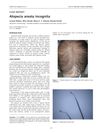 19 citations
,
January 2011 in “Clinics”
19 citations
,
January 2011 in “Clinics” A young woman with a rare hair loss condition improved with steroid and biotin treatment.
 18 citations
,
January 2017 in “Annals of dermatology/Annals of Dermatology”
18 citations
,
January 2017 in “Annals of dermatology/Annals of Dermatology” Certain immune cells contribute to severe hair loss in chronic alopecia areata, with Th17 cells possibly having a bigger impact than cytotoxic T cells.
 16 citations
,
January 2015 in “Current problems in dermatology”
16 citations
,
January 2015 in “Current problems in dermatology” Alopecia Areata is an autoimmune hair loss condition that needs more research for better treatments.
 7 citations
,
March 2025 in “Archives of Dermatological Research”
7 citations
,
March 2025 in “Archives of Dermatological Research” Trichoscopy helps better understand and manage alopecia areata, improving patient outcomes.
 7 citations
,
June 2019 in “Cureus”
7 citations
,
June 2019 in “Cureus” Fractional lasers and microneedling, combined with topical agents, could potentially treat Alopecia Areata effectively, but more research is needed due to limited data.
 2 citations
,
October 2025 in “Discover Immunity.”
2 citations
,
October 2025 in “Discover Immunity.” Alopecia Areata is an autoimmune disease causing hair loss, with no cure yet, but research may lead to new treatments.
 2 citations
,
February 2014 in “Hair therapy & transplantation”
2 citations
,
February 2014 in “Hair therapy & transplantation” Alopecia Areata is an autoimmune condition causing hair loss, influenced by genetics, environment, and possibly improved by anti-MIF therapy, with many patients experiencing regrowth within a year.